
Ai Content Generator
Ai Picture
Tell Your Story

 uk screeds
Fast, Efficient, and Durable: Liquid Screed in Reading
In recent years, liquid screed in Reading has become more and more popular. Its consistency is nearly self-levelling, as the name implies. Cement, water, and other polymers and flow additives make up liquid screed. Liquid screed spreads readily over subfloors and doesn't need to be compacted like traditional screed because it is softer and easier to deal with.
Installation Simplicity and Speed
The ease and speed of installation of liquid screed flooring is one of its greatest benefits. In addition to saving time, it also requires less labour and installation tools. Large areas can be laid quickly thanks to the pump that is used to create the flowing screeds.
Compared to other types of screed, liquid screed can be installed up to ten times faster and with significantly less manpower. A single team can pour up to 1000–2000 m² of liquid screed and swiftly level it to the proper datum points in a single day.
Liquid screed is superior to traditional screed in this regard since it pours very quickly and many formulas can level and compact themselves without the use of a power floater. To smooth it out and get rid of air bubbles, it will at most need to be tamped down with a dapple bar.
Faster Drying Periods
In addition to saving time during installation, one of the advantages of liquid screeding is that it dries quickly. Within 24 to 48 hours, it becomes sufficiently dry to walk on. This implies that soon after the site is laid, contractors can begin construction. Therefore, liquid screeds are ideal for tasks requiring a rapid turnaround.
Because liquid screed has a lower depth than other types, it dries more quickly, making it perfect for applications requiring a fast turnaround. Both liquid and conventional screeds dry at a pace of 1 mm per day, depending on local conditions. However, liquid screeds can be walked on in 24 to 48 hours, while traditional screeds must lie for 7 days.
Although flowing screeds are less dense and allow the water content to drain more quickly, liquid screeds may initially contain a higher water content. This evens out their rate of drying, at least for liquid screed formulas that are common.
Ideal for Underfloor Heating
Liquid screed is most effective when combined with underfloor heating. Its shape allows it to flow around pipes, filling in gaps and joints that would otherwise be difficult to handle with conventional screeds. Greater thermal efficiency results from the more even distribution of heat caused by the absence of gaps.
Both liquid and conventional screed work well for covering an underfloor heating system because they provide uniform heat transfer and diffusion from the pipes to the space. However, liquid fills all the spaces between the pipes, creating a void-free finish with minimal extra work, making it the superior product of the two types.
Air pockets in typical screed must be avoided and removed with extreme caution. An air pocket can, at best, decrease heat transfer efficiency; at worst, it can cause the screed to break.
Increased Insulation and Thermal Efficiency
There is more space for thicker floor insulation since liquid screed has a significantly lower screed depth than other screeds due to its lower volume. A property with thicker insulation will benefit from increased thermal efficiency, which lowers heating costs.
Compared to other flooring options, liquid screeds are far more thermally conductive, making them ideal for heating rooms with less energy. Additionally, the ideal choice for underfloor heating installation is liquid screeding. This is due to the fact that installing underfloor heating requires completely covering the heating pipes, which is a challenging task. However, a liquid screed in Reading will readily cover the installed pipes because it is liquid. This indicates that the heat will enter the space uniformly.
Smooth and Durable Floors
Liquid screed self-levels, ensuring a smooth finish. You don't have to be concerned about an uneven and rough surface. Unlike sand and cement, which typically require manual levelling, the smooth finish can be accomplished without it. Every corner of the space is effortlessly covered by the pumped-flowing screeds, which also smooth out any uneven floor.
Pumped screeding provides a smooth surface because it shrinks, cracks, and twists less than other screeding.
Minimal Shrinkage and Versatile Depth
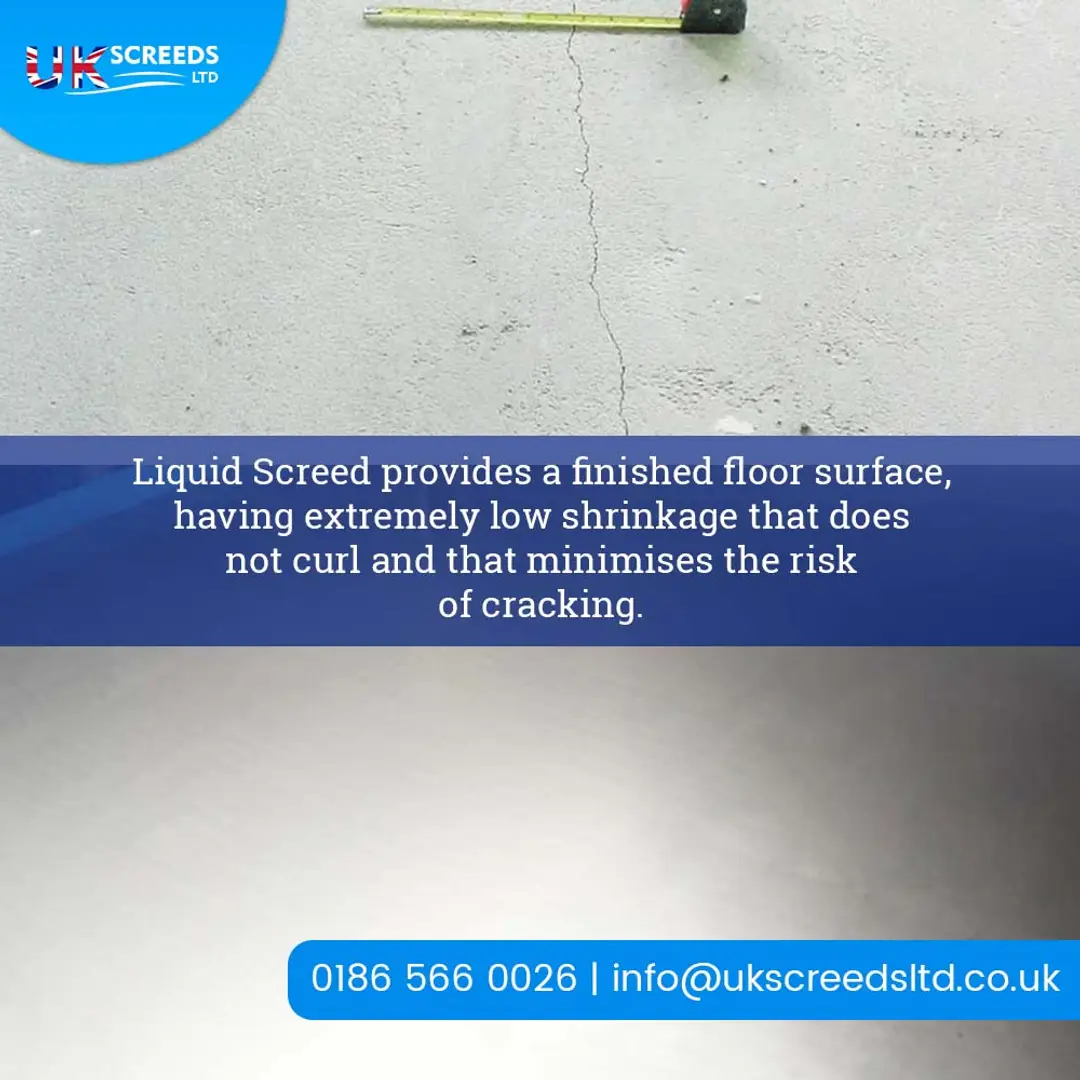
Minimal shrinkage is another advantage of liquid screed. It provides a smooth surface because it shrinks, cracks, and twists less than other types of screed.
A deep application is necessary for some tasks but not for others. Because liquid screed may operate at both low and high depths, you can select the depth that best meets the requirements of your project. Furthermore, a thin coating of liquid screeds does not necessarily indicate that the material is weak. In actuality, it is more durable than massive sand and cement layers. Liquid screed will be sturdy enough to walk on in just one day.
Liquid Screed vs Traditional Screed
Time Spent Drying
Traditional screeds take longer to dry than liquid screeds. After only 7–14 days, floor coverings can be installed since the liquid screed dries at a rate of 1 mm per day. However, before other floor finishes can be placed, conventional cement/sand screeds must dry out completely, which takes at least 21 days.
Measurements Of Thickness
The thickness requirements for liquid and traditional screeds differ because of their compositions and installation techniques. With a thickness of only 30 to 40 mm, liquid screeds offer a smooth floor. Conventional screed must be placed at least 40 mm above concrete or 75 mm above flooring. There are special screed thickness requirements for areas with underfloor heating as well.
Shrinkage and Cracks
Unlike traditional screed mixes, contemporary liquid screeds are less prone to shrink and crack when the screed dries. Strength and crack resistance are enhanced by additional polymers. However, liquid screeds may easily cover greater unbroken floor spans, while traditional screeds may need carefully planned bay divides to minimise cracking for larger areas.
Difference in Cost
When compared to traditional screed application and finishing, the quick installation method of liquid screeds also results in a significant reduction in labour time. The precise items utilised, the thickness of the screed, and the size of the floor surface all have a significant impact on the final cost.
Get in touch with the screed specialists in Reading to know more about the several advantages of using liquid screed in Reading over traditional flooring options.
Related Posts
© 2025 Invastor. All Rights Reserved
User Comments