
Ai Content Generator
Ai Picture
Tell Your Story

 Global News
Scandal in Equatorial Guinea: VP Issues Stern Warning Against Office Sex Amid Viral Video Fallout
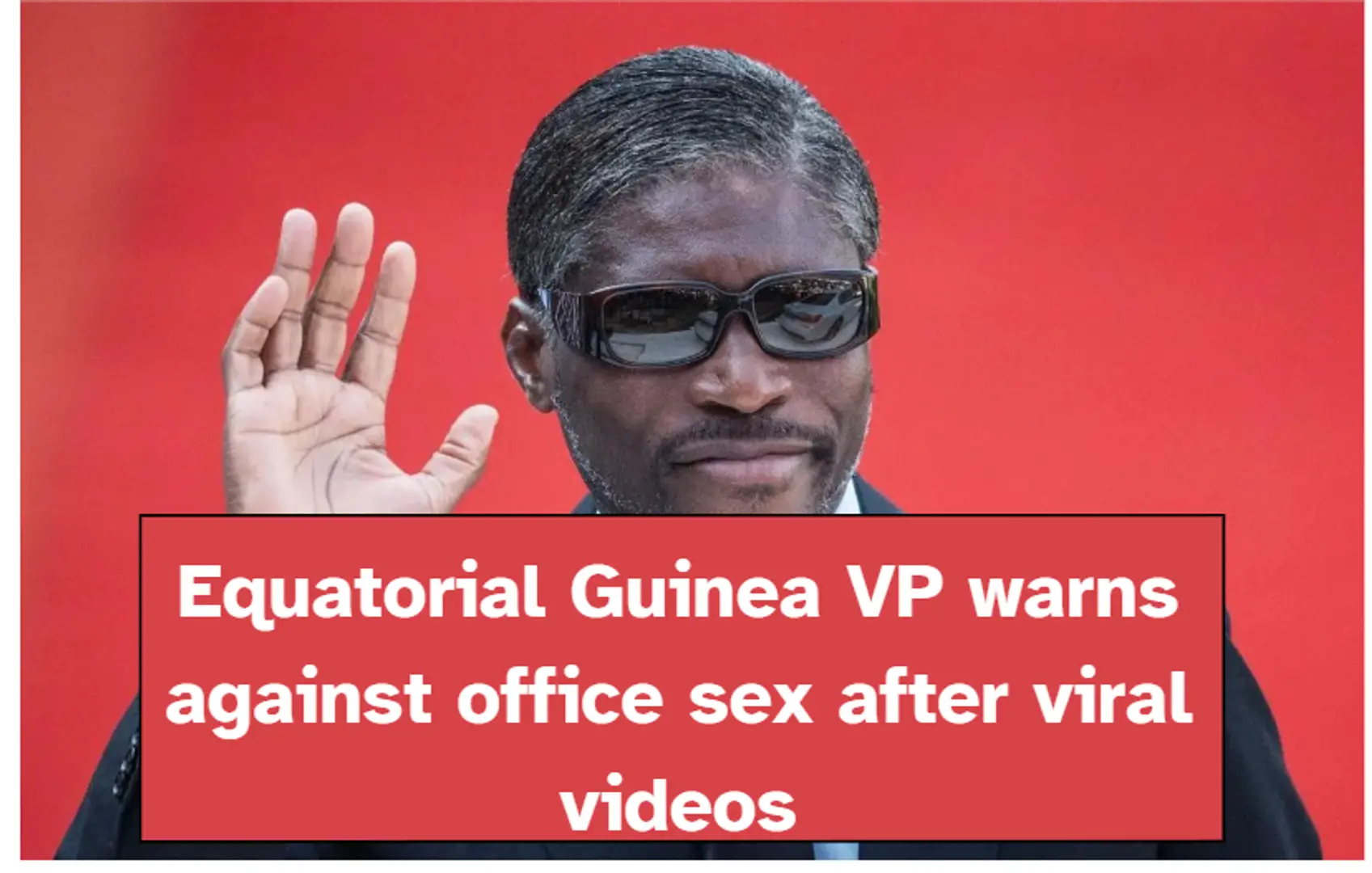
Scandal in Equatorial Guinea: VP Issues Stern Warning Against Office Sex Amid Viral Video Fallout<br>Subtitle: Civil servants caught engaging in sexual acts at work face suspension as the government cracks down on scandalous behavior.<br>Introduction:<br>In a shocking turn of events, Equatorial Guinea's Vice-President Teodoro Obiang Mangue has issued a stern warning to civil servants following the leak of hundreds of explicit videos allegedly involving high-ranking official Baltasar Ebang Engonga. The videos, which have gone viral on social media, depict Engonga engaging in sexual acts with various women—including the spouses of prominent officials—within the confines of his office. This scandal has raised significant concerns about morality and professionalism within government ranks, prompting the vice-president to take decisive action against such behavior. The situation highlights broader issues of corruption, governance, and public image in Equatorial Guinea.<br>The Viral Videos: A Breach of Conduct<br>The controversy ignited when videos featuring Engonga were leaked after his arrest on unrelated corruption charges. As the head of the National Financial Investigation Agency, Engonga was already under scrutiny for his role in combating financial crimes. The explicit content of these videos has not only damaged his reputation but also brought the integrity of the entire government into question.<br>Vice-President Obiang emphasized that engaging in sexual acts at work constitutes a "flagrant violation of the code of conduct." His office's statement indicated that the widely circulated videos have "denigrated the image of the country," prompting immediate action to restore public confidence.<br>Surveillance Measures to Curb Indecency<br>In response to the scandal, Vice-President Obiang has ordered the installation of surveillance cameras in government offices, including courts and ministries. This move aims to combat "indecent and illicit acts" and to ensure that civil servants adhere strictly to professional standards. The decision to monitor workplace behavior reflects a growing concern about maintaining decorum in public service, especially in light of the current scandal.<br>The Public's Reaction and Internet Crackdown<br>The leaking of the videos has caused a significant public outcry in Equatorial Guinea, a country already grappling with issues of corruption and governance. In an effort to control the narrative, the vice-president has instructed telecommunications companies to curb the spread of these "pornographic videos" on social media platforms. Consequently, internet traffic, particularly for downloading images, has been severely disrupted, as authorities attempt to mitigate the scandal's impact on the country's image.<br>Block Quote:<br>As Vice-President Obiang stated, "The behavior exhibited in these videos is unacceptable and will not be tolerated within our government. We must uphold the integrity of our offices and serve as examples to our citizens."<br>Investigations and Future Consequences<br>In light of the scandal, the vice-president's office has recommended opening an investigation into Engonga's conduct. Furthermore, Equatorial Guinea's chief prosecutor has warned that if Engonga is found to have contracted a sexually transmitted disease, he could face prosecution for offenses against "public health." This stark warning underscores the potential legal ramifications for civil servants engaging in inappropriate behavior.<br>Conclusion:<br>The recent scandal involving Equatorial Guinea's civil service serves as a critical reminder of the importance of ethical conduct in public office. As Vice-President Obiang takes steps to address this breach of trust, it remains to be seen how these measures will affect the country's governance and public perception. The installation of surveillance cameras and potential investigations signal a new era of accountability in Equatorial Guinea, but whether these actions will lead to meaningful change is yet to be determined.<br>
Civil servants caught engaging in sexual acts at work face suspension as the government cracks down on scandalous behavior.<br>Introduction:<br>In a shocking turn of events, Equatorial Guinea's Vice-President Teodoro Obiang Mangue has issued a stern warning to civil servants following the leak of hundreds of explicit videos allegedly involving high-ranking official Baltasar Ebang Engonga. The videos, which have gone viral on social media, depict Engonga engaging in sexual acts with various women—including the spouses of prominent officials—within the confines of his office. This scandal has raised significant concerns about morality and professionalism within government ranks, prompting the vice-president to take decisive action against such behavior. The situation highlights broader issues of corruption, governance, and public image in Equatorial Guinea.<br>The Viral Videos: A Breach of Conduct<br>The controversy ignited when videos featuring Engonga were leaked after his arrest on unrelated corruption charges. As the head of the National Financial Investigation Agency, Engonga was already under scrutiny for his role in combating financial crimes. The explicit content of these videos has not only damaged his reputation but also brought the integrity of the entire government into question.<br>Vice-President Obiang emphasized that engaging in sexual acts at work constitutes a "flagrant violation of the code of conduct." His office's statement indicated that the widely circulated videos have "denigrated the image of the country," prompting immediate action to restore public confidence.<br>Surveillance Measures to Curb Indecency<br>In response to the scandal, Vice-President Obiang has ordered the installation of surveillance cameras in government offices, including courts and ministries. This move aims to combat "indecent and illicit acts" and to ensure that civil servants adhere strictly to professional standards. The decision to monitor workplace behavior reflects a growing concern about maintaining decorum in public service, especially in light of the current scandal.<br>The Public's Reaction and Internet Crackdown<br>The leaking of the videos has caused a significant public outcry in Equatorial Guinea, a country already grappling with issues of corruption and governance. In an effort to control the narrative, the vice-president has instructed telecommunications companies to curb the spread of these "pornographic videos" on social media platforms. Consequently, internet traffic, particularly for downloading images, has been severely disrupted, as authorities attempt to mitigate the scandal's impact on the country's image.<br>Block Quote:<br>As Vice-President Obiang stated, "The behavior exhibited in these videos is unacceptable and will not be tolerated within our government. We must uphold the integrity of our offices and serve as examples to our citizens."<br>Investigations and Future Consequences<br>In light of the scandal, the vice-president's office has recommended opening an investigation into Engonga's conduct. Furthermore, Equatorial Guinea's chief prosecutor has warned that if Engonga is found to have contracted a sexually transmitted disease, he could face prosecution for offenses against "public health." This stark warning underscores the potential legal ramifications for civil servants engaging in inappropriate behavior.<br>Conclusion:<br>The recent scandal involving Equatorial Guinea's civil service serves as a critical reminder of the importance of ethical conduct in public office. As Vice-President Obiang takes steps to address this breach of trust, it remains to be seen how these measures will affect the country's governance and public perception. The installation of surveillance cameras and potential investigations signal a new era of accountability in Equatorial Guinea, but whether these actions will lead to meaningful change is yet to be determined.<br>
<br>In a shocking turn of events, Equatorial Guinea's Vice-President Teodoro Obiang Mangue has issued a stern warning to civil servants following the leak of hundreds of explicit videos allegedly involving high-ranking official Baltasar Ebang Engonga. The videos, which have gone viral on social media, depict Engonga engaging in sexual acts with various women—including the spouses of prominent officials—within the confines of his office. This scandal has raised significant concerns about morality and professionalism within government ranks, prompting the vice-president to take decisive action against such behavior. The situation highlights broader issues of corruption, governance, and public image in Equatorial Guinea.<br>The Viral Videos: A Breach of Conduct<br>The controversy ignited when videos featuring Engonga were leaked after his arrest on unrelated corruption charges. As the head of the National Financial Investigation Agency, Engonga was already under scrutiny for his role in combating financial crimes. The explicit content of these videos has not only damaged his reputation but also brought the integrity of the entire government into question.<br>Vice-President Obiang emphasized that engaging in sexual acts at work constitutes a "flagrant violation of the code of conduct." His office's statement indicated that the widely circulated videos have "denigrated the image of the country," prompting immediate action to restore public confidence.<br>Surveillance Measures to Curb Indecency<br>In response to the scandal, Vice-President Obiang has ordered the installation of surveillance cameras in government offices, including courts and ministries. This move aims to combat "indecent and illicit acts" and to ensure that civil servants adhere strictly to professional standards. The decision to monitor workplace behavior reflects a growing concern about maintaining decorum in public service, especially in light of the current scandal.<br>The Public's Reaction and Internet Crackdown<br>The leaking of the videos has caused a significant public outcry in Equatorial Guinea, a country already grappling with issues of corruption and governance. In an effort to control the narrative, the vice-president has instructed telecommunications companies to curb the spread of these "pornographic videos" on social media platforms. Consequently, internet traffic, particularly for downloading images, has been severely disrupted, as authorities attempt to mitigate the scandal's impact on the country's image.<br>Block Quote:<br>As Vice-President Obiang stated, "The behavior exhibited in these videos is unacceptable and will not be tolerated within our government. We must uphold the integrity of our offices and serve as examples to our citizens."<br>Investigations and Future Consequences<br>In light of the scandal, the vice-president's office has recommended opening an investigation into Engonga's conduct. Furthermore, Equatorial Guinea's chief prosecutor has warned that if Engonga is found to have contracted a sexually transmitted disease, he could face prosecution for offenses against "public health." This stark warning underscores the potential legal ramifications for civil servants engaging in inappropriate behavior.<br>Conclusion:<br>The recent scandal involving Equatorial Guinea's civil service serves as a critical reminder of the importance of ethical conduct in public office. As Vice-President Obiang takes steps to address this breach of trust, it remains to be seen how these measures will affect the country's governance and public perception. The installation of surveillance cameras and potential investigations signal a new era of accountability in Equatorial Guinea, but whether these actions will lead to meaningful change is yet to be determined.<br>
<br>The recent scandal involving Equatorial Guinea's civil service serves as a critical reminder of the importance of ethical conduct in public office. As Vice-President Obiang takes steps to address this breach of trust, it remains to be seen how these measures will affect the country's governance and public perception. The installation of surveillance cameras and potential investigations signal a new era of accountability in Equatorial Guinea, but whether these actions will lead to meaningful change is yet to be determined.<br>
Related Posts
© 2025 Invastor. All Rights Reserved
User Comments