
All
Ai Content Generator
Ai Picture
Tell Your Story

 Healthy Lifestyle
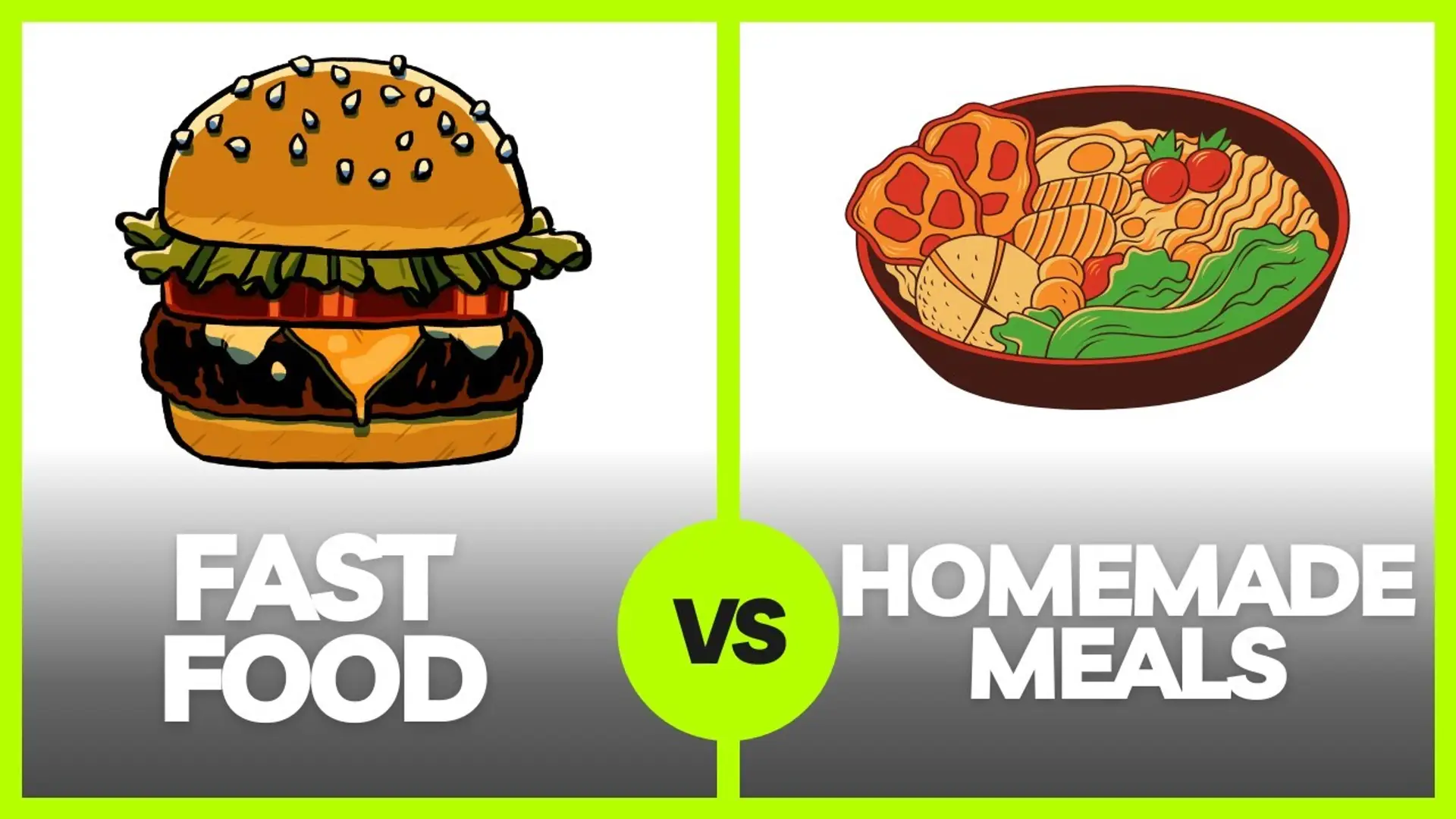
Fast Food vs. Home-Cooked Meals: Which is Healthier and More Cost-Effective?
Fast Food vs. Home-Cooked Meals: Which is Healthier and More Cost-Effective?
Fast Food
Features:
- Quick and convenient meals, often prepared in minutes.
- Available in restaurants, drive-thrus, and delivery services.
- Highly processed and often rich in calories, fats, and sugars.
Pros:
- Convenience – Fast food is easily accessible and saves time, making it a popular choice for people with busy schedules.
- Variety – A wide selection of meal options, from burgers and fries to salads and wraps.
- No Preparation Time – Meals are ready to eat, requiring no cooking, cleaning, or grocery shopping.
Cons:
- Unhealthy Ingredients – Fast food is often high in unhealthy fats, sugar, sodium, and preservatives, leading to long-term health risks like obesity, heart disease, and diabetes.
- Portion Control Issues – Fast food portions are often larger than necessary, leading to overeating.
- Lack of Nutrients – Fast food tends to be low in essential nutrients like fiber, vitamins, and minerals, contributing to nutrient deficiencies.
- Cost Over Time – While cheap in the short term, regular consumption of fast food can be more expensive than cooking at home, especially when considering health costs down the line.
Home-Cooked Meals
Features:
- Meals prepared at home using fresh ingredients.
- Full control over ingredients, portion sizes, and cooking methods.
- Can be tailored to individual health needs and dietary preferences.
Pros:
- Healthier Ingredients – Home-cooked meals are generally healthier, as they allow for fresh, unprocessed ingredients, lower sodium, and healthier fats.
- Portion Control – Cooking at home lets you control serving sizes, reducing the risk of overeating.
- Nutrient-Rich – Meals can be packed with essential nutrients like vitamins, fiber, and lean proteins, promoting overall well-being.
- Cost-Effective – Cooking in bulk and buying fresh ingredients is often more affordable than regularly purchasing fast food, and leftovers can be reused.
- Customizable – Home-cooked meals can be tailored to personal tastes, dietary restrictions, and preferences, making them more versatile.
Cons:
- Time-Consuming – Home-cooked meals require time for preparation, cooking, and cleaning, which can be challenging for those with busy schedules.
- Planning and Skill – Meal planning, grocery shopping, and cooking skills are necessary to consistently prepare nutritious meals.
- Initial Cost for Ingredients – Buying fresh ingredients and cooking tools upfront can be more expensive than ordering a single fast-food meal.
Conclusion:
Home-cooked meals are generally healthier and more cost-effective in the long run. They offer better control over ingredients, portion sizes, and nutrition, reducing the risk of chronic diseases. While fast food is convenient and quick, its high levels of unhealthy fats, sugars, and sodium make it less healthy, and regular consumption can be costly over time. Though cooking at home requires time and effort, it ultimately leads to better health outcomes and more savings.
Related Posts
© 2025 Invastor. All Rights Reserved
User Comments