
Ai Content Generator
Ai Picture
Tell Your Story

 Tony Ngari
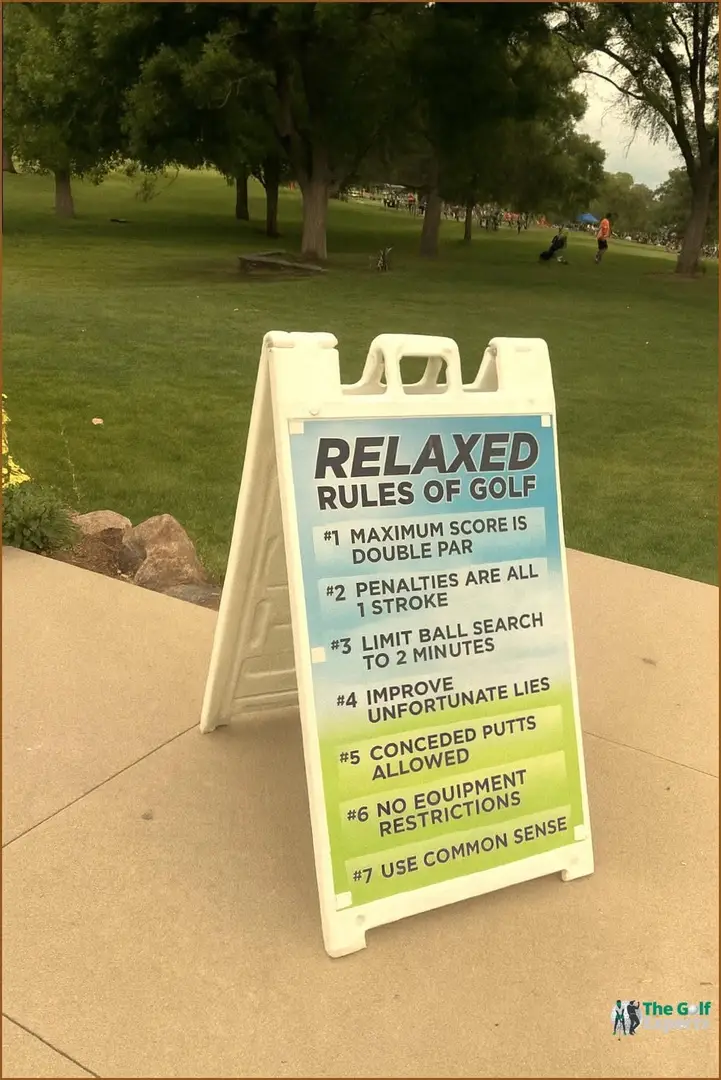
Relaxed rules of golf.
https://www.amazon.com/dp/B0CL7K6W2M/?tag=mygolfconnex20
As an Amazon Associate I earn from qualifying purchases.
#ad #CommissionsEarned #golfconnex
Relaxed rules golf (sometimes called casual golf, friendly rules, social golf, or playing with “local rules”) refers to playing golf with modified or simplified rules to make the round faster, more enjoyable, more beginner-friendly, or better suited to course conditions. It’s common in non-competitive rounds, charity scrambles, family play, or when course conditions would make strict rules frustrating.
Below are common relaxed rules, why people use them, and examples of how they work. I’ll also include references to official concepts (like “preferred lies” and “ready golf”) where applicable.
1) Preferred lies (“lift, clean, and place”)
What it is: If your ball is in the fairway (or sometimes “closely mown areas”), you may lift it, clean it, and place it within a small distance (e.g., within 6 inches or one club-length), no nearer the hole.
Why it’s used: Helps when fairways are muddy, dormant, or damaged, and prevents unfair “bad luck” lies.
Example: Your ball lands in the fairway but sits in a muddy depression. Under relaxed rules, you pick it up, wipe it clean, and place it 6 inches to the side on a patch of grass.
Reference: This concept is widely used as a “preferred lies” local rule. In the official rules framework, it’s implemented via Local Rules (see the R&A/USGA Model Local Rules, commonly referred to as “Preferred Lies”).
2) “Gallery rule” / Lost ball relief (informal)
What it is: If a ball is likely in play (e.g., in light rough) but can’t be found quickly, players allow a free drop near where it should be—because in a tournament with spectators (“the gallery”), it would have been found.
Why it’s used: Speeds up play and reduces frustration, especially in autumn leaves or thick rough.
Example: Your drive is clearly in bounds but disappears in leaves. Instead of walking back or taking stroke-and-distance, your group agrees you may drop near the spot with no penalty (or sometimes with a 1-stroke penalty, depending on the group).
Important note: This is not an official rule; it’s purely a friendly-round convention.
3) Max score per hole (double par, net double bogey, “pick up”)
What it is: Set a maximum score you can take on any hole—common limits include:
- Double par (e.g., max 8 on a par 4)
- Triple bogey
- Net double bogey (used in some handicap contexts)
- “Pick up after X strokes”
Why it’s used: Keeps rounds moving and prevents one blow-up hole from derailing enjoyment.
Example: On a par 5, you’re lying 8 strokes still not on the green. Under the group’s rule of “max double par,” you record a 10 and move on.
Reference: While “max score” is a format choice rather than a core rule, it aligns with pace-of-play goals and is similar in spirit to Stableford-style scoring systems.
4) Ready golf (playing when safe, not strict honors)
What it is: Instead of strictly following “furthest from the hole plays first,” players hit when ready, as long as it’s safe and doesn’t disrupt others.
Why it’s used: Significantly improves pace of play.
Example: You’re slightly farther from the hole than your friend, but they already have a club and a clear shot while you’re still deciding. They go ahead and hit.
Reference: “Ready golf” is widely recommended by golf organizations for casual play and pace-of-play improvement (often discussed in guidance from the R&A/USGA and many national golf bodies).
5) Improve lies in the rough or anywhere (very relaxed)
What it is: Move the ball a small distance to avoid roots, rocks, divots, sprinkler heads, or bare patches—sometimes “one club-length,” sometimes “six inches,” often “no closer to the hole.”
Why it’s used: Protects clubs, prevents injury, and reduces “gotcha” outcomes in casual rounds.
Example: Your ball is nestled against a tree root. Instead of risking injury or a broken club, you move it 8 inches to a safer spot and play on.
Note: Official rules do allow free relief from certain obstructions and abnormal course conditions, but not from tree roots unless the committee defines them as ground under repair or provides a local rule. In casual play, groups often allow it anyway for safety.
6) Mulligans (replay a shot)
What it is: A “do-over” shot, often limited to:
- One mulligan per side (front/back nine)
- One mulligan per round
- Only on the first tee
Why it’s used: Reduces stress, especially on the first tee, and makes social rounds more fun.
Example: On the first tee you top your drive 30 yards. Your group allows one first-tee mulligan, so you re-tee and hit again, counting only the second ball.
Note: Mulligans are not part of the official Rules of Golf; they’re purely informal unless part of a specific event format.
7) Simplified penalty areas and water hazards (drop and go)
What it is: If a ball goes into a penalty area (or is assumed to), players may use a simplified drop procedure (e.g., drop near where it crossed) without carefully measuring relief areas.
Why it’s used: Keeps the game moving and reduces rules complexity for beginners.
Example: Your ball splashes into a pond. Instead of debating exact crossing points and relief options, you take a one-stroke penalty and drop near the pond edge where it went in.
Reference: The official Rules of Golf define Penalty Areas and relief options (including lateral relief for red penalty areas). Casual play often simplifies the mechanics while keeping the “one-stroke penalty” idea.
8) “Free drop” from divots (common debate)
What it is: If your ball is in a divot in the fairway, some groups allow a free drop or placement nearby.
Why it’s used: Many golfers feel a fairway should offer a fair lie, and a divot is “unlucky.”
Example: Your approach shot lands in the fairway but stops in an old divot hole. Your group allows you to move it 6 inches to grass.
Reference: Under the official rules, a divot is generally considered part of the “general area,” and you typically must play it as it lies unless a local rule is in place (which is uncommon for divots). This is one of the most common “relaxed rules” in friendly golf.
9) Gimmes and relaxed putting
What it is: Short putts are conceded, especially in match play or casual rounds. Common ranges: “inside the leather,” “inside the grip,” or “within 2 feet.”
Why it’s used: Speeds up play and reduces frustration over very short putts.
Example: You have a 1-foot putt left for bogey. Your playing partners say “that’s good,” and you pick it up.
Tip: If you’re practicing or tracking a handicap accurately, putt it out more often—short putts matter.
10) Simplified out-of-bounds and lost ball alternatives
What it is: Instead of the traditional “stroke-and-distance” (replay from the previous spot), some casual groups use a local alternative: drop near where the ball went out and add a penalty (often 2 strokes).
Why it’s used: Stroke-and-distance is slow and can be punishing in casual play.
Example: Your drive goes out of bounds. Instead of re-teeing, you drop near where it crossed the boundary and take a penalty to approximate the cost of stroke-and-distance.
Reference: The USGA/R&A introduced a Model Local Rule (often referred to as “Alternative to Stroke and Distance for Lost Ball or Ball Out of Bounds”) that allows dropping in the fairway area with a two-stroke penalty in certain circumstances (generally for non-elite play). This is a major “relaxed rules” option with an official basis.
How to use relaxed rules fairly (best practices)
- Agree before the round: Decide which relaxed rules apply (mulligans? preferred lies? gimmies distance?).
- Keep it consistent: Apply the same allowances to everyone.
- Be clear about scoring: If you’re posting a score for handicap purposes, be cautious—some relaxed rules can make a score non-compliant.
- Prioritize safety and pace: Many relaxed rules exist to prevent injury (roots/rocks) and speed up play (max score, ready golf).
References (official frameworks and commonly cited sources)
- USGA & The R&A – Rules of Golf: The official rules and definitions (Penalty Areas, relief procedures, etc.).
- USGA/R&A Model Local Rules: Includes commonly adopted options like:
- Preferred Lies (lift, clean, and place) as a local rule in adverse conditions
- Alternative to Stroke and Distance for lost ball/out of bounds (two-stroke penalty drop option) for general play
If you tell me your context (beginner round, league night, scramble, playing for handicap, slow course, winter conditions, etc.), I can suggest a specific set of relaxed rules that fit—plus a simple “one-paragraph rules sheet” you can send to the group before the tee time.
Related Posts
© 2026 Invastor. All Rights Reserved
User Comments