
Ai Content Generator
Ai Picture
Tell Your Story

 InVastor Crypto News
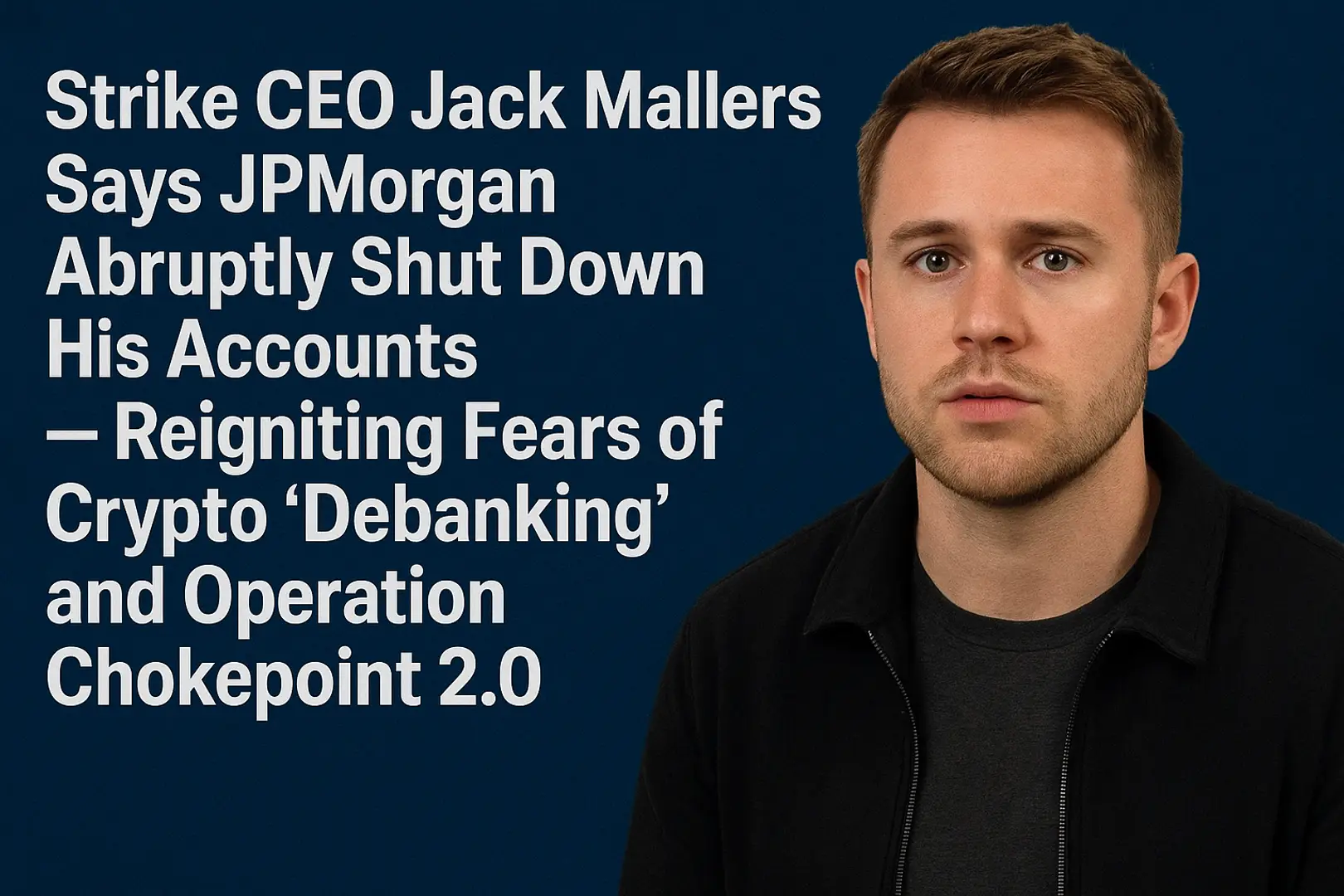
Strike CEO Jack Mallers Says JPMorgan Abruptly Shut Down His Accounts
Strike CEO Jack Mallers Says JPMorgan Abruptly Shut Down His Accounts — Reigniting Fears of Crypto “Debanking” and Operation Chokepoint 2.0
Strike CEO Jack Mallers says he was blindsided in September when JPMorgan Chase abruptly shut down his personal bank accounts without any prior warning or meaningful explanation. What he initially assumed was a misunderstanding soon became, in his words, “a disturbing and suspicious experience,” adding fuel to long-standing concerns within the crypto industry about targeted shutdowns of accounts belonging to prominent digital-asset figures.
.webp)
Mallers explained that the only justification he received from Chase was a vague reference to “concerning activity” under the Bank Secrecy Act. The bank offered no specifics, no documentation, and no opportunity for clarification. For a high-profile founder who operates one of the most visible Bitcoin payments companies in the world, the silence was as alarming as the closure itself.

The event has revived a broader, heated debate within the crypto community—one that has simmered for years. Many industry leaders fear the resurgence of what they describe as Operation Chokepoint 2.0, a modern echo of the controversial initiative that allegedly encouraged banks to quietly sever ties with industries deemed politically risky or undesirable. Crypto companies and executives say they are increasingly encountering chilly treatment, unexplained account freezes, and heightened scrutiny that goes well beyond normal compliance.
Mallers’ experience is particularly notable because of his role as the founder of Strike, a global Bitcoin payments platform that has drawn widespread attention from both supporters and critics of digital currencies. As one of the most outspoken Bitcoin advocates, Mallers has repeatedly pushed for broader adoption and financial openness—making the sudden account termination feel, to many observers, more like a targeted action than a routine compliance review.

The incident has sharpened anxieties about whether traditional financial institutions are exerting quiet pressure to marginalize crypto leaders and limit their access to essential banking services. Some view this as an existential threat: without reliable access to the banking system, even the most established crypto firms could struggle to operate, pay employees, or onboard users.
Others are urging caution, arguing that the lack of details makes it difficult to determine whether Mallers’ case was politically motivated or simply an opaque, bureaucratic compliance decision. But with no explanation forthcoming from JPMorgan, the uncertainty itself is becoming a focal point—and a catalyst for renewed scrutiny of how banks handle crypto-related accounts.

For Mallers and many across the industry, the episode has become emblematic of a deeper question:
Are these isolated incidents—or signs of a coordinated, far less transparent effort to push crypto to the margins of the financial system?
Related Posts
© 2025 Invastor. All Rights Reserved
User Comments