
Ai Content Generator
Ai Picture
Tell Your Story

 InVastor Academy Professionals
Module 2: Personalized Learning with AI Lesson 2.3: Designing AI-Driven Learning Paths
Module 2: Personalized Learning with AI
Lesson 2.3: Designing AI-Driven Learning Paths
Learning Objectives
By the end of this lesson, educators will be able to:
- Define what an AI-driven learning path is and how it adapts to student performance.
- Create differentiated learning sequences using AI platforms and student data.
- Use AI insights (dashboards, diagnostics, performance history) to group students and assign interventions.
- Support student agency and self-paced learning while maintaining oversight.
- Ensure that AI-generated learning plans align with curriculum standards and learning outcomes.
1.What Are AI-Driven Learning Paths?
An AI-driven learning path is a personalized learning route created based on a student’s:
- Performance on tasks or quizzes
- Learning pace and engagement patterns
- Strengths and skill gaps
- Preferred learning style (visual, auditory, kinesthetic, etc.)
Unlike fixed lesson pacing, AI adapts the sequence in real time as the student learns.
Example:
A student struggling with fractions receives more interactive demonstrations and guided practice before advancing.
Key Idea:
AI responds to the learner. The student does not have to adapt to the system.
2.How AI Creates Personalized Learning Paths
Most adaptive platforms follow a 4-step cycle:
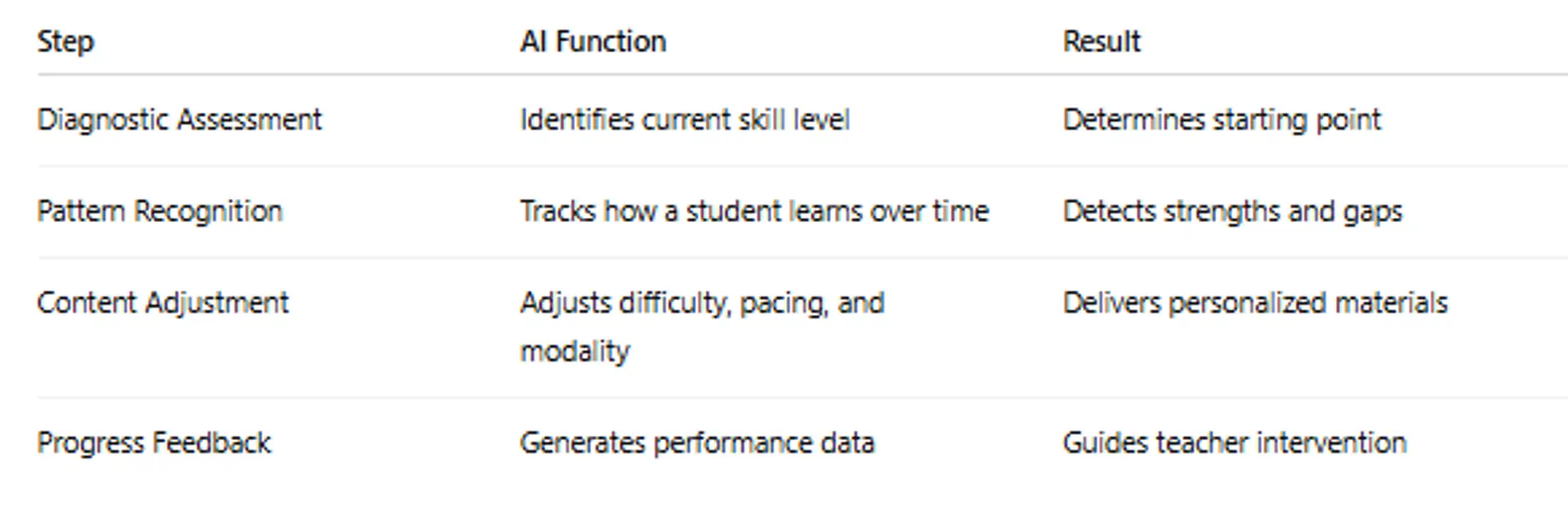
This cycle repeats continuously, not only after tests.
3.Role of the Teacher in AI-Driven Personalization
Even with AI tools, teachers remain instructional leaders.
Teachers:
- Review and interpret AI recommendations
- Adjust or override pathways when needed
- Provide emotional, motivational, and contextual support
- Facilitate small-group instruction based on data insights
AI handles:
- Repetitive practice
- Adaptive leveling
- Progress tracking
Teachers handle:
- Concept explanation
- Critical thinking and discussion activities
- Real-world application
4.Steps to Design an AI-Driven Learning Path
1. Step 1: Identify Learning Objectives
Ensure that the AI lessons align with your curriculum or standards.
Step 2: Administer Baseline Assessments
- Use tools like:
- Khanmigo Pre-Unit Check-In
- CenturyTech Initial Diagnostic
- Squirrel AI Concept Mastery Scan
Step 3: Analyze AI-Generated Insights
Look for patterns such as:
- Who needs foundational support?
- Who is ready for advanced challenges?
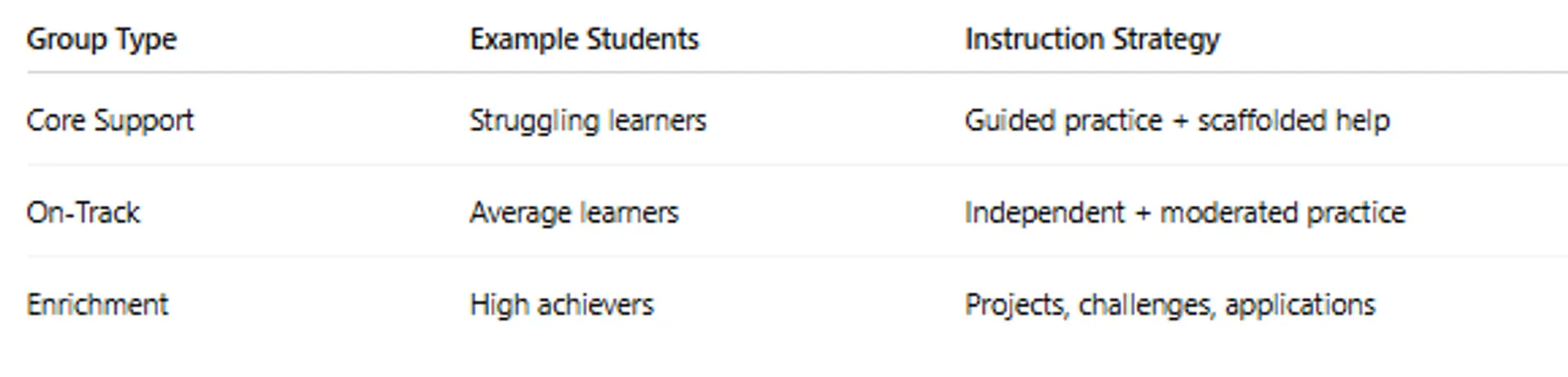
Step 4: Group Students Strategically
Small groups might include:
Step 5: Monitor & Adjust Weekly
Never allow learning paths to run on “auto-pilot.”
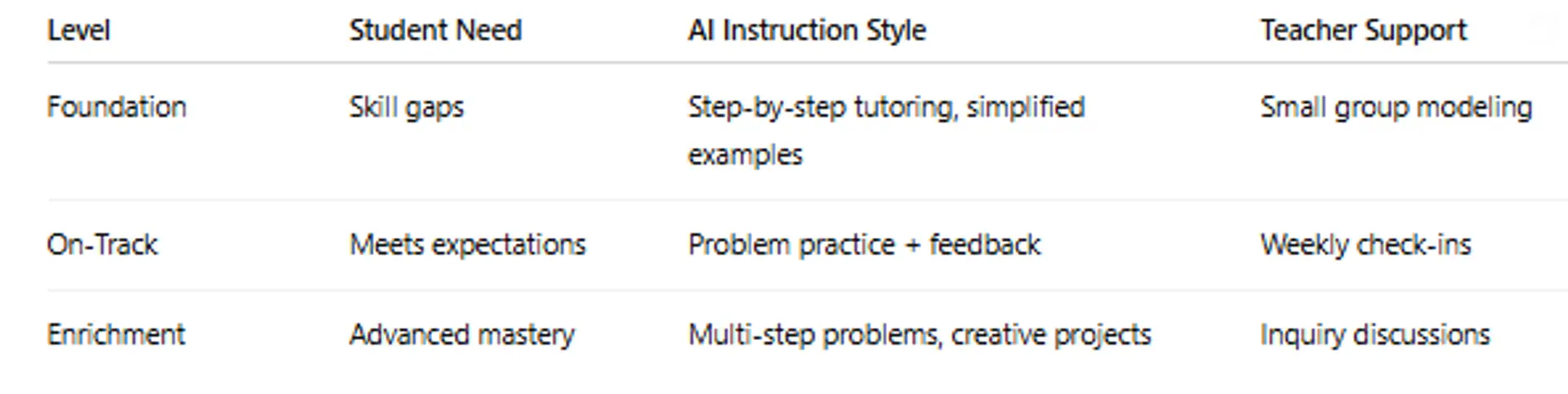
5. Example Learning Path Structure
6. Best Practices
- Start with one subject (math or reading works best).
- Set clear expectations for student accountability and pacing.
- Combine AI time with reflection journals (e.g., “What did I learn today?”).
- Celebrate progress — show students their growth data.
7.Supplementary Resources
- What Are AI Personalized Learning Paths For Student Engagement? - Safe AI for The Classroom
- AI-Driven Personalization Drives Emotional Loyalty
- AI in Education: Creating Personalized Learning Paths for Every Student
Lesson 2.3 Quiz — Designing AI-Driven Learning Paths
You must score at least 70% to pass.
This quiz counts toward your certification progress.
Click here for Quiz 2.3:
Conclusion
AI-driven learning paths allow students to progress at the pace that is right for them, ensuring stronger mastery and deeper engagement. However, AI is most effective when guided by teachers who interpret data, build motivation, and support learning with human connection. When balanced correctly, AI personalization leads to more equitable learning experiences and better academic outcomes for all learners.
Next and Previous Lesson
Next: 2.4: Using Data & Analytics to Track Student Progress
Previous: Lesson 2.2: AI Tools for Personalized Learning (Khanmigo, CenturyTech, Squirrel AI)
AI for Educators: Personalized Learning & Content Creation
Related Posts
© 2026 Invastor. All Rights Reserved
User Comments