
Ai Content Generator
Ai Picture
Tell Your Story


 InVastor Academy Professionals
Module 2: Personalized Learning with AI Lesson 2.1: Understanding Personalized Learning and Adaptive Education
Module 2: Personalized Learning with AI
Lesson 2.1: Understanding Personalized Learning and Adaptive Education
Learning Objectives
By the end of this lesson, educators will be able to:
- Define personalized learning and explain how AI enhances it.
- Distinguish between traditional instruction and adaptive learning.
- Identify common AI tools that adjust content, pacing, and feedback for students.
- Explain how AI supports differentiated instruction in diverse classrooms.
- Recognize challenges and considerations when implementing AI-based personalization.
1.What is Personalized Learning?
Personalized learning is an instructional approach where teaching, practice activities, and pacing are tailored to the individual needs, interests, and skill levels of each learner.
Traditionally, teachers attempt personalization through:
- Small-group instruction
- Individualized assignments
- Differentiated worksheets
- One-on-one guidance
However, these methods can be time-intensive, especially in classrooms of 25–60 students.
2. How AI Enhances Personalized Learning
AI supports personalization by analyzing student performance patterns and adjusting:

Key Idea:
AI systems do not teach for the teacher — they extend the teacher’s reach and responsiveness.
3.Adaptive Learning Systems
- Adaptive learning platforms use AI to:
- Identify what students already understand
- Predict where they may struggle
- Adjust activities based on real-time responses
- Provide targeted practice to close gaps
Examples of Adaptive Systems in K–12 and Higher Ed:
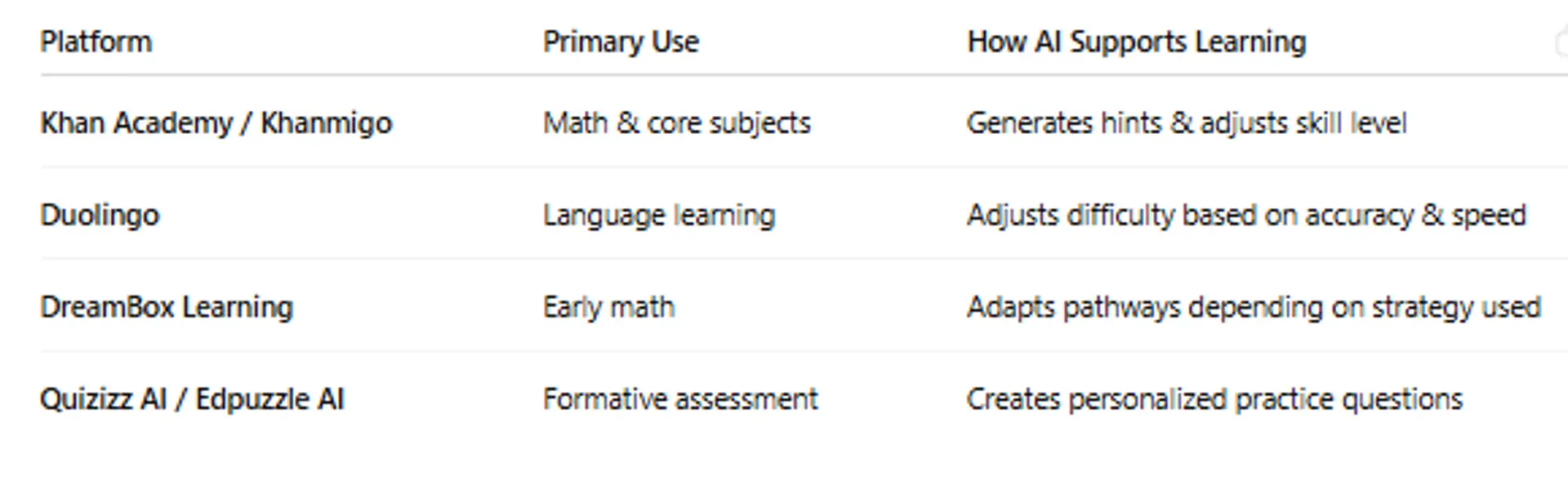
4.Benefits of AI-Driven Personalized Learning
For Students:
- Learners move at a comfortable pace
- Increased confidence from immediate feedback
- More ownership of learning progress
- Enhanced engagement through relevant learning paths
For Teachers:
- Quickly identify who needs remediation or advancement
- Reduce grading, tracking, and diagnostic workload
- Provide targeted small-group or one-on-one support
- Increase time available for meaningful teaching interactions
5.Challenges & Considerations
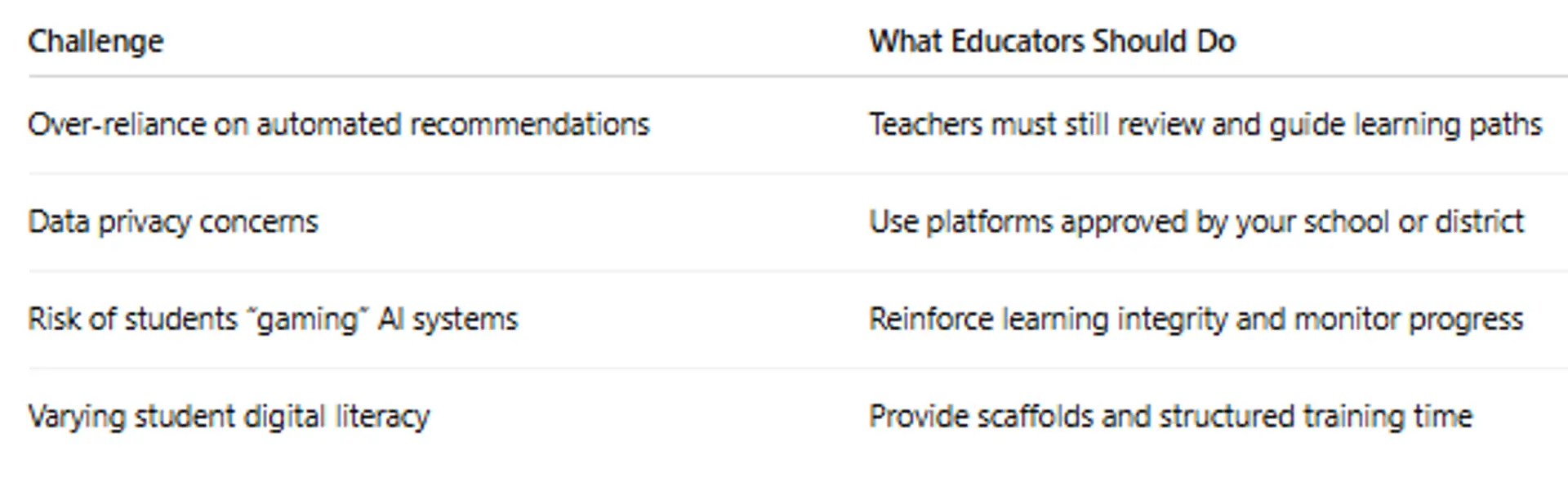
Teacher Oversight Is Still Key
AI can recommend — but teachers decide what is developmentally and contextually appropriate.
6. Key Takeaway
Personalized learning is most powerful when AI tools support — not replace — the educator.
AI helps tailor pace, difficulty, and support for every student, but the teacher remains the instructional leader, ensuring accuracy, empathy, and human connection.
7. Supplementary Resources
- AI in Education: Enhancing Learning Experiences 🔥😎
- How AI is Revolutionizing Education: Personalized Learning to Automated Grading!
- What Is Personalized Learning?
Lesson 2.1 Quiz — Personalized Learning & Adaptive Education
You must score at least 70% to pass.
Click here for Quiz 2.1:
Conclusion
AI makes genuine personalized learning more achievable by helping tailor instruction to each student’s needs in real time. However, successful implementation requires thoughtful guidance from educators who can interpret data, support emotional and social learning, and ensure that AI use remains ethical and meaningful. When balanced well, AI-powered personalization leads to greater student engagement, improved learning outcomes, and more empowered teachers.
Next and Previous Lesson
Next: 2.2: AI Tools for Personalized Learning (Khanmigo, CenturyTech, Squirrel AI)
2.1: Understanding Personalized Learning and Adaptive Education
Previous: Lesson 1.4: Case Studies — AI in Classrooms Around the World
AI for Educators: Personalized Learning & Content Creation
Related Posts
© 2026 Invastor. All Rights Reserved
User Comments