
Ai Content Generator
Ai Picture
Tell Your Story

 InVastor Academy Professionals
Module 1: Introduction to AI in Education Lesson 1.3: The Role of Educators in the AI Era
Module 1: Introduction to AI in Education
Lesson 1.3: The Role of Educators in the AI Era
Learning Objectives
By the end of this lesson, educators will be able to:
- Explain why teachers remain essential even with AI-driven instruction.
- Analyze how teacher responsibilities shift when AI tools are introduced.
- Identify specific classroom tasks where AI is helpful vs. where human judgment is required.
- Model responsible AI engagement for students and promote academic integrity.
- Plan how to integrate AI to enhance — not replace — their teaching practices.
1.The Core Idea: AI Does Not Replace Teachers — It Reinforces Them
AI can support instruction, but human connection is irreplaceable.
AI excels at:
- Processing and retrieving information quickly
- Generating drafts, explanations, and learning materials
- Providing structured feedback on grammar, writing, and problem-solving
- Personalizing practice tasks efficiently
But AI cannot:
- Understand a student’s emotional state, stress, trauma, or motivation
- Know cultural, social, and interpersonal classroom nuances
- Provide deep mentorship, encouragement, or role modeling
- Adapt spontaneously in the moment like a teacher can
- Build trust — the foundation of learning
AI helps students learn concepts.
Teachers help students become learners.
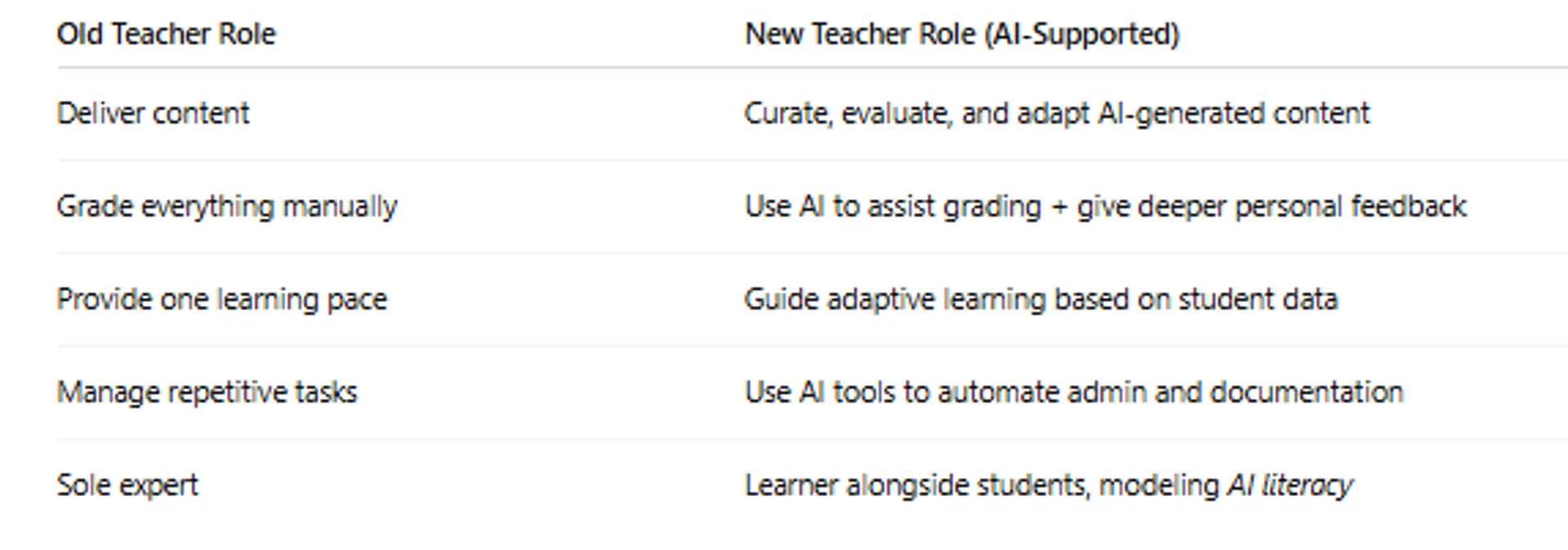
2.How AI Changes the Teacher’s Role
Teachers are shifting from being information deliverers to being:
- Learning Designers
- Coaches
- Facilitators
- Human role models
- Critical thinking mentors
This shift mirrors broader educational changes:
- Less lecturing
- More interactive, inquiry-based learning
- More individualized student pathways
- More feedback-driven growth cycles
3. Practical Examples: How Teachers + AI Work Together
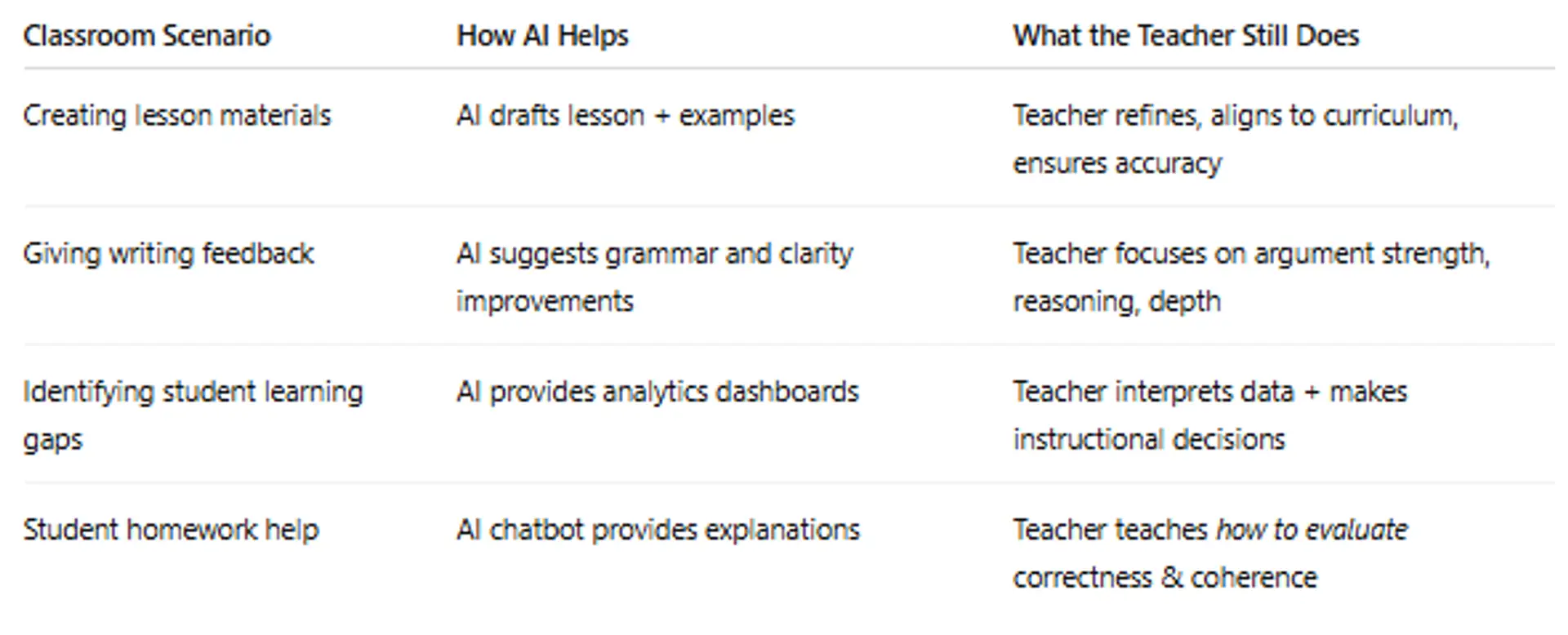
AI saves time, but teachers make meaning.
4. Teaching Students How to Use AI Responsibly
Students must learn:
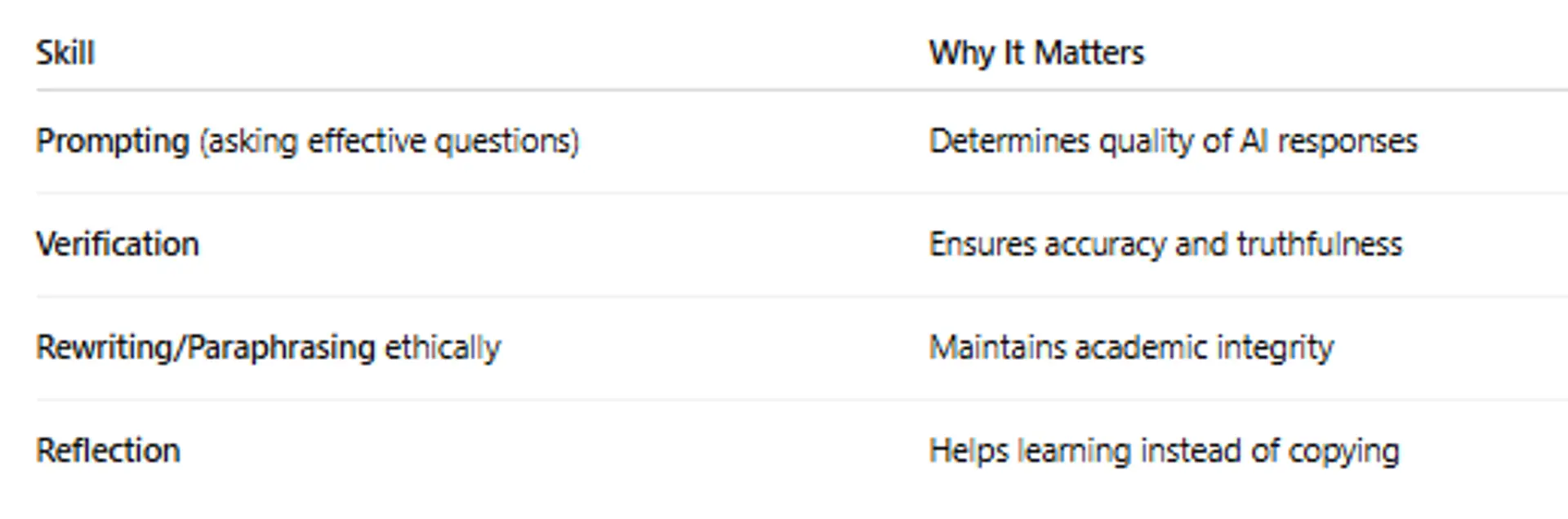
Responsible use sentence we encourage students to learn:
“AI helps me think, but it does not think for me.”
5.The Teacher’s Human Advantage: Social & Emotional Learning
No AI can replace:
- Encouragement during frustration
- Compassion and emotional attunement
- Cultural awareness and humor
- Classroom community-building
- Real-world wisdom
Research shows:
Students learn more effectively when they feel emotionally supported and personally connected to their teacher.
This is the human core of teaching — irreplaceable and essential.
Key Takeaway
AI amplifies what teachers do — it does not diminish their importance.
The teacher becomes the expert guide leading students in how to think, how to evaluate information, and how to use AI responsibly and ethically.
Supplementary Resources
- How to Use AI in the Classroom
- Effect of Artificial Intelligence on Education | Adrien Dubois | TEDxCanadianIntlSchool
- No teachers, no homework: School solely uses AI to teach students
Lesson 1.3 Quiz — The Role of Educators in the AI Era
You must score at least 70% to pass.
Click here for Quiz 1.3:
Conclusion
The future of education is not AI instead of teachers — it is teachers empowered by AI.
Educators remain the emotional anchors, ethical guides, and learning architects who help students grow into capable, thoughtful, and human-centered learners.
Next and Previous Lesson
Next: lesson 1.4: Case Studies: AI in Classrooms Around the World
Previous: Lesson 1.2: Overview of AI Applications in Teaching and Learning
AI for Educators: Personalized Learning & Content Creation
Related Posts
© 2026 Invastor. All Rights Reserved
User Comments