
Ai Content Generator
Ai Picture
Tell Your Story

 InVastor Academy Professionals
Module 1: Introduction to AI in Education Lesson 1.2: Overview of AI Applications in Teaching and Learning
Module 1: Introduction to AI in Education
Lesson 1.2: Overview of AI Applications in Teaching and Learning
Learning Objectives
By the end of this lesson, educators will be able to:
- Identify the major categories of AI tools used in education today.
- Understand how AI supports instructional design, assessment, and student support.
- Differentiate between generative AI, adaptive learning AI, and automation tools.
- Recognize the practical classroom uses of AI in real teaching contexts.
- Evaluate which AI applications align with their teaching needs and subjects.
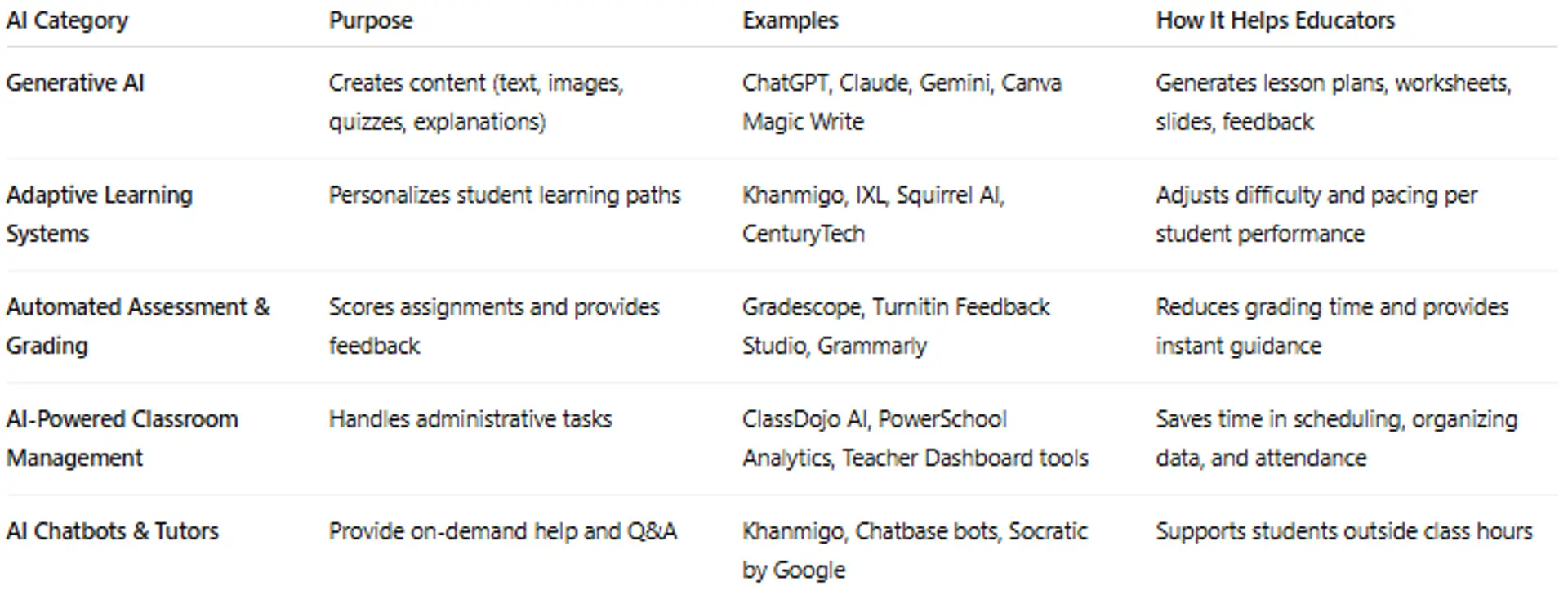
1. Categories of AI Used in Education
2. Generative AI in Lesson Planning and Content Creation
Generative AI tools can:
- Produce lesson plans, unit outlines, and differentiated tasks
- Generate examples, explanations, and analogies tailored to student levels
- Create visual and multimedia teaching aids (slides, posters, videos)
Important: Educators should review, edit, and align outputs to curriculum goals.
3. Adaptive Learning AI and Personalized Instruction
Adaptive platforms adjust based on:
- Student performance
- Learning style
- Timing and pace of progress
Benefits:
- Enables differentiation without creating separate resources manually
- Provides data insights on mastery and struggles
Challenge:
- Teachers must interpret dashboard data, not rely blindly on system recommendations.
4.AI for Assessment, Feedback & Academic Integrity
AI can:
- Evaluate grammar, structure, and clarity
- Provide quick feedback cycles to students
- Detect plagiarism and AI-generated writing
Tools:
- Turnitin / GPTZero / Copyleaks for AI detection
- Grammarly / Sapling for writing support
- Gradescope for quiz and exam scoring efficiency
The goal is to make feedback faster and more personalized, not eliminate teacher judgment.
5.AI Chatbots and On-Demand Tutoring
Chatbots can act as:
- Homework helpers
- Practice coaches
- Clarification tools
They are available:
- 24/7
- Without classroom time constraints
Teacher role:
- Ensure students understand, not just copy chatbot answers.
6. Key Takeaway
AI tools vary in purpose and capability.
Effective educators choose the right tool for the right goal — and always apply professional judgment to guide and verify the AI’s support.
7.Supplementary Resources
How AI Could Save (Not Destroy) Education | Sal Khan | TED
AI In Education: Personalized Learning And Intelligent Tutoring Systems
What Is Generative AI’s Role In Educational Content Creation? - AI SaaS Software Explained
Lesson 1.2 Quiz — Overview of AI Applications in Education
You must score at least 70% to pass.
Click here for Quiz 1.2:
Conclusion
AI in education is most powerful when used strategically. By selecting the right tools for specific teaching goals, educators can enhance learning, support differentiation, and reduce workload — while maintaining professional judgment and instructional leadership.
Next and Previous Lesson
Next: lesson 1.3: The Role of Educators in the AI Era
Previous: Lesson 1.1: What is Artificial Intelligence and How It’s Changing Education
Learning Objectives
AI for Educators: Personalized Learning & Content Creation
Related Posts
© 2026 Invastor. All Rights Reserved
User Comments