
Ai Content Generator
Ai Picture
Tell Your Story

 InVastor Academy Professionals
Module 1: Introduction to AI in Education Lesson 1.1: What is Artificial Intelligence and How It’s Changing Education
Module 1: Introduction to AI in Education
Lesson 1.1: What is Artificial Intelligence and How It’s Changing Education
Learning Objectives
By the end of this lesson, educators will be able to:
- Define artificial intelligence (AI) in simple, education-relevant terms.
- Describe how AI differs from traditional educational technologies.
- Identify current, real-world uses of AI in teaching and learning environments.
- Explain the potential benefits of AI for instructional efficiency and student support.
- Recognize challenges and ethical considerations when implementing AI in schools.
1. What is Artificial Intelligence (AI)?
Artificial Intelligence refers to computer systems that perform tasks that normally require human intelligence, such as:
- Understanding or generating language
- Recognizing patterns
- Making predictions
- Providing recommendations or feedback
AI does not think like a human — it uses patterns in data to generate responses or decisions.
In education, AI is best understood as a tool that assists teachers, not a replacement for them.
AI = Augmented Teaching, Not Teacher Replacement.
2. How AI Differs from Traditional Educational Technology
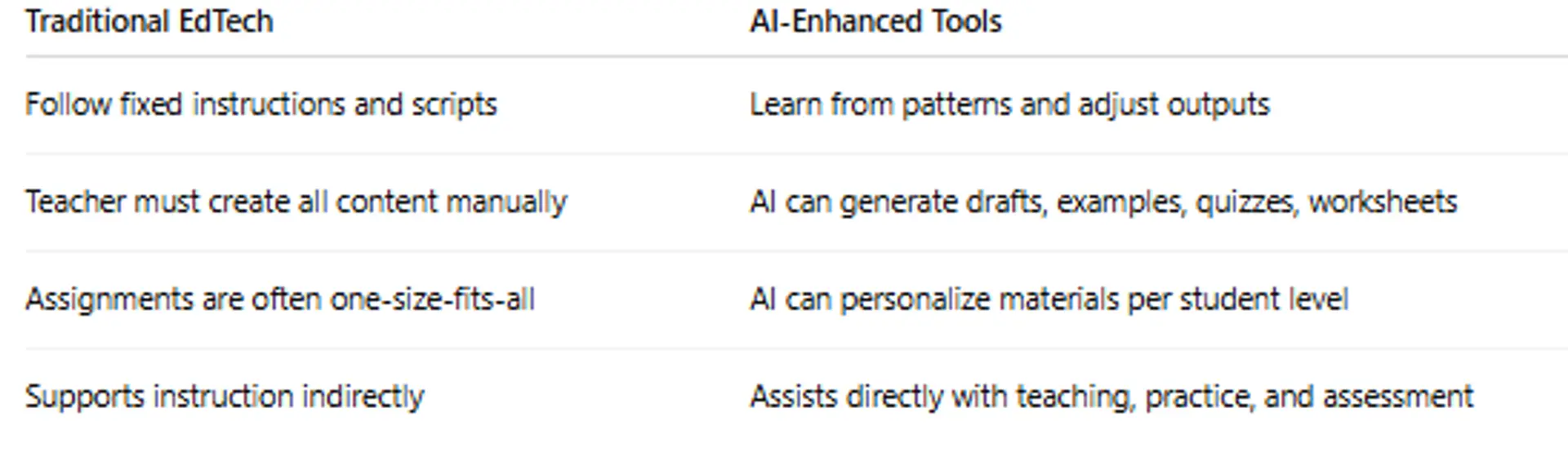
Example:
Google Docs is traditional tech → ChatGPT/Grammarly are AI-enhanced writing assistants.
3.How AI is Changing Education Today
AI is already integrated into many widely-used educational activities:

AI makes teaching more efficient, freeing time for human-centered instruction like discussion, mentoring, and relationship-building.
4. Benefits of AI in Education
- Reduces teacher burnout by decreasing repetitive workload
- Generates content quickly (lesson plans, activities, assessments)
- Personalized learning pathways for students with varied needs
- Provides immediate feedback to students for practice
- Allows more time for connection, creativity, and critical thinking
5. Challenges & Ethical Considerations
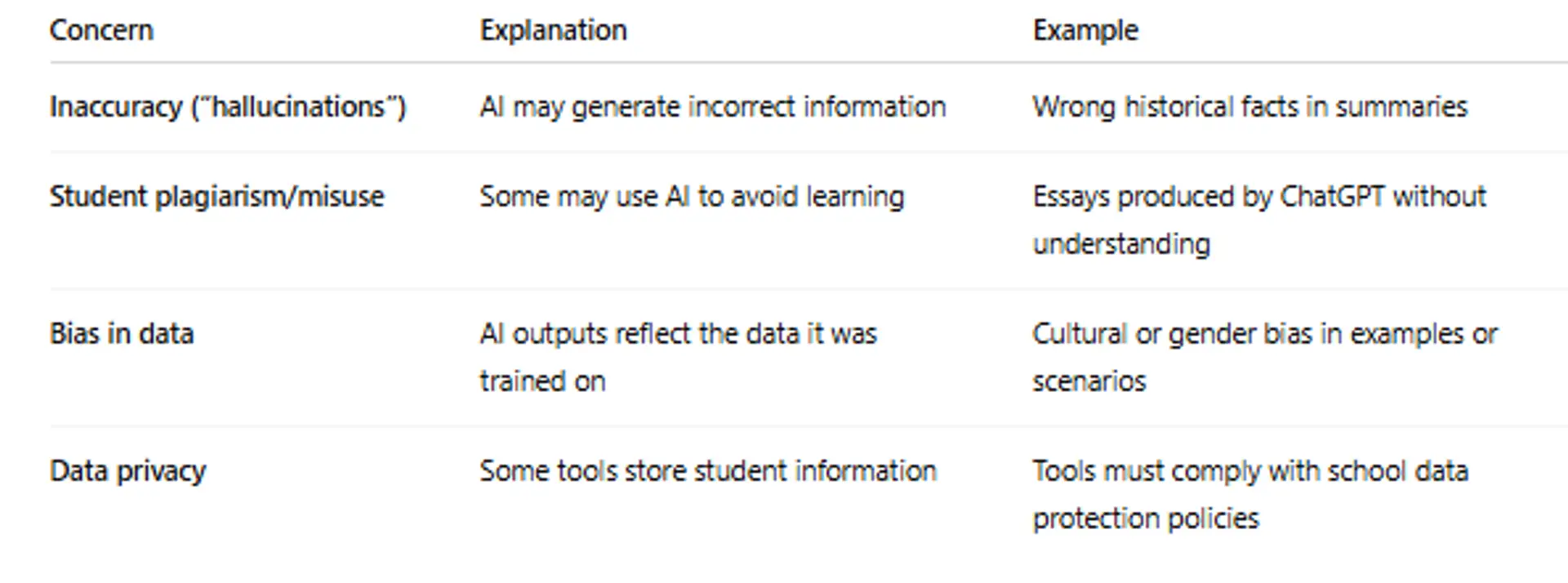
Teacher responsibility:
Always review AI output, and teach students ethical use — not blind reliance.
6.Key Takeaway
AI is a powerful educational partner when used intentionally.
It enhances teaching — but educators remain the decision-makers who ensure accuracy, fairness, and learning integrity.
7.Supplementary Resources
- Khanmigo for teachers
- What Is AI? | Artificial Intelligence | What is Artificial Intelligence? |
- How is artificial intelligence (AI) used in education?
Lesson 1.1 Quiz — What is AI and How It’s Changing Education
You must score at least 70% to pass.
Click here for Quiz 1.1:
Conclusion
Artificial Intelligence is transforming education by offering new ways to personalize learning, streamline teacher workloads, and support students with real-time guidance. However, AI is a tool — not a replacement for the educator. Effective use depends on thoughtful application, verification of AI-generated content, and teaching students how to engage with AI ethically and responsibly. When guided by a skilled educator, AI can enhance learning and help create more meaningful, student-centered classrooms.
Next and Previous Lesson
Next: lesson 1.2: Overview of AI Applications in Teaching and Learning
AI for Educators: Personalized Learning & Content Creation
Related Posts
© 2026 Invastor. All Rights Reserved
User Comments