
Ai Content Generator
Ai Picture
Tell Your Story


 InVastor Academy - (InVastor)
Module 6: Integration, Firm Governance, and Future Developments Lesson 6.2: Drafting AI Use Policies and Client
Module 6: Integration, Firm Governance, and Future Developments
Lesson 6.2: Drafting AI Use Policies and Client Disclosures
Learning Objectives
- Draft an internal firm-wide AI Use Policy aligned with ethical and regulatory requirements.
- Identify when client disclosure is mandatory vs. optional.
- Apply data protection and confidentiality safeguards in AI-assisted legal work.
- Implement client consent language and workflow checklists to reduce professional risk.
- Understand how to maintain trust and transparency when using AI in legal practice.
1. Why AI Use Policies Are Necessary in Law Firms
AI can dramatically improve:
- Research efficiency
- Drafting speed
- Document review accuracy
- Case strategy modeling
But it also introduces risks:
- Inaccurate or fabricated legal content (AI hallucinations)
- Exposure of confidential or privileged client information
- Algorithmic bias influencing interpretation or assessment
- Loss of client trust if they discover undisclosed AI use
A written AI Use Policy prevents these risks by establishing clear rules for how, when, and why AI may be used.
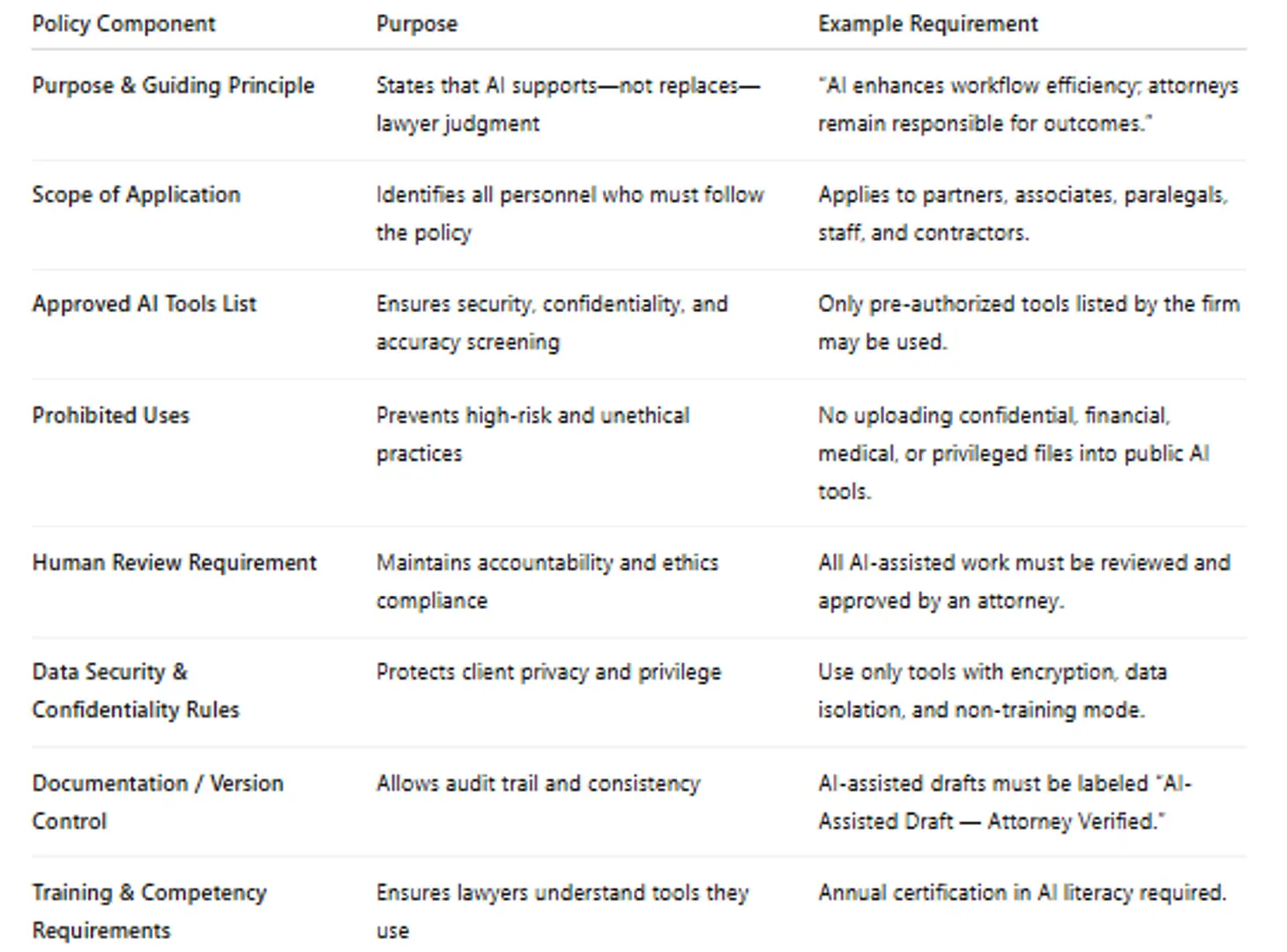
2. Core Structure of a Firm AI Use Policy
A strong policy includes the following sections:
3.Sample AI Use Policy Language (Customizable)
“AI tools may be used to assist in document drafting, legal research, summarization, and internal analysis. However, AI-generated content is considered preliminary output and must not be relied upon without attorney verification. Attorneys retain full responsibility for the accuracy, validity, and strategic application of all AI-assisted work.”
“No confidential, proprietary, privileged, or client-identifying information may be input into any AI tool unless the tool has been approved by the firm for secure data handling and the user has confirmation that data is not stored for future training.”
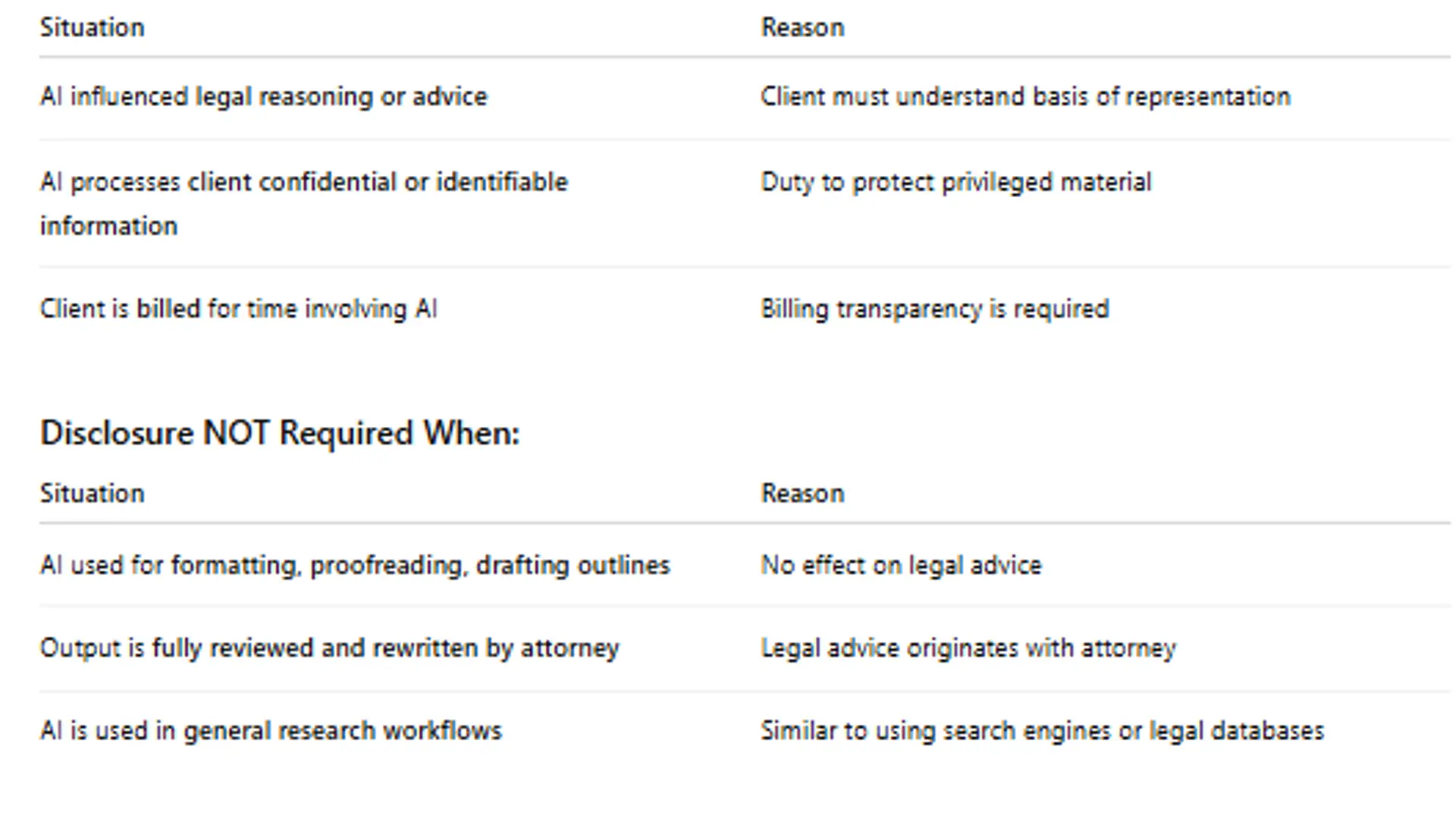
4. Client Disclosure Requirements
Disclosure IS Required When:
5.Client Disclosure Templates
General Disclosure (Safe to Use Broadly)
“Our firm uses secure artificial intelligence tools to support legal research, drafting, and internal workflow efficiency. All work products are reviewed and approved by a licensed attorney. AI tools do not replace legal judgment or decision-making.”
Disclosure When Client Data Is Involved
“Certain client information may be processed through AI platforms that meet firm-approved confidentiality and data security standards. Your information will not be used to train public models. You may request that we avoid AI-assisted processing at any time.”
Client Consent Checkbox Text (for intake)
[ ] I acknowledge that the firm may use secure AI tools to assist in legal work, and that all output will be reviewed and approved by a licensed attorney.
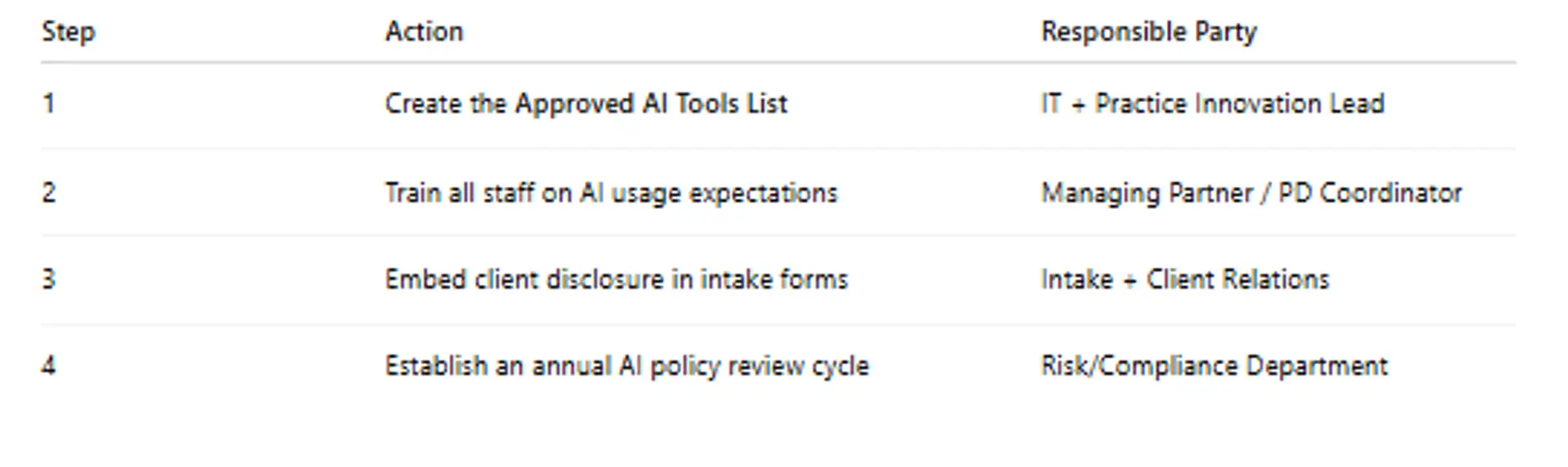
6. Implementation Steps for Firms
To effectively operationalize this policy:
7.Supplementary Resources
Videos:
- AI Governance for Law Firms
- Why Is Ethical AI Crucial For HR And Legal Tech? - Legal And HR SaaS Stack
- You Ask, I Answer: Keeping Data Confidential with ChatGPT?
Lesson 6.2 Quiz
Drafting AI Use Policies and Client Disclosures
Please complete this quiz to check your understanding of Lesson 6.2.
You must score at least 70% to pass.
This quiz counts toward your final certification progress.
Click here for Quiz 6.2
Conclusion
An AI use policy defines how AI can be used safely and ethically in legal practice. Clear disclosure strengthens client trust, ensures compliance with professional duties, and reinforces that attorneys—not AI—remain responsible for legal decisions.
Next and Previous Lesson
Lesson 6.3: Preparing for Next-Generation Legal AI Tools
Previous: Lesson 6.1: Implementing AI in Individual and Firm Practices
Course 3 -Mastering AI and ChatGPT for Legal Practice — From Fundamentals to Advanced Research and Ethical Use
Related Posts
© 2025 Invastor. All Rights Reserved
User Comments