
Ai Content Generator
Ai Picture
Tell Your Story

 InVastor Academy - (InVastor)
Module 4: AI-Supported Legal Drafting Lesson 4.1: AI-Assisted Memoranda and Brief Writing
Module 4: AI-Supported Legal Drafting
Lesson 4.1: AI-Assisted Memoranda and Brief Writing
Learning Objectives
- Understand how AI assists in drafting legal memoranda and briefs
- Develop clear instructions (prompts) for structured legal writing
- Integrate legal sources, case holdings, and statutes properly when drafting
- Maintain ethical and professional obligations while using AI
- Review, edit, and finalize AI-generated drafts effectively
1. Purpose of AI in Legal Drafting
AI enhances efficiency by supporting attorneys in generating drafts, organizing information, summarizing case law, and structuring arguments. However, AI does not replace the lawyer.
The attorney must:
- Provide the correct facts
- Insert the correct legal authorities
- Review and verify all citations
- Maintain professional judgment
AI assists — it does not interpret the law or guarantee accuracy.
2. Legal Memorandum vs. Legal Brief
Understanding the difference determines how prompts should be structured.
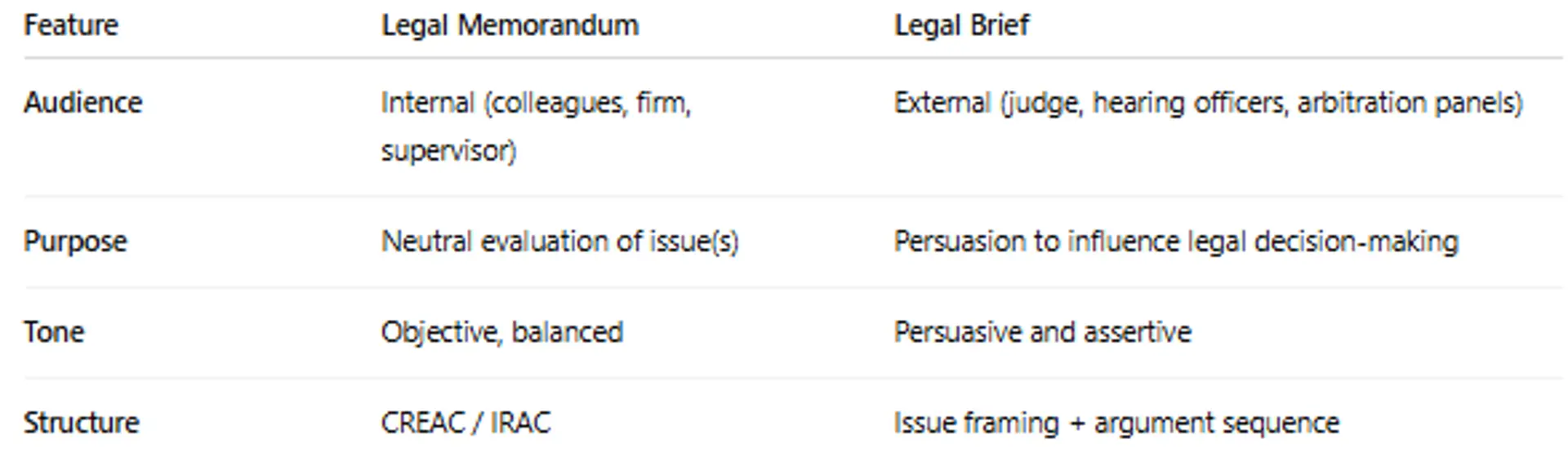
Key takeaway:
- Memo = Analyze
- Brief = Persuade
3. Standard Structure for a Legal Memorandum (CREAC Method)
CREAC stands for:
- Conclusion (short answer to the issue)
- Rule (relevant legal principles)
- Explanation (explain rule elements or standards)
- Application (apply rule to facts using reasoning)
- Conclusion (restate outcome)
AI can format text into CREAC if instructed to, e.g.:
Using CREAC, write a neutral legal memorandum addressing the issue of whether [Issue] based on the following facts…
4. Standard Structure for a Legal Brief
A persuasive brief contains:
- Statement of the Issue
- Statement of Facts (favorable to your client’s narrative)
- Argument Section
- Conclusion / Requested Relief
Prompts for briefs should emphasize tone and persuasion, e.g.:
Draft a persuasive argument supporting the position that [Your Client’s Position] using the legal authorities provided below. Highlight the strongest reasoning and counter opposing arguments.
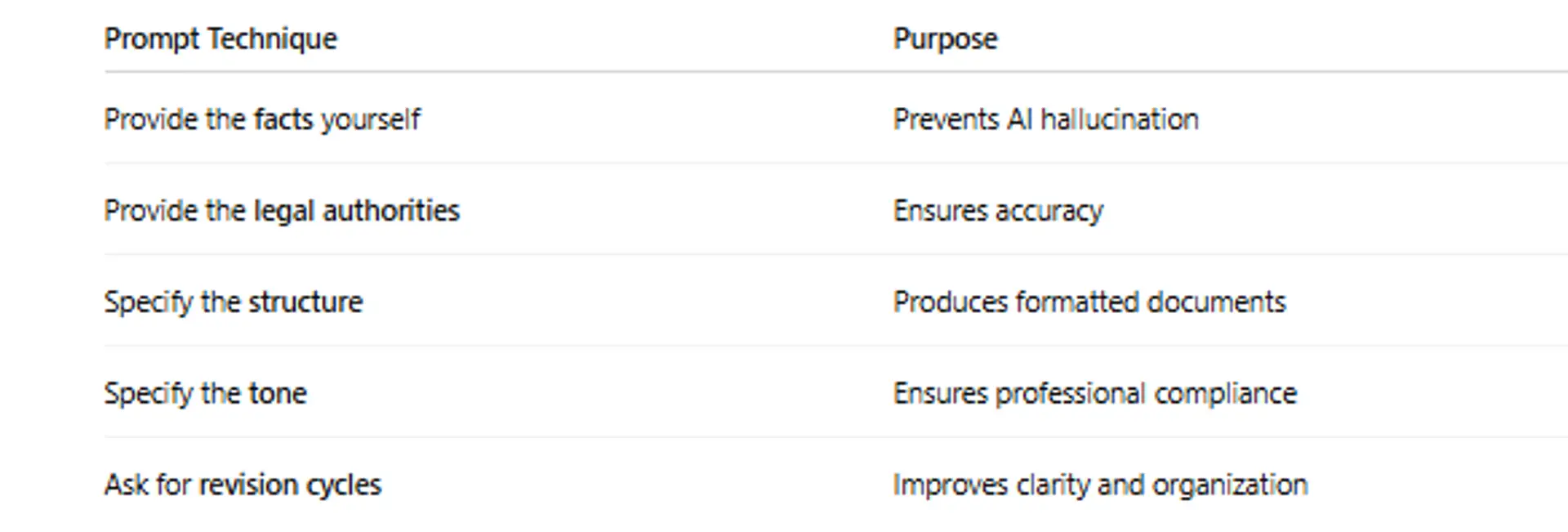
5. Key Prompting Techniques for Legal Drafting
6. Example Memorandum Prompt
Draft a neutral legal memorandum using CREAC format.
Facts:
[Insert key facts]
Legal Issue:
[State issue clearly]
Authorities to Use:
- [Case 1]
- [Case 2]
- [Statute or Rule]
Tone: objective, analytical.
Do not invent new cases.
7. Example Legal Brief Prompt
Draft a persuasive legal brief arguing that [Client Position].
Statement of Facts:
[Insert facts]
Authorities to Reference:
[List only cases and statutes you provide]
Tone: professional and assertive.
Do not fabricate citations.
8.Supplementary Learning Resources
Video Lesson:
- How to Write Legal Memos and Briefs (Clear Example)
- How to Write a Memo
- Memorandum | How to write a Memorandum | Memorandum vs Letter | Example | Exercise | Business Memo
Lesson 4.1 Quiz
AI-Assisted Memoranda and Brief Writing
Please complete this quiz to check your understanding of Lesson 4.1.
You must score at least 70% to pass.
This quiz counts toward your certification progress.
Click here for Quiz 4.1
Conclusion
AI streamlines the drafting of legal memoranda and briefs, helping lawyers generate structured arguments and well-organized analysis quickly. However, AI cannot replace professional judgment or legal verification. The lawyer must always review, confirm, and finalize all outputs. When used responsibly, AI becomes a powerful tool to elevate clarity, efficiency, and legal writing quality.
Next and Previous Lesson
Lesson 4.2: Contract Drafting, Analysis, and Revision
Previous : Lesson 3.3 – Using AI with Legal Databases (Lexis, Westlaw, Bloomberg)
Related Posts
© 2025 Invastor. All Rights Reserved
User Comments