
Ai Content Generator
Ai Picture
Tell Your Story

 InVastor Academy - (InVastor)
Module 3:egal Research and Case Law Verification Lesson 3.3 – Using AI with Legal Databases (Lexis, Westlaw, Bloomberg)
Module 3: Legal Research and Case Law Verification Lesson 3.3 – Using AI with Legal Databases (Lexis, Westlaw, Bloomberg)
Learning Objectives
- Understand how AI complements but does not replace professional legal research platforms.
- Use AI to improve search efficiency, organization, and summarization within legal databases.
- Apply structured workflows combining AI with Lexis, Westlaw, and Bloomberg Law.
- Validate cases, statutes, and secondary sources using authoritative tools.
- Maintain ethical and confidentiality standards while conducting AI-assisted research.
High-quality legal research requires authoritative sources. While AI can summarize, suggest search strategies, and compare arguments, it is not a primary legal research database.
Professional legal platforms remain the standard for reliable legal authority.
The recommended research model is:
AI for thinking and organizing — Legal Databases for authority and verification
This lesson explains how AI integrates alongside leading research platforms.
1. Why AI Alone Is Not Enough for Legal Research
AI cannot:
- Confirm if a case is still good law.
- Identify controlling precedent by jurisdiction.
- Provide official, citable reporter references.
- Access proprietary case law databases (Westlaw, Lexis, Bloomberg).
Thus, AI supports research, but final research must be done in legal databases.
2.Strengths of AI in the Research Workflow
AI works best for:
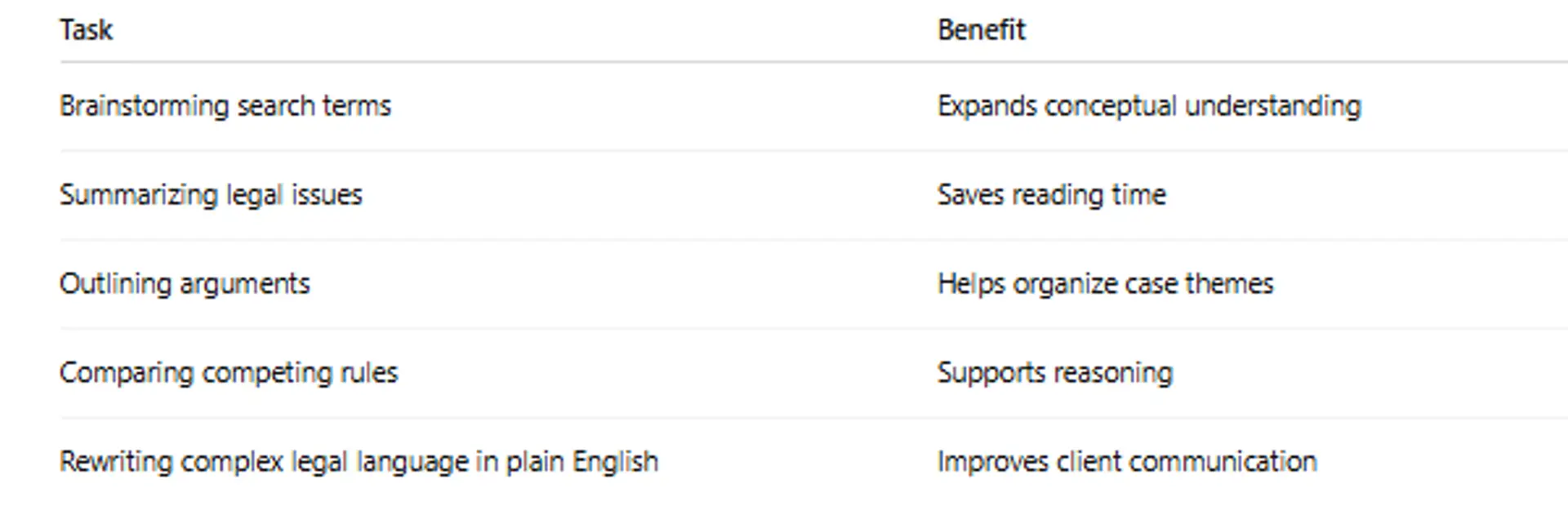
AI should be used at the beginning and middle phases of research—not for final authority.
3. Using AI with LexisNexis
Lexis provides:
- Case law search with jurisdiction filters
- Shepard’s citation system (for case validity)
- Secondary sources such as treatises & law reviews
Recommended Workflow:
- Use AI to generate search phrases and issue statements.
- Input refined terms into Lexis with jurisdiction filters.
- Shepardize selected cases to confirm good law.
- Use AI to summarize holdings, themes, and conflicts.
Example Prompt to AI:
“List key phrases and search terms to use in Lexis for wrongful termination based on implied contract under California law.”
Then refine results manually in Lexis.
4.Using AI with Westlaw
Westlaw offers:
- KeyCite for legal validity
- West Key Number System (topic classification)
- Court-level and publication status sorting
Workflow Integration:
- Use AI to outline legal issues and sub-issues.
- Search cases in Westlaw using Key Number categories.
- Use KeyCite to validate each case and view treatment.
- Request AI to explain the reasoning in simpler language.
Example Prompt to AI:
“Summarize the legal rationale in [Case Name] in plain English without altering meaning.”
The LAW remains from Westlaw. The LANGUAGE support comes from AI.
5. Using AI with Bloomberg Law
Bloomberg Law is strong in:
- Dockets and filings
- Business litigation analytics
- Corporate and regulatory materials
Workflow Example:
- Locate real documents in Bloomberg dockets.
- Ask AI to extract structure, issues, tone, and persuasion patterns.
- Never input confidential matter into AI — anonymize details first.
6. Confidentiality Rules Still Apply
When using AI:
Do not input:
- Client names
- Strategy discussions
- Financial or medical records
- Privileged communications
Instead, anonymize:

Enterprise AI solutions (private, encrypted) are recommended for sensitive material.
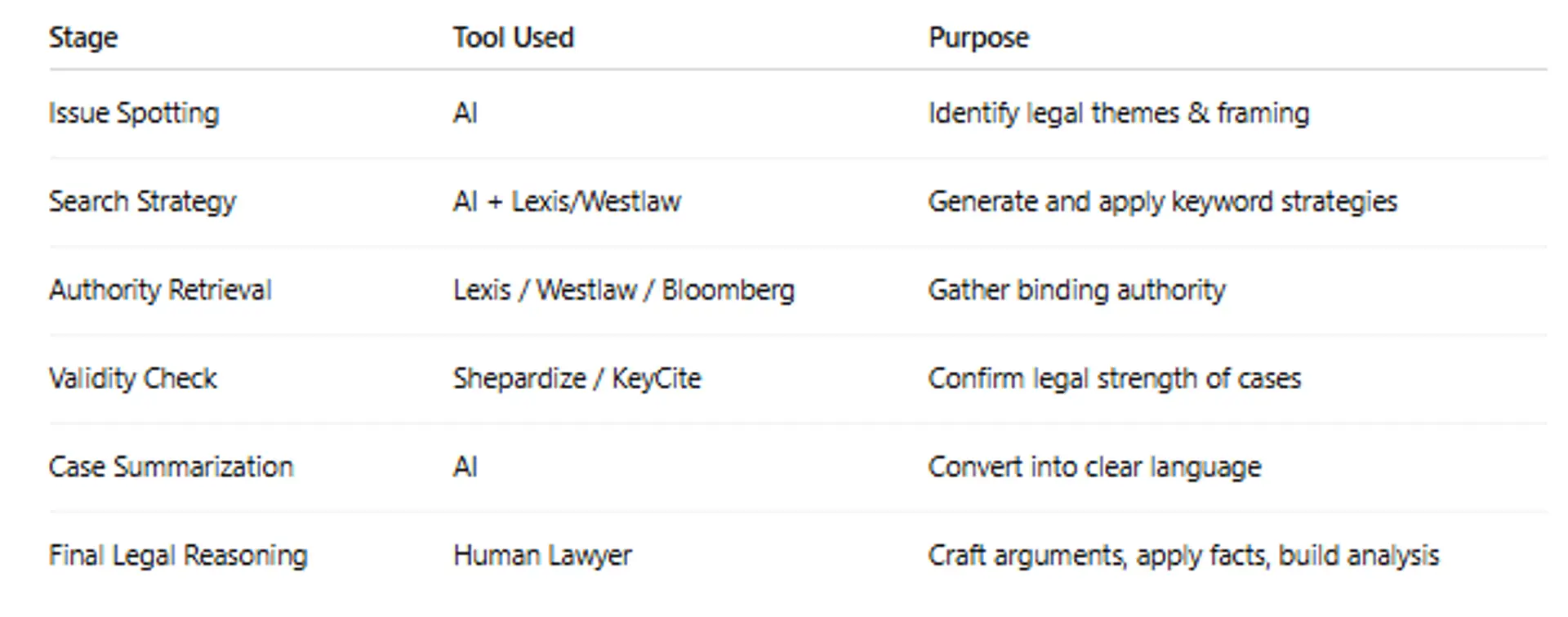
7. Combining AI and Legal Databases: Model Workflow
8.When AI Should Not Be Used in Research
Avoid AI when:
- Case strategy is being developed privately.
- Law is unsettled and needs precedent comparison.
- Documents are near filing stage.
- Legal interpretation is fact-specific and precedent-sensitive.
Final reasoning must remain attorney-led.
9.Supplementary Learning Resource
Video:
- How to Use Westlaw & LexisNexis for Case Law Verification
- Finding Sources in Bloomberg Law, Lexis Advance and WestlawNext
- How Do I Access Legal Databases? - Law School Prep Hub
Lesson 3.3 Quiz
Using AI with Legal Databases (Lexis, Westlaw, Bloomberg)
Please complete this quiz to check your understanding of Lesson 3.3. You must score at least 70% to pass this lesson quiz. This quiz counts toward your final certification progress.
Click here for Quiz 3.3
Conclusion
AI enhances speed, clarity, and research planning — but legal databases remain the controlling authority.
The lawyer must:
- Verify law independently
- Maintain confidentiality
- Apply professional reasoning
- Rely on authoritative research platforms
AI assists thinking. Legal databases confirm truth. The lawyer ensures accuracy.
Next and Previous Lesson
Module 4: AI-Supported Legal Drafting
Lesson 4.1: AI-Assisted Memoranda and Brief Writing
Previous :Lesson 3.2: Verifying Case Citations and Detecting Fake Case Law
Related Posts
© 2025 Invastor. All Rights Reserved
User Comments