
All
Ai Content Generator
Ai Picture
Tell Your Story

 InVastor Ai
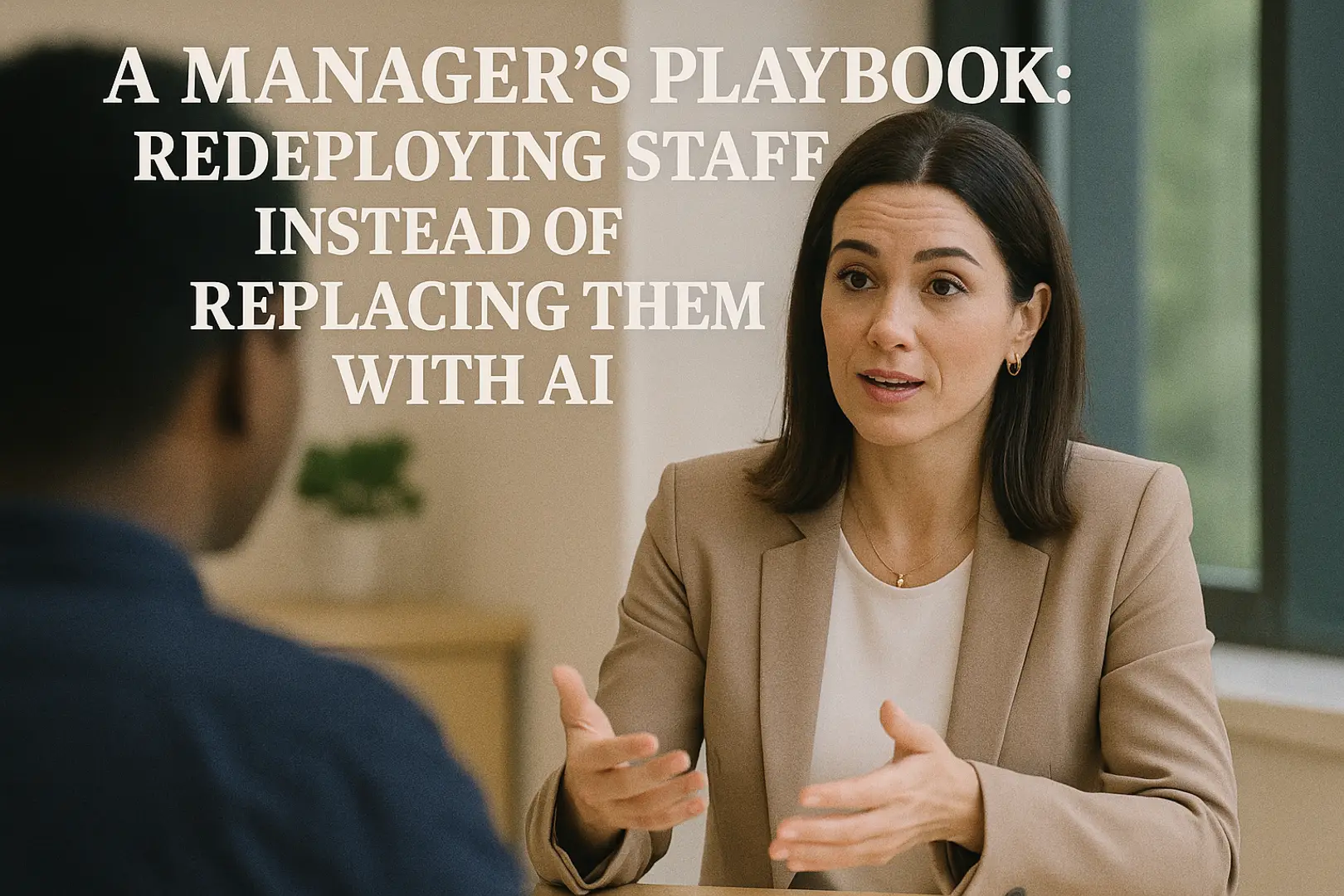
A Manager’s Playbook: Redeploying Staff Instead of Replacing Them with AI
A Manager’s Playbook: Redeploying Staff Instead of Replacing Them with AI
As artificial intelligence reshapes the workplace, many leaders face a critical question:
Should we replace roles with AI — or redeploy and reskill the people we already have?
The short-term temptation is clear: automation promises faster results and lower costs.
But smart organizations are realizing that redeploying and reskilling existing staff creates long-term value — stronger loyalty, smoother transitions, and more resilient teams.
Here’s your playbook for navigating the shift — with real-world examples and data that make a strong business case for redeployment over replacement.
Why Reskilling Beats Replacing
AI can handle repetitive tasks — but it can’t replicate context, judgment, or trust.
Companies that move too quickly to replace staff often discover that productivity gains are offset by hidden costs:
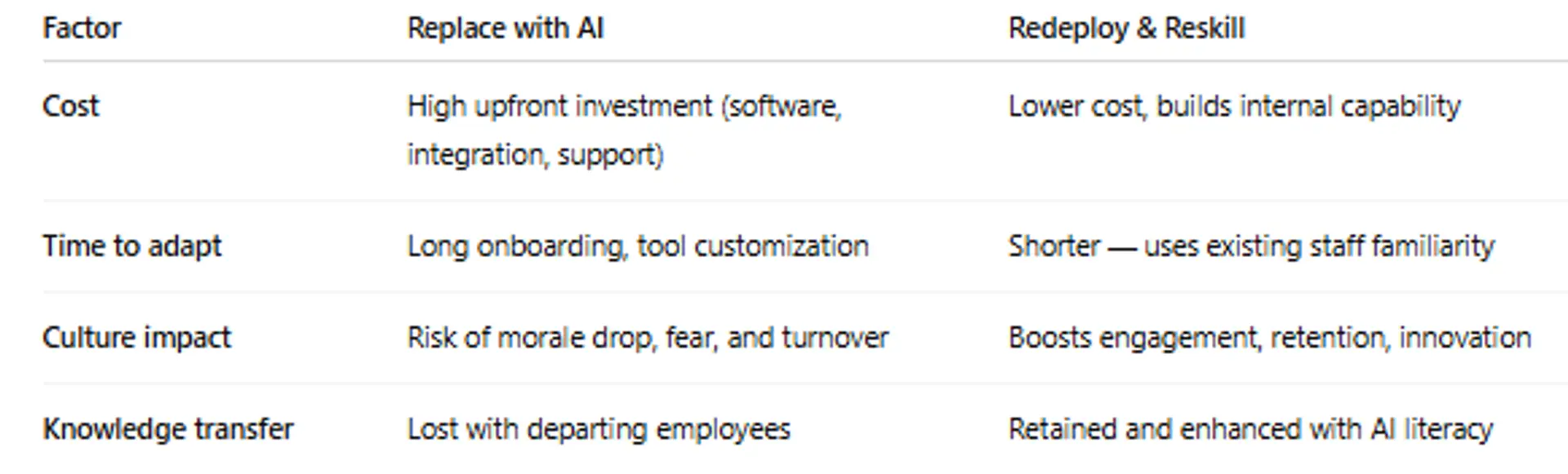
According to the World Economic Forum, reskilling existing employees costs one-third less than hiring new ones — and can deliver a 30% boost in team productivity.
Case Study 1: IBM’s “SkillsBuild” Initiative
When IBM saw automation reducing demand for some tech roles, they launched SkillsBuild, an internal reskilling platform that helped employees move into AI, cybersecurity, and cloud computing positions.
- Result: Over 400,000 workers globally were retrained.
- Impact: IBM reduced recruitment costs and preserved decades of institutional expertise.
- Lesson: Reskilling isn’t just HR strategy — it’s business continuity.

Case Study 2: AT&T’s Workforce 2020
Faced with digital disruption, AT&T chose transformation over layoffs. The company invested $1 billion in retraining programs for 100,000 employees.
- Employees were offered AI-driven learning paths aligned with future company roles.
- The program helped cut voluntary turnover by 40%.
- Many workers transitioned from outdated technical roles to data science, software, and analytics.
“It’s cheaper to reskill a current employee than to hire and train a new one,” said AT&T’s former CEO, Randall Stephenson.
“And it builds a culture that embraces change instead of fearing it.”

Case Study 3: Amazon’s “Career Choice” Program
Amazon’s Career Choice initiative allows employees to learn new skills — even outside the company’s immediate needs. They can train in IT, healthcare, or technical services with up to 95% tuition coverage.
- Thousands of warehouse workers have since transitioned into technical or managerial roles.
- The company retains valuable experience while empowering workers to grow.
Takeaway: Even in automation-heavy environments, people-first planning pays off in brand trust and internal innovation.

The Manager’s Step-by-Step Redeployment Framework
Here’s a simple structure any organization can follow:
1️⃣ Audit Skills and Tasks
Identify repetitive tasks suited for automation.
Map which employee roles could shift toward strategy, analytics, or AI supervision.
2️⃣ Open Transparent Conversations
Communicate early about AI integration plans.
Invite feedback: “How do you see your role evolving with these tools?”
3️⃣ Launch Targeted Learning Tracks
Partner with learning platforms (Coursera, LinkedIn Learning, Udemy).
Offer micro-credentials or certifications aligned with your future business goals.
4️⃣ Pilot AI + Human Collaboration
Assign small cross-functional teams to test new workflows.
Measure outcomes — efficiency, satisfaction, and quality — before scaling.
5️⃣ Celebrate Early Adopters
Highlight employees who embraced AI tools successfully.
Recognition motivates others to reskill and contribute.
Cost Comparison: Replace vs Reskill (Per 100 Employees)
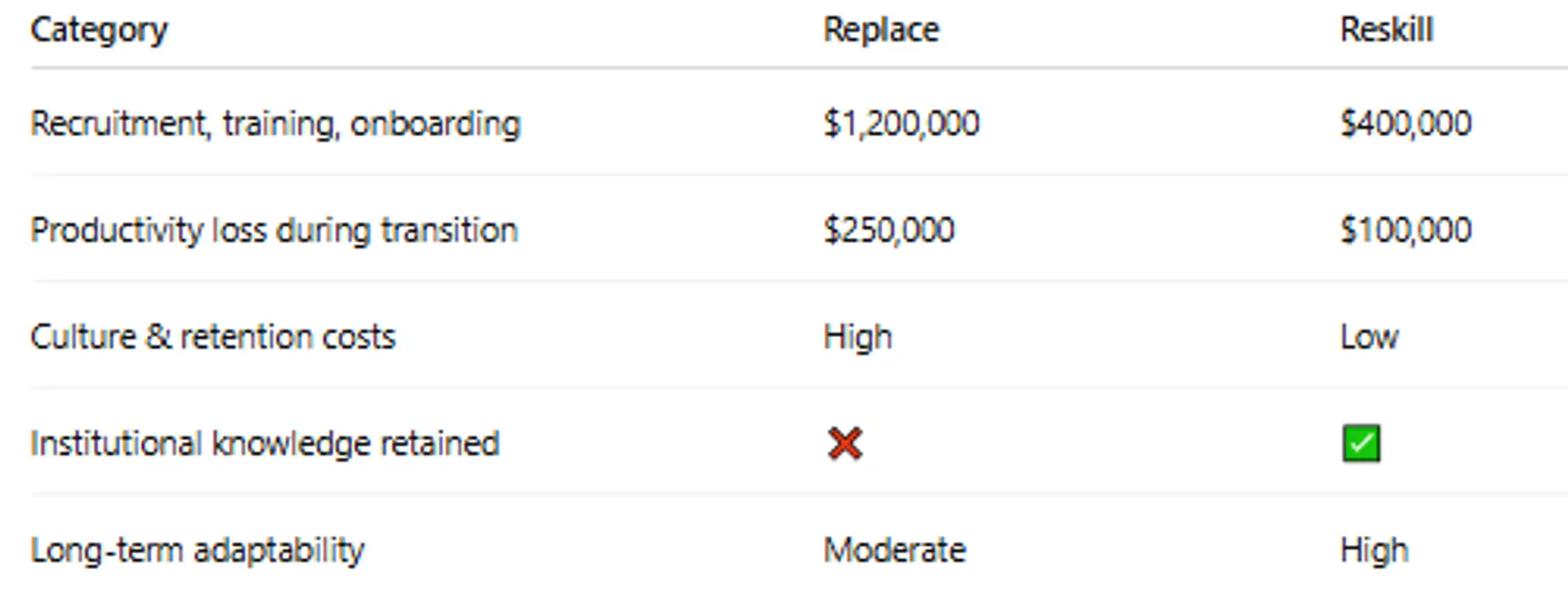
Estimated total savings: Up to $950,000 per 100 employees when reskilling is prioritized over replacement.
The Human ROI
Beyond financial metrics, redeploying staff strengthens trust. It signals that leadership values people as assets, not costs. That mindset fuels long-term innovation — because employees who feel secure are the ones who take creative risks.
“AI can’t replace passion, empathy, or collaboration — but it can multiply their impact when people feel safe to use it.”

Final Thought
The future of work isn’t man versus machine — it’s man with machine.
The most successful organizations in the AI era won’t be the ones that cut fastest — but the ones that evolve smartest.
Managers who learn to redeploy instead of replace will lead more adaptable, innovative, and loyal teams — ready to thrive in a world where technology keeps changing, but human potential remains limitless.
Related Posts
© 2025 Invastor. All Rights Reserved
User Comments