
Ai Content Generator
Ai Picture
Tell Your Story

 emma brown
Dyson V Battery Series Overview: Everything You Need to Know
Cordless vacuums have become a game-changer in modern homes, and Dyson has been at the forefront of this innovation. The Dyson “V series” of cordless vacuums—ranging from the Dyson V6 to the V7, V8, and V10—all share one essential feature: a rechargeable lithium-ion battery. The battery is the heart of these machines, dictating how long they can run, how powerful they feel, and ultimately how convenient they are for daily use.
If you’re considering buying, maintaining, or replacing a Dyson cordless vacuum, understanding the Dyson V battery series is crucial. This detailed guide will walk you through each generation, highlighting battery life, charging times, replacement options, and tips to maximize performance.
Why the Battery Matters in Dyson V Series Vacuums
Unlike corded vacuums, the Dyson V series relies completely on its battery for suction power. The runtime, charging speed, and longevity of the battery determine how effective the vacuum will be in real-life cleaning scenarios. For example, short battery life can make vacuuming larger homes frustrating, while a long-lasting pack allows for uninterrupted cleaning.
Dyson uses lithium-ion technology, which offers several benefits:
Faster charging compared to older NiCd batteries.
No “memory effect,” meaning you don’t need to drain the battery completely before recharging.
Lighter weight, making the vacuum easier to handle.
Consistent power output until the battery is nearly depleted.
However, like all lithium-ion batteries, Dyson batteries have a limited lifespan and will eventually need replacement after a few years of use.
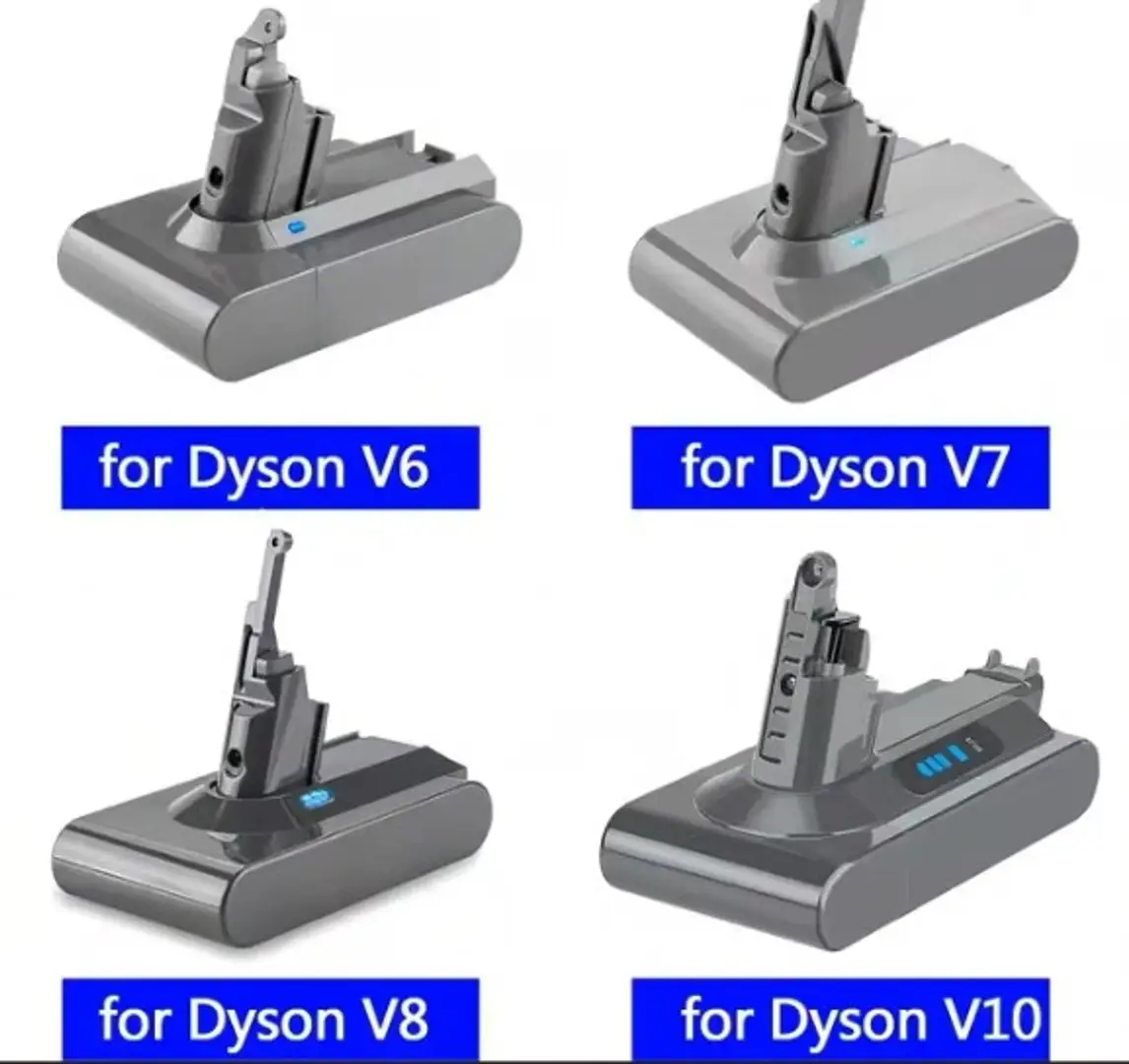
Dyson V6 Battery Overview
The Dyson V6 was one of the first truly successful cordless vacuums from Dyson, and it set the stage for the later models.
Battery type: 21.6V lithium-ion, 2.1Ah capacity.
Runtime: Up to 20 minutes in standard mode, 15 minutes with motorized tools, and about 6 minutes on MAX mode.
Charging time: Around 3.5 hours for a full charge.
The Dyson V6 battery is relatively small by today’s standards, which explains its shorter runtime. Still, for apartments, small homes, or quick clean-ups, it remains adequate. Many users today choose aftermarket replacement batteries for the V6, which can sometimes offer higher capacities for longer runtimes.
Dyson V7 Battery Overview
The Dyson V7 was introduced as a middle ground between the V6 and V8. It improved on the design of the V6 while keeping the vacuum lightweight and affordable.
Battery type: 21.6V lithium-ion, slightly larger capacity than V6.
Runtime: Up to 30 minutes in standard mode, 20 minutes with motorized tools, and 6–7 minutes on MAX.
Charging time: About 3.5 hours.
The Dyson V7 battery makes a noticeable difference in usability compared to the V6. The extra 10 minutes of cleaning time is significant for small to medium-sized homes. While it still cannot handle long cleaning sessions in one go, the V7 battery was a step toward making Dyson vacuums more practical for daily use.
Dyson V8 Battery Overview
The Dyson V8 represented a major leap in battery technology. It nearly doubled the runtime of the V6 and came with stronger suction, making it a favorite among many households.
Battery type: 21.6V lithium-ion, higher capacity (2.8–3.0Ah depending on version).
Runtime: Up to 40 minutes in standard mode, 25 minutes with motorized tools, and 7 minutes on MAX power.
Charging time: Around 5 hours for a full charge.
The Dyson V8 battery is larger and heavier than the V6 or V7, but it delivers a much longer runtime. For many users, this was the first Dyson cordless vacuum that truly replaced their corded vacuum. Pet owners and people with bigger homes especially benefited from the longer runtime.
Dyson V10 Battery Overview
The Dyson V10 took another leap forward, both in battery and motor design. Dyson even declared that with the V10, they would stop developing new corded vacuums—showing just how much confidence they had in its battery system.
Battery type: 25.2V lithium-ion, 3.0Ah capacity.
Runtime: Up to 60 minutes in standard mode, 35 minutes with motorized tools, and around 8 minutes on MAX.
Charging time: About 3.5 hours.
The Dyson V10 battery changed expectations for cordless vacuums. With up to an hour of runtime, it could handle most homes in a single session. The higher voltage also contributed to stronger suction. This model marked Dyson’s shift toward making cordless vacuums the default choice for modern households.
Comparing Dyson V6, V7, V8, and V10 Batteries
Here’s a quick side-by-side look at the batteries:
Model
Voltage
Runtime (Standard)
Runtime (MAX)
Charge Time
V6
21.6V
20 minutes
6 minutes
3.5 hours
V7
21.6V
30 minutes
6–7 minutes
3.5 hours
V8
21.6V
40 minutes
7 minutes
5 hours
V10
25.2V
60 minutes
8 minutes
3.5 hours
As you can see, each generation brought clear improvements in runtime, with the V10 standing out as a real game-changer.
Battery Lifespan and Replacement
No matter which model you own, Dyson batteries typically last 2 to 4 years before showing signs of decline. These signs include shorter runtime, sudden shutdowns, or the battery refusing to charge.
Replacing a Dyson battery is simple and usually requires just a screwdriver. OEM replacements can be purchased directly from Dyson, while aftermarket options are available at lower prices and sometimes with higher capacities.
Tips to Extend the Life of Dyson V Batteries
Here are some practical ways to make your Dyson battery last longer:
Avoid using MAX mode unless absolutely necessary.
Store your vacuum in a cool, dry place.
Don’t leave the battery completely drained for long periods.
Keep filters clean to reduce motor strain and battery drain.
Charge at least once a month if you don’t use the vacuum regularly.
By following these habits, you can often stretch your battery’s lifespan closer to 4 years or more.
Should You Upgrade or Replace?
If your Dyson vacuum is working fine apart from the battery, replacing the pack is usually the best option—it’s far cheaper than buying a new vacuum. However, if you own an older model like the V6 and want longer runtimes, it may be worth upgrading to a newer model like the V8 or V10.
Summing Up The Guide
The Dyson V battery series has evolved significantly over the years. From the 20-minute runtime of the V6 to the impressive 60 minutes of the V10, each generation has made cordless cleaning more practical and powerful.
If you currently own a Dyson cordless vacuum, understanding your battery’s capacity, runtime, and lifespan can help you get the best out of it. And when the time comes, replacing the battery is often an easy, affordable way to extend the life of your machine.
For buyers, the progression of the Dyson V series shows one clear trend: longer runtimes and better efficiency with every generation. Whether you stick with your current vacuum and replace the battery, or upgrade to a newer model, Dyson’s cordless vacuums remain some of the best-performing options available today.
Related Posts
© 2025 Invastor. All Rights Reserved
User Comments