
Ai Content Generator
Ai Picture
Tell Your Story

 Industry Outlokk
Culinary Tourism Market Overview: From Street Food to Michelin Dining
The global appetite for food experiences is reshaping the travel industry. Culinary tourism—also known as gastronomy or food tourism—has emerged as one of the fastest-growing segments of global tourism, blending cultural exploration with authentic dining.
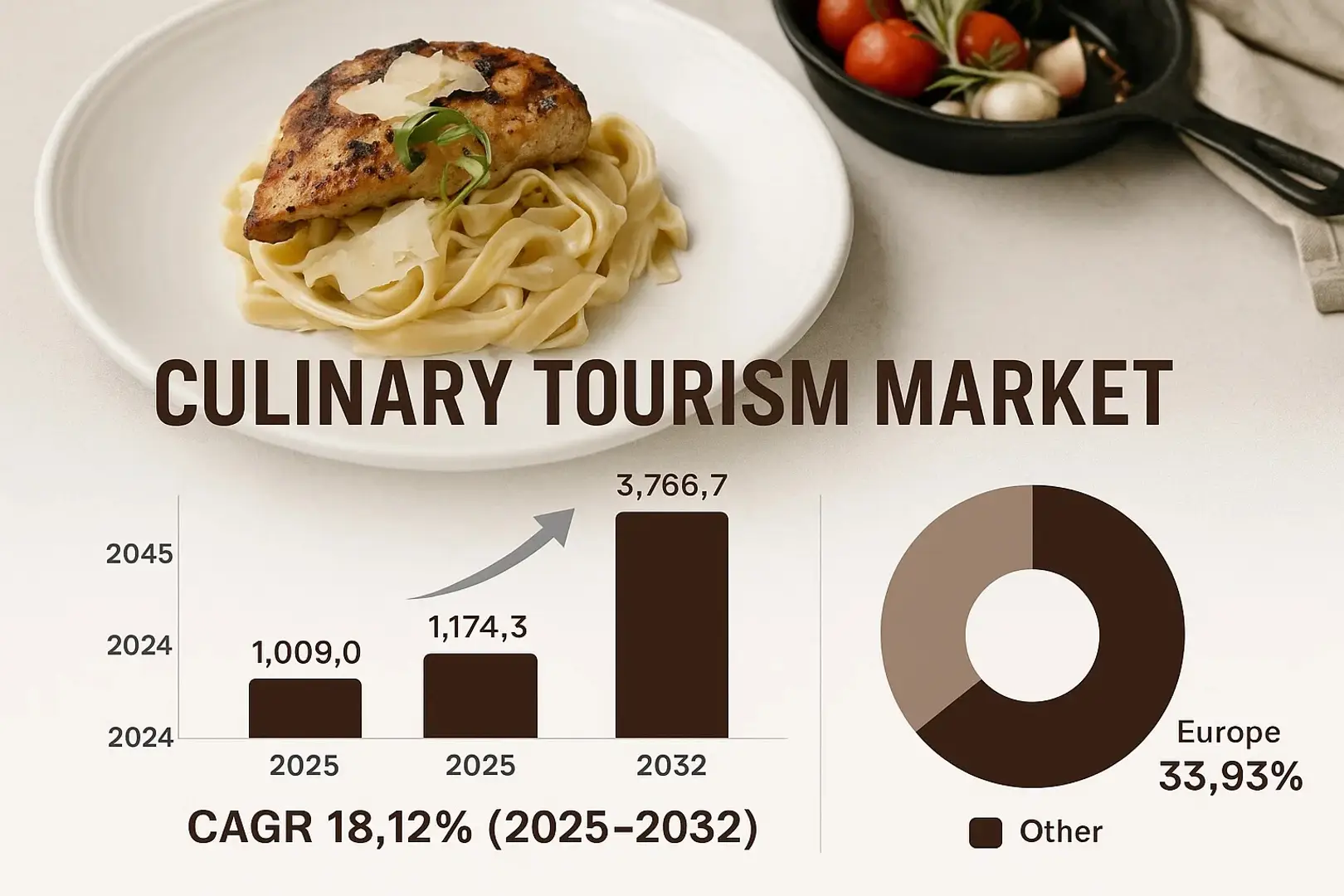
According to Fortune Business Insights, the global culinary tourism market size was valued at USD 1,009 million in 2024. It is projected to expand from USD 1,174.27 million in 2025 to USD 3,766.67 million by 2032, at a robust CAGR of 18.12%. Europe dominated the market in 2024 with a 33.93% market share, reflecting the region’s rich gastronomic heritage.
So, what’s fueling this market growth? Let’s explore the key drivers, restraints, opportunities, and trends that are shaping the future of culinary tourism.
Request FREE sample PDF Copy: https://www.fortunebusinessinsights.com/enquiry/request-sample-pdf/culinary-tourism-market-113603
Why Culinary Tourism Is Booming
- The Desire for Authentic Local Experiences
- Travelers are increasingly prioritizing meaningful experiences over traditional sightseeing. Food offers one of the most immersive ways to connect with local culture, history, and traditions. Sampling regional dishes, joining cooking classes, or attending food festivals allows tourists to engage directly with communities. According to the World Food Travel Organization (WFTO), travelers spend nearly 25% of their trip budget on food and beverages, underlining the centrality of cuisine in travel decisions.
- The Power of Social Media and Digital Influence
- Food has become one of the most shared experiences on platforms like Instagram, TikTok, and YouTube. Stunning visuals of local delicacies, combined with storytelling by influencers and chefs, have turned food into a major travel motivator. Social media trends are now shaping destination choices, inspiring travelers to visit cities and villages famous for their culinary traditions.
- Rising Disposable Incomes and International Travel
- As middle-class populations expand globally, more people are allocating budgets for unique travel experiences. Culinary tourism has benefited from this trend, as food-focused trips often blend luxury dining with affordable street food adventures, catering to a wide range of budgets.
Market Challenges
Despite the growth potential, the culinary tourism industry faces hurdles:
Poor Infrastructure in Rural Areas: Many authentic culinary experiences are located in remote destinations with weak transport links and limited accommodation.
Food Safety Regulations: Small, local food providers often struggle to meet international food safety standards, which can hinder growth.
Supply Chain Disruptions: Geopolitical uncertainties and fluctuating food prices impact consistency and profitability.
These issues, if not addressed, may limit the accessibility of authentic experiences for global travelers.
Opportunities Ahead
- Health and Wellness Integration
- As health-conscious lifestyles rise, travelers are seeking culinary experiences that align with wellness goals. From farm-to-table dining to detox retreats and cooking classes focused on organic, plant-based meals, destinations that emphasize holistic nourishment stand to benefit.
- Sustainability and Eco-Food Tourism
- Eco-friendly travel is influencing dining choices. Zero-waste events, carbon-neutral restaurants, and farm visits are growing in popularity. This trend not only enriches the traveler’s experience but also supports local farmers and preserves culinary heritage.
Culinary Tourism Market Segmentation
By Type
Restaurants dominate the market due to accessibility and structured experiences.
Culinary Trails are the fastest-growing, offering immersive tours through local farms, wineries, and artisanal food hubs.
By Tourist Type
Domestic Tourism leads, as locals explore food within their own countries.
International Tourism is expanding rapidly, fueled by cultural curiosity, rising disposable incomes, and government-backed food tourism campaigns.
By Age Group
Generation X holds the largest market share, thanks to financial stability and a preference for quality experiences.
Millennials (Gen Y) are the fastest-growing segment, driven by digital engagement and a love for authentic, Instagram-worthy experiences.
By Booking Mode
Online Travel Agents (OTAs) dominate, offering convenience, price transparency, and instant bookings.
Direct Bookings are set to grow the fastest, supported by operators’ adoption of apps, optimized websites, and social media promotions.
Get More Info: https://www.fortunebusinessinsights.com/culinary-tourism-market-113603
Regional Insights
Europe: The global leader, offering diverse food traditions—from French fine dining to Italian pasta culture and Spanish tapas. Its strong wine tourism scene boosts its culinary appeal.
North America: Experiences like farm-to-table dining, wine tastings, and food festivals are major growth drivers. The U.S. is a hotspot with events like the Aspen Food & Wine Classic.
Asia Pacific: Expected to grow the fastest, fueled by its rich culinary diversity, affordable street food, and government-led gastronomy campaigns (e.g., Amazing Thailand Gastronomy Tourism).
South America: Rising global recognition of cuisines from Peru, Brazil, and Argentina, along with coffee and wine tourism, is boosting growth.
Middle East & Africa: A growing mix of traditional food and emerging culinary experiences presents steady growth opportunities.
Competitive Landscape
The market is highly competitive, with players focusing on authentic, local, and hyper-curated experiences. Leading companies include:
Abercrombie & Kent USA, LLC (S.)
Greaves Travel Ltd (K.)
India Food Tour (India)
Classic Journeys, LLC (U.S.)
The FTC4Lobe Group (U.S.)
The Travel Corporation (U.K.)
Gourmet on Tour (U.K.)
INTERNATIONAL CULINARY TOURS (Argentina)
Culinary Tours (India)
Butterfield & Robinson Inc. (Canada)
Recent developments include farm-to-table culinary tours in Southeast Asia (2024) and exclusive Italian food tours by Abercrombie & Kent (2023). Partnerships with local farmers and tourism boards are becoming a key differentiator.
The culinary tourism market is on a strong upward trajectory, blending culture, tradition, and gastronomy into unforgettable travel experiences. With digital platforms driving awareness, wellness and sustainability shaping preferences, and a growing appetite for authentic cultural immersion, the industry is poised for remarkable growth through 2032.
As food continues to be a universal language, culinary tourism will remain one of the most flavorful ways to experience the world.
Related Posts
© 2025 Invastor. All Rights Reserved
User Comments