
Ai Content Generator
Ai Picture
Tell Your Story

 Kabir Shah
Complete Guide to Solar Panel Installation for Homes & Businesses
Solar energy is becoming one of the most popular and reliable sources of renewable energy in the world. People are switching to solar power not only to save money on electricity bills but also to reduce their carbon footprint and support a cleaner environment. Whether it’s a home or a business, solar panel installation can make a big difference in energy costs and long-term sustainability.
In this guide, we will explain everything you need to know about solar panel installation for both homes and businesses. From understanding the basics of solar energy to the step-by-step installation process, costs, and benefits, this blog will help you make an informed decision.
Understanding Solar Energy Basics
What Are Solar Panels and How Do They Work?
Solar panels are devices made of photovoltaic (PV) cells that convert sunlight into electricity. When sunlight hits these cells, it creates an electric field, generating direct current (DC) electricity. Since most homes and businesses use alternating current (AC), an inverter is used to convert DC into usable AC electricity.
Types of Solar Panels
There are mainly three types of solar panels:
- Monocrystalline Panels – Made from a single crystal structure, they are highly efficient and last longer. They are more expensive but perfect for places with limited roof space.
- Polycrystalline Panels – Made from multiple crystals, they are less efficient than monocrystalline but more affordable.
- Thin-film Panels – Lightweight and flexible, but with lower efficiency. These are mostly used in large commercial spaces.
Solar Energy Systems
- On-Grid System – Connected to the main electricity grid. Excess power can be sold back to the grid through net metering.
- Off-Grid System – Works independently with battery storage. Best for remote areas without grid access.
- Hybrid System – A mix of both on-grid and off-grid, offering flexibility and backup storage.
Benefits of Installing Solar Panels
Environmental Benefits
Solar energy is clean and renewable. By installing solar panels, you reduce dependency on fossil fuels like coal and gas, which release harmful greenhouse gases. This helps in fighting climate change and keeping the air clean.
Financial Benefits
One of the biggest reasons people choose solar energy is saving money on electricity bills. Once installed, solar panels can reduce monthly bills by up to 70–90%, depending on system size and energy usage.
Long-Term Investment Value
Solar panels usually last for 25–30 years with minimal maintenance. Over this time, they provide a strong return on investment by lowering energy costs.
Business Advantages
For businesses, going solar is not only about saving costs but also about building a green brand image. Many customers prefer companies that care about sustainability. Also, businesses can enjoy tax credits, accelerated depreciation, and government incentives.
Assessing Your Home or Business for Solar Installation
Site Evaluation
Before installation, it’s important to check whether your site is suitable. Factors include:
- Roof orientation – South-facing roofs in the Northern Hemisphere get maximum sunlight.
- Shading – Avoid trees, buildings, or objects that block sunlight.
- Roof size – You need enough space to place the required number of panels.
Energy Needs Assessment
Check your electricity bills to understand your average monthly and yearly consumption. This helps in deciding the number of panels required.
Local Climate
Solar panels work best in sunny regions but can still produce power in cloudy weather. Places with more sunlight hours naturally get better output.
Structural Suitability
Your roof should be strong enough to handle the weight of solar panels. If not, ground-mounted panels can be an alternative.
Planning the Solar Installation Process
DIY vs. Professional Installation
While some people prefer DIY, solar panel installation involves electrical work, permits, and safety checks. Professional installation is recommended for efficiency and warranty coverage.
Choosing the Right Equipment
- Solar Panels – Select based on efficiency, budget, and available space.
- Inverters – Options include string inverters, microinverters, or hybrid inverters.
- Batteries – Useful for backup power and off-grid systems.
Permits and Regulations
Many regions require approval before installation. This includes building permits, electrical permits, and grid connection approvals.
Estimating Costs and ROI
The cost depends on system size, location, and equipment. On average, solar panel installation costs ₹40,000–₹60,000 per kW in India (or $2,000–$3,000 per kW in the U.S.). Most homeowners recover their investment in 5–8 years through savings.
Step-by-Step Solar Panel Installation Process
Designing the System Layout
Installers plan where panels, inverters, and other components will be placed for maximum efficiency.
Preparing the Site
The roof or ground area is prepared, cleaned, and fitted with mounting structures.
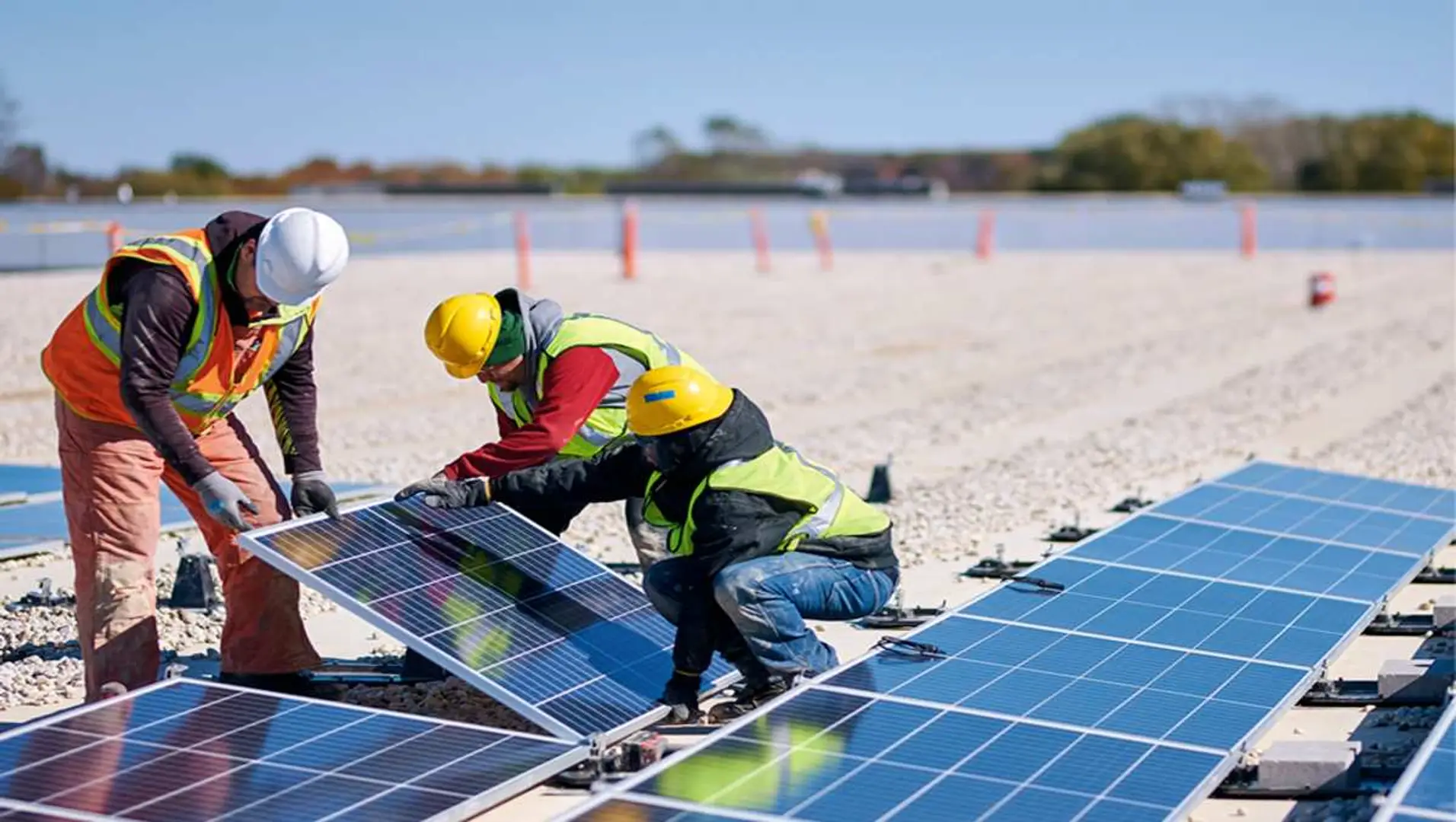
Mounting the Panels
Solar panels are securely attached to the mounting structure with the right tilt angle for maximum sunlight exposure.
Wiring and Connecting the Inverter
Panels are wired together and connected to the inverter, which converts DC to AC power.
Grid Connection and Net Metering
For on-grid systems, the setup is connected to the electricity grid, allowing excess power to be exported. Net meters track both consumption and contribution.
Testing and Commissioning
Once installed, the system is tested for performance and safety before activation.
Solar Panel Installation for Homes
Ideal Solar Capacity for Residential Needs
A typical household uses 3–5 kW of solar power. The exact size depends on the number of family members and power consumption.
Roof-Mounted vs. Ground-Mounted Panels
- Roof-mounted – Common choice for homeowners with limited land.
- Ground-mounted – Suitable for those with extra land space. Easier to clean and maintain.
Cost Range and Payback Period
For homes, solar installation costs around ₹1.5–₹3 lakhs for a 3–5 kW system in India. The payback period is usually 5–7 years, after which energy is almost free.
Solar Panel Installation for Businesses
Why Businesses Should Go Solar
Businesses consume large amounts of electricity, and solar panels help cut these expenses significantly.
Large-Scale System Design
Commercial installations often require 10 kW to several megawatts depending on the size of the business.
Financial Benefits for Businesses
- Tax credits and subsidies.
- Accelerated depreciation benefits.
- Reduced operational costs.
Case Studies
- Retail Stores: Saved up to 60% on energy bills.
- Factories: Reduced dependency on diesel generators.
- IT Companies: Improved sustainability and reduced costs.
Maintenance & Monitoring
Routine Cleaning
Dust, dirt, and bird droppings can reduce efficiency. Cleaning panels every 2–3 months helps maintain performance.
Monitoring Systems
Modern solar setups come with apps or monitoring devices to check daily energy production and usage.
Common Issues
- Inverter failure (most common).
- Wiring problems.
- Reduced efficiency due to shading or dirt.
Cost, Financing & Incentives
Average Cost
- Residential: ₹40,000–₹60,000 per kW in India.
- Commercial: Bulk installations may cost less per kW due to scale.
Financing Options
- Bank loans for solar projects.
- Leasing models where you pay monthly instead of upfront.
- Power Purchase Agreements (PPAs) for businesses.
Government Incentives
- Subsidies on residential solar panels (up to 40% in India for small systems).
- Tax benefits for businesses.
- Net metering policies for selling extra electricity.
Future of Solar Energy
Emerging Technologies
- Bifacial solar panels – Capture sunlight from both sides.
- Solar tiles – Blend with roofs for better aesthetics.
- Floating solar farms – Panels installed on water bodies.
Smart Homes & IoT
Integration with smart meters, AI-powered monitoring, and IoT devices will make solar energy management easier.
A Sustainable Future
As costs fall and efficiency rises, solar power will become the backbone of renewable energy worldwide.
Conclusion
Installing solar panels is one of the smartest decisions for both homes and businesses. It saves money, protects the environment, and provides long-term energy security. While the initial cost may seem high, the return on investment and the benefits outweigh the expenses.
Now is the perfect time to switch to solar energy. Whether you’re a homeowner looking to cut bills or a business wanting to improve sustainability, solar panel installation is a step toward a brighter, greener future.
Related Posts
© 2025 Invastor. All Rights Reserved
User Comments