
Ai Content Generator
Ai Picture
Tell Your Story

%20(1).webp&w=256&q=75) krisala developers - (Krisala Developers)
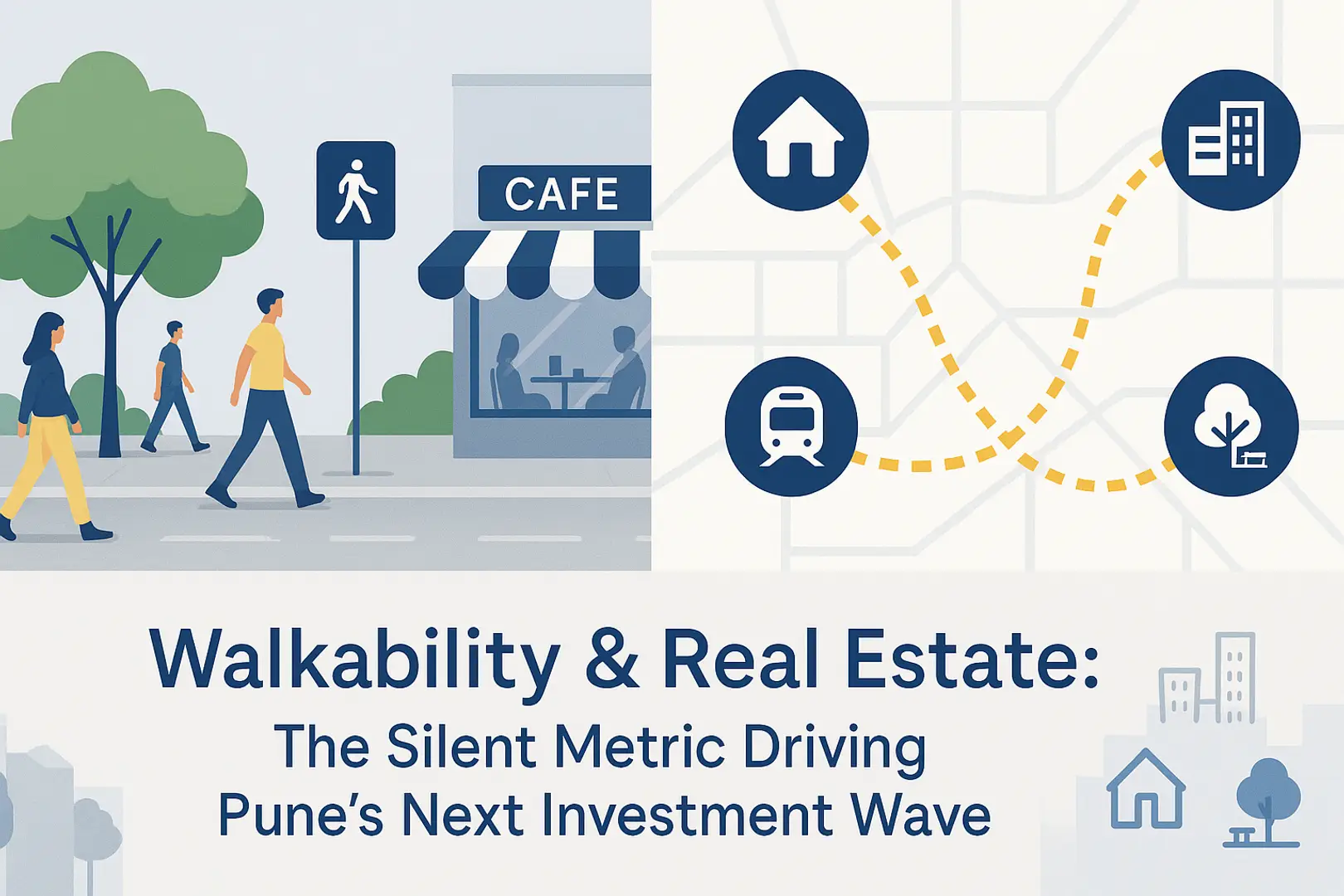
krisala developers - (Krisala Developers)Walkability & Real Estate: The Silent Metric Driving Pune’s Next Investment Wave
Urban mobility is evolving—and with it, so is real estate investment strategy. In Pune, the infrastructure story is dominated by grand projects like Metro expansions and the Ring Road. But beneath the surface lies a quieter, equally powerful force shaping the city’s growth: walkability.
What is Walkability and Why It Matters to Real Estate?
Walkability refers to how friendly an area is to walking. It encompasses pedestrian access to workplaces, schools, transit, shopping, and open spaces—all within a 10-15 minute radius. While this metric has long been a focus in global cities, Pune’s shifting urban fabric is beginning to reflect similar principles.
Key Takeaway:
Walkability isn’t just about convenience—it’s a predictor of long-term real estate demand and value appreciation.
The Data-Backed Case for Walkable Communities
International research shows a consistent pattern:
- Walkable neighbourhoods see 20–40% higher property value growth over a decade compared to car-dependent areas.
- Rental yields are 8–10% higher in walkable zones due to consistent demand from young professionals and families.
- Retail and service-based commercial properties in walkable clusters experience 30–40% higher foot traffic and revenue generation.
Pune’s Shift Toward the 15-Minute City
The concept of the “15-minute city”—where everything a resident needs is within a 15-minute walk—has quietly entered Pune’s planning ecosystem. While the Metro and Ring Road handle macro connectivity, micro-mobility within residential clusters is fast becoming a decisive factor in homebuyer and renter preferences.
Emerging Walkable Pockets in Pune:
- Baner-Balewadi: Integrated with cafes, co-working spaces, and retail zones
- Kharadi: Office hubs, schools, and daily needs within short walking loops
- Tathawade-Wakad: Rapid urbanization with walkable lifestyle infrastructure
The Walkability Premium: Future-Proofing ROI
Walkable areas in Pune are displaying stronger price resilience and faster inventory absorption, especially in the 2–3 BHK segment. This is not speculative—this is consumer-driven.
What Makes These Locations Work?
- Dense street grids and internal road networks
- Proximity to public transit stations
- Mixed-use zoning enabling shops, cafes, and offices in residential belts
- Green corridors and open spaces with pedestrian-first planning
Developers that prioritize walkability—through layout, mixed-use amenities, and accessibility planning—are already seeing higher site visits, faster closures, and sustained rental demand.
Technology & Walkability: A New Urban Equation
With smart city systems, IoT-based infrastructure, and mobility-as-a-service (MaaS) platforms entering Pune’s ecosystem, walkability will no longer be passive. Real-time wayfinding, app-connected transport, and data-driven zoning will define which neighbourhoods thrive.
Even property portals are adapting, adding walk scores and commute-friendly tags to listings. For future-forward investors, this is a metric that cannot be ignored.
Key Takeaway:
Walkability, powered by tech and planning, will be a key differentiator in Pune’s saturated mid-income housing market.
Connecting the Dots: Infrastructure and Walkability
The rise of walkable communities isn’t separate from Pune’s larger growth story—it’s a direct evolution of it. While macro infrastructure projects like the Metro and Ring Road redraw the city’s boundaries, walkability brings livability into focus within those zones.
To understand how broader infrastructure is transforming Pune’s real estate, read our detailed analysis on [how Pune’s growth is powering real estate ROI through the Metro and Ring Road].
Conclusion
As Pune continues its trajectory toward becoming a more connected, efficient, and sustainable city, walkability will move from a lifestyle choice to an investment necessity. Investors who factor it into their due diligence today will likely lead the value curve tomorrow.
Krisala Developers has been quietly incorporating these urban planning shifts into project design—developing not just buildings, but future-ready neighbourhoods.
Related Posts
© 2025 Invastor. All Rights Reserved
User Comments