
Ai Content Generator
Ai Picture
Tell Your Story

 Kabir Shah
Photovoltaic vs Solar Panels: A Beginner’s Guide to Clean Energy
In today’s world, people are looking for clean and green energy options. One of the most popular choices is solar energy. It is good for the environment and helps save money in the long run.
But many people feel confused when they hear terms like “photovoltaic panels” and “solar panels.” Are they the same? Or are they different? If you are new to clean energy, this blog will explain everything in a very easy way.
This guide will help you understand what these panels are, how they work, and which one is right for your home or business.
What Are Solar Panels?
What is the Simple Meaning of Solar Panels?
Solar panels are devices that capture sunlight and convert it into energy. This energy can be used in different ways, depending on the type of panel.
In simple words, a solar panel is a flat device that sits on a roof or open area and uses sunlight to give us power or heat.
Types of Solar Panels
There are three main types of solar panels:
- Photovoltaic (PV) panels – These convert sunlight into electricity.
- Solar thermal panels – These convert sunlight into heat.
- Hybrid solar panels – These produce both electricity and heat.
What Are Photovoltaic (PV) Panels?
Meaning and How They Work
The word “photovoltaic” comes from “photo” (light) and “voltaic” (electricity). So, photovoltaic panels are panels that change sunlight into electricity.
They work using special materials called semiconductors, usually silicon. When sunlight hits these materials, it makes the electrons move. This movement creates direct current (DC) electricity. Then, an inverter changes DC into alternating current (AC), which we use in our homes.
Main Parts of a Photovoltaic Panel
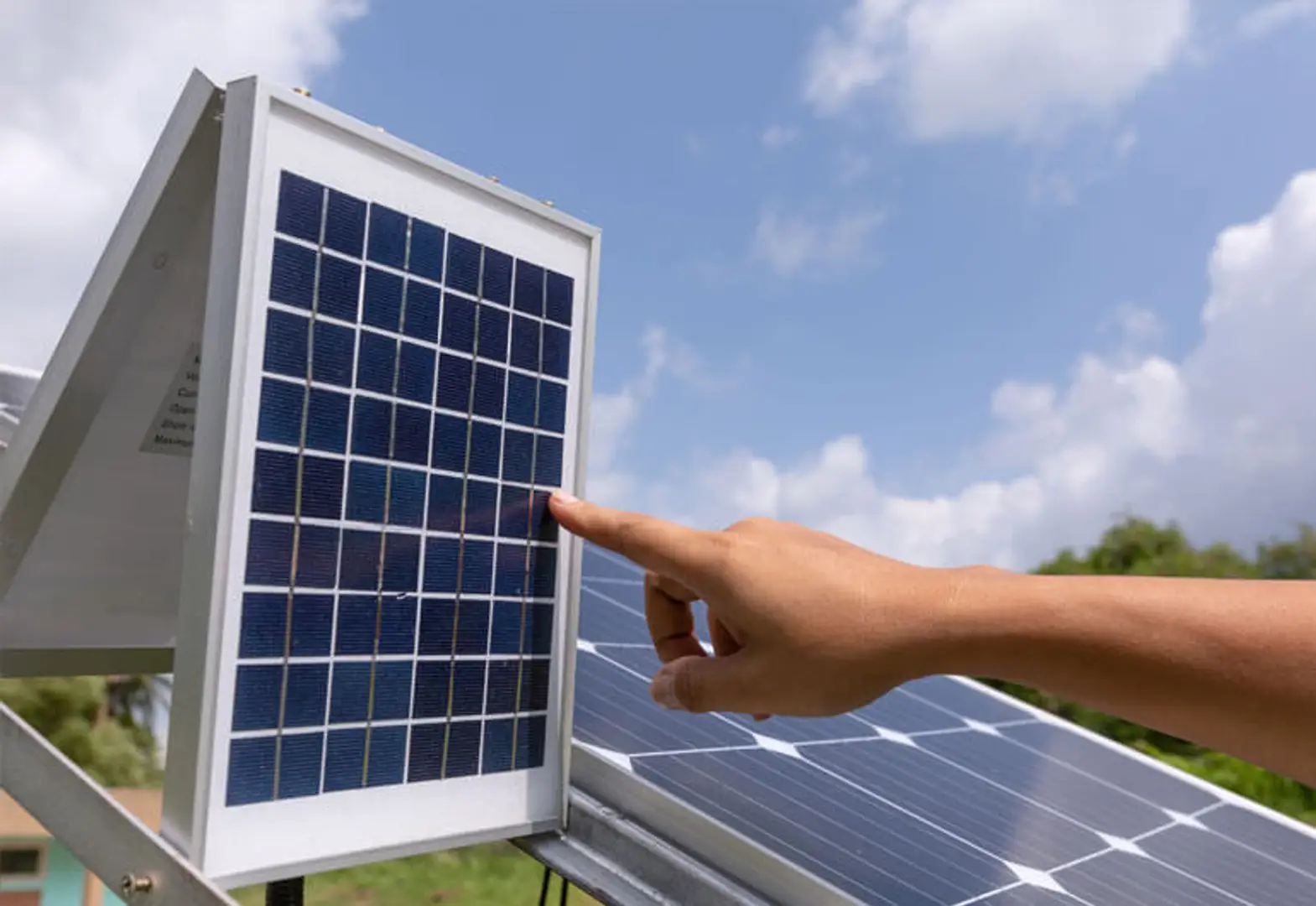
- Solar cells – These are the tiny squares inside the panel. They absorb sunlight and create electricity.
- Glass cover – It protects the cells from dust and damage.
- Frame – Usually made of aluminum, it gives shape and support.
- Backsheet and encapsulant – These protect the cells from moisture and heat.
- Inverter (installed separately) – Converts the electricity to a usable form.
Solar Panels vs Photovoltaic Panels: Are They the Same?
Key Differences in Simple Words
This is where most people get confused. The term “solar panel” is a general name. It can mean any panel that uses sunlight.
A photovoltaic panel is a type of solar panel—the kind that produces electricity.
So:
- All photovoltaic panels are solar panels.
- But not all solar panels are photovoltaic panels.
Types of Energy They Produce
- Photovoltaic panels produce electricity.
- Solar thermal panels produce heat.
Where Each Type is Used
- Photovoltaic (PV) panels – Used in homes, offices, factories, and even satellites to produce power.
- Solar thermal panels – Used in solar water heaters, solar cookers, or heating systems.
Advantages of Photovoltaic (PV) Panels
1. Clean and Renewable Energy Source
PV panels use sunlight, which is free and unlimited. They don’t produce smoke, noise, or harmful gases. It’s one of the cleanest ways to make electricity.
2. Save Money on Electricity Bills
Once you install photovoltaic panels, your electricity bill goes down. In some cases, you can even sell extra electricity back to the grid and earn money.
3. Low Maintenance
PV systems don’t have moving parts, so they last long with very little maintenance. Just clean them a few times a year.
4. Easy to Use in Different Sizes
You can install PV panels on a small house roof or a large solar farm. It works for homes, shops, schools, and businesses.
5. Helps in Energy Independence
With PV panels, you don’t have to fully depend on the power grid. Even during power cuts, solar batteries can keep your home running.
Where Are Solar Panels Used in Daily Life?
Residential Use
Many people use solar panels on their home rooftops to generate electricity or heat water. Some examples include:
- Solar lights
- Solar phone chargers
- Solar fans and coolers
- Rooftop solar systems
Commercial and Industrial Use
Offices, schools, factories, and malls also use large PV systems. These reduce their electricity costs and help with sustainability goals.
- Shopping malls use solar power for lighting and cooling
- Offices run computers and fans on solar electricity
- Farms use solar pumps for irrigation
Rural and Off-grid Applications
In remote villages where power lines don’t reach, solar panels are a great solution. They are used for:
- Lighting homes
- Charging phones
- Running small water pumps
- Operating basic appliances
Which One Should You Choose?
For Electricity – Choose Photovoltaic Panels
If you want to run fans, lights, computers, or other electrical devices, PV panels are the right choice.
For Heating – Go for Solar Thermal Panels
If your goal is to heat water for your home, hotel, or swimming pool, solar thermal panels are better.
For Both – Use Hybrid Systems
Some systems provide both electricity and heat. These are called hybrid panels, and they can be useful if you want to save space and get both benefits.
Common Myths and Misconceptions
Myth 1: All Solar Panels Produce Electricity
Truth: Only photovoltaic panels do. Solar thermal panels produce heat, not electricity.
Myth 2: Solar Panels Don’t Work on Cloudy Days
Truth: Solar panels still work even when it’s cloudy or raining. They may not work at full power, but they still produce some energy.
Myth 3: Solar Panels Are Too Expensive
Truth: In 2025, the cost of solar panels has come down a lot. Also, many governments offer subsidies and tax benefits, which make solar more affordable.
Myth 4: Solar Panels Need a Lot of Maintenance
Truth: They only need cleaning once every few months. They are strong and can last 25–30 years.
Myth 5: Solar Panels Take Too Much Space
Truth: Modern PV systems are compact and efficient. Even small rooftops can produce enough power for a home.
How to Get Started with Solar Energy
Step 1: Check Your Energy Needs
Look at your electricity bill. See how much power you use each month. This helps you choose the right system size.
Step 2: Choose the Right Type of Solar Panel
- For electricity, go for PV panels
- For hot water, go for solar thermal panels
- For both, consider hybrid panels
Step 3: Find a Good Installer
Hire a certified solar installer. They will check your location, sunlight availability, and rooftop condition.
Step 4: Learn About Government Schemes
Many governments offer incentives, discounts, or loans for installing solar. Ask your installer or search online for local solar subsidy programs.
Step 5: Install and Monitor
After installation, you can track your solar system with a mobile app or web portal. You’ll see how much energy you save every day.
Conclusion
Solar energy is a powerful and clean way to power our homes, offices, and industries. But understanding the difference between photovoltaic panels and solar panels can be tricky for beginners.
Now you know:
- Solar panels is a broad term.
- Photovoltaic panels are a type of solar panel that produce electricity.
- Solar thermal panels give heat.
- You can choose the right one based on your needs.
Whether you want to save money, reduce pollution, or become energy-independent, solar energy is a smart step in the right direction.
Related Posts
© 2025 Invastor. All Rights Reserved
User Comments