
Ai Content Generator
Ai Picture
Tell Your Story

 Sharvari Makote
Solid Waste Management Market Analysis, Demand, Opportunities & Forecast 2032
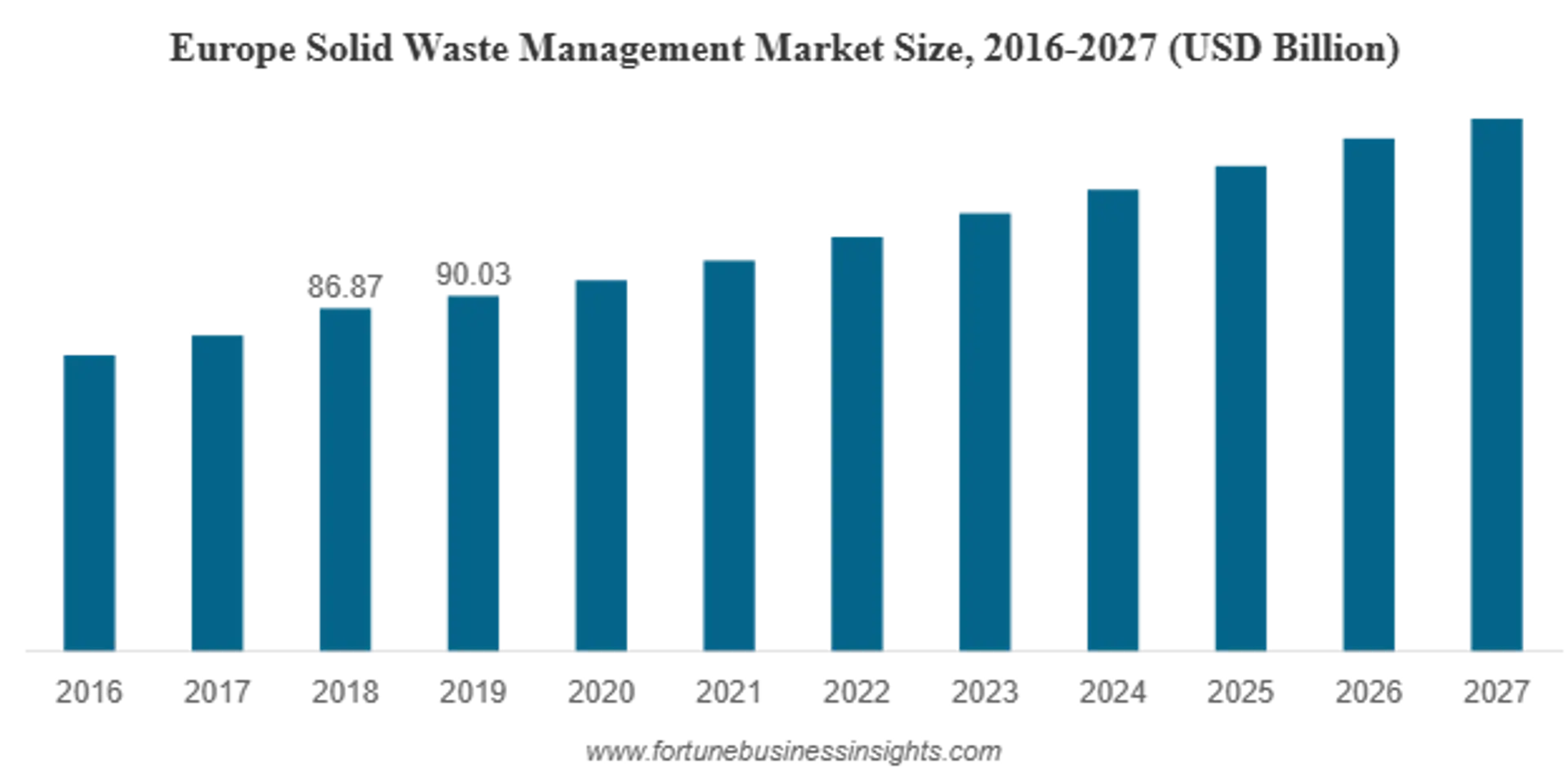
The global solid waste management market was valued at USD 285.16 billion in 2019 and is expected to reach USD 366.52 billion by 2027, growing at a CAGR of 3.3% during the forecast period. In 2019, Europe led the market with a share of 31.57%. Additionally, the solid waste management market in the U.S. is anticipated to experience significant growth, projected to reach USD 93.46 billion by 2032. This growth is driven by the country’s well-developed collection, processing, and disposal systems, along with the presence of major waste management companies.
Solid waste management involves the systematic control of generation, collection, transportation, processing, recycling, and disposal of various types of waste. The primary objective is to reduce the harmful effects of waste on human health, the environment, and natural resources. As the world faces increasing pressure to adopt sustainable practices, efficient waste management has become more critical than ever.
Key Drivers of Market Growth
- Urban Expansion and Infrastructure Development
The sharp increase in urban population is directly contributing to higher volumes of waste. Cities worldwide are witnessing a surge in domestic, commercial, and construction-related waste. Rapid infrastructure development, particularly in developing countries, is creating an urgent need for robust waste management systems.
- Government Initiatives and Regulatory Frameworks
Governments across various regions are implementing stricter waste management laws and policies. These include mandates for waste segregation, recycling targets, landfill restrictions, and eco-friendly disposal methods. Such regulatory backing is pushing municipalities and private operators to invest in more advanced and efficient waste handling solutions.
- Increased Environmental Awareness
Public concern over pollution, landfill overflows, and greenhouse gas emissions has intensified. With heightened environmental awareness, both individuals and organizations are seeking sustainable waste disposal methods. This shift is encouraging greater participation in recycling and composting programs, which, in turn, supports the solid waste management industry.
- Technological Advancements in Waste Treatment
Modern waste processing technologies such as sensor-based collection systems, smart bins, automated material sorting, and waste-to-energy conversion are improving operational efficiency and minimizing landfill use. These innovations are being adopted at a rapid pace, particularly in smart city projects and industrial zones.
List Of Key Players Profiled:
- Waste Management Inc. (USA)
- SUEZ Group (France)
- Veolia Environment S.A. (France)
- Biffa PLC (U.K.)
- Clean Harbors Inc. (USA)
- Covanta Holdings Corporation (USA)
- Hitachi Zosen Corporation (Japan)
- Remondis AG & Co. Kg (Germany)
- Republic Services Inc. (USA)
Read More : https://www.fortunebusinessinsights.com/solid-waste-management-market-103045
Market Restraints
- High Operational Costs: Advanced waste treatment facilities and technologies often require substantial investment, making them inaccessible for low-income regions.
- Lack of Infrastructure in Developing Countries: Inadequate collection and disposal systems in rural and underserved urban areas hinder the effectiveness of waste management.
- Limited Public Participation: Poor awareness and participation in waste segregation at the source affect the efficiency of recycling and composting initiatives.
Regional Insights
- Asia Pacific
- This region holds the largest share in the global solid waste management market. Rapid industrialization, urbanization, and increasing consumer waste are primary contributors. Governments in countries like China, India, and Indonesia are undertaking significant projects to modernize waste collection and disposal systems. The region is also seeing increased investments in recycling facilities and waste-to-energy plants.
- North America
- North America continues to show significant growth, supported by mature infrastructure and strong environmental policies. The U.S. solid waste management market, in particular, is expected to grow steadily due to ongoing efforts to reduce landfill dependence and enhance recycling and composting practices. Initiatives encouraging circular economy models are further contributing to market expansion.
- Europe
- European countries have long emphasized sustainable waste practices. With strict regulations on waste disposal and ambitious recycling targets, the region is at the forefront of implementing circular economy principles. The adoption of producer responsibility policies and green packaging initiatives supports the region’s dominance in sustainable waste management.
- Latin America, Middle East & Africa
- These regions are emerging as potential markets, driven by urban growth and increasing governmental and international support for infrastructure development. While challenges such as limited funding and awareness exist, ongoing reforms and investments in waste collection and sanitation systems are laying the groundwork for long-term growth.
Market Segmentation
The solid waste management market can be segmented based on:
Waste Type: Municipal solid waste (MSW), industrial waste, hazardous waste, and electronic waste (e-waste).
Service: Collection, transportation, recycling, treatment, landfilling, and incineration.
End-User: Residential, commercial, industrial, and construction sectors.
Among these, municipal solid waste dominates the segment, primarily due to the volume generated by urban residential areas and commercial institutions. However, the demand for proper hazardous and electronic waste handling is also rising as consumption patterns evolve.
Competitive Landscape
The global market comprises a mix of public and private players offering a range of waste management services. Companies are actively focusing on expanding their capabilities through technology adoption, joint ventures, and geographic diversification. The emphasis is increasingly on eco-friendly solutions, cost optimization, and resource recovery through recycling and energy conversion.
Public-private partnerships (PPPs) are playing a significant role in improving municipal waste services, particularly in developing regions. Many service providers are also exploring data-driven approaches and digital platforms to streamline operations and track waste generation patterns more effectively.
Key Industry Developments:
- July 2019 – The consortium BCE led by SUEZ Group signed a 25 years contract with municipal company Beogradske Elektrane to sell heat produced from waste-to-energy in Belgrade, Serbia. By signing this contact, the municipal company is aiming to introduce renewable energy by reducing its energy dependency on natural gas. The plant operation will be handled by SUEZ Group and the plant will process 500 Kilo Tons of Municipal waste and 200 Kilo Tons of construction & demolition waste per year.
- December 2019 – Covanta Holdings Corporation agreed with Zhao County, China to build & operate a new Energy-from-waste facility. The project will offer sustainable waste management solutions to the county. With this agreement, the company is aiming to expand its geographical footprints into Chinese market.
Outlook
The future of the solid waste management market lies in sustainability, innovation, and inclusive participation. As global waste generation continues to rise, governments, businesses, and communities must collaborate to create circular systems that reduce waste at the source, increase recycling rates, and promote responsible consumption.
With continued investment in infrastructure, supportive policies, and technological integration, the solid waste management industry is well-positioned to address the growing environmental challenges and contribute meaningfully to global sustainability goals.
Related Posts
© 2025 Invastor. All Rights Reserved
User Comments