
Ai Content Generator
Ai Picture
Tell Your Story

 renub amanrenub
US Kitchen Appliances Market to Reach USD 115.15 Billion by 2033, Driven by Innovation
Smart Kitchens of Tomorrow: US Kitchen Appliances Market Forecast 2025–2033
According to a comprehensive report published by Renub Research, the United States Kitchen Appliances Market is expected to witness robust growth over the next decade. The market is forecast to reach USD 115.15 billion by 2033, up from USD 74.35 billion in 2024, expanding at a CAGR of 4.98% during the forecast period of 2025–2033.
Renub Research’s latest analysis highlights how the convergence of digital technology, sustainability, and evolving consumer lifestyles is reshaping American kitchens and driving demand for modern kitchen appliances.
Rising Demand for Smart, Energy-Efficient Kitchen Solutions
One of the key drivers of growth in the U.S. kitchen appliance market is the increased adoption of smart appliances. As American households embrace smart homes, kitchen
appliances integrated with IoT, voice control, and app-based functionalities are gaining traction. From smart refrigerators with internal cameras to ovens that can be remotely preheated via smartphones, these innovations are not only improving convenience but also energy efficiency.
https://www.renub.com/united-states-kitchen-appliance-market-p.php
Moreover, government initiatives and consumer preferences are pushing manufacturers to develop energy-efficient appliances. Features like low power consumption, eco-friendly materials, and Energy Star certifications are influencing purchasing decisions across the United States.
Changing Lifestyles and Home-Centric Living Fuel Market Expansion
The shift toward remote working and home-centric lifestyles post-pandemic has placed greater emphasis on home cooking and kitchen upgrades. Consumers are now willing to invest in premium kitchen appliances that offer superior performance, aesthetics, and multifunctionality.
The surge in DIY cooking trends, meal prepping, and health-conscious eating has also contributed to increased sales of high-performance blenders, food processors, air fryers, and built-in appliances. Additionally, modular and customized kitchen concepts are growing, leading to demand for integrated, space-saving appliances suitable for urban living.
E-Commerce and Omni-Channel Retailing Reshape Consumer Access
Digital transformation in retail has significantly influenced the way kitchen appliances are marketed and sold. Consumers now rely on online product reviews, detailed specifications, and virtual demonstrations before making a purchase. Leading e-commerce platforms, including Amazon, Best Buy, and brand websites, are playing a pivotal role in reaching wider audiences.
Moreover, omni-channel strategies, where brands combine in-store experiences with online ordering and delivery services, are improving accessibility and driving sales across both urban and rural areas of the U.S.
Market Segmentation Highlights
Renub Research’s report segments the U.S. kitchen appliances market based on product type, structure, fuel type, distribution channel, and region. Key highlights include:
By Product Type:
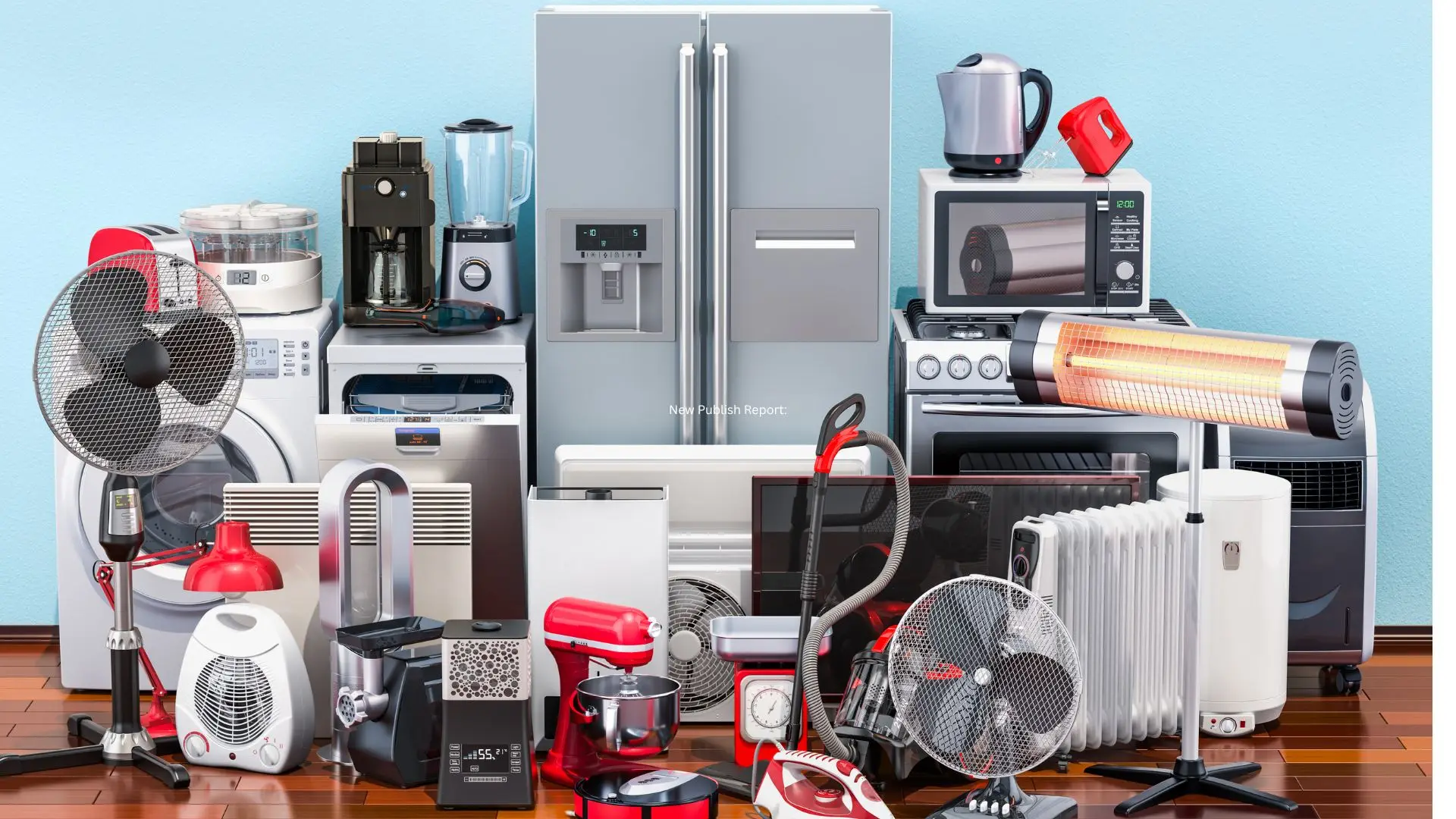
Refrigerators and Freezers dominate the market, followed by cooktops, ovens, dishwashers, and small kitchen appliances like mixers, blenders, and air fryers.
Built-in appliances are gaining ground due to their sleek design and space efficiency.
By Structure:
Freestanding appliances continue to hold a significant share due to their affordability and flexibility.
However, built-in appliances are rapidly expanding in popularity among luxury and modern homeowners.
By Fuel Type:
Electric-powered appliances remain the dominant category, while gas-powered cooking appliances retain demand in specific regions and among traditional users.
By Distribution Channel:
Multi-brand retail stores and specialty outlets maintain strong sales volumes.
Online retail platforms are witnessing the fastest growth due to convenience, competitive pricing, and expanding product availability.
Regional Insights: Urban Markets Lead, Rural Areas Catch Up
Urban areas like New York, California, Texas, and Florida are major contributors to the kitchen appliance market, driven by higher disposable incomes and faster adoption of smart home trends. However, rural and semi-urban areas are emerging as growth hotspots, particularly with improved logistics and broadband penetration supporting online purchases.
Competitive Landscape and Key Players
The U.S. kitchen appliances market is characterized by intense competition, innovation, and product diversification. Major players continue to invest heavily in R&D and brand partnerships to expand their portfolios. Key companies profiled in Renub Research’s report include:
Whirlpool Corporation
Samsung Electronics
LG Electronics
GE Appliances
Bosch (BSH Home Appliances)
Haier Group
Electrolux AB
Panasonic Corporation
Miele
KitchenAid
These companies are focusing on smart appliance integration, sustainability, and customer experience to maintain their market dominance.
Technological Innovation: The Future of the Smart Kitchen
The market’s future lies in AI-powered appliances, predictive maintenance, voice control via Alexa and Google Assistant, and integration with home automation systems. Touchscreen-enabled refrigerators, ovens with automatic recipe detection, and dishwashers with smart sensors are expected to become mainstream.
Further, innovations in materials and design, such as fingerprint-resistant stainless steel and compact multi-function units, are appealing to both tech-savvy and design-conscious consumers.
Policy Support and Sustainability Trends
The U.S. government’s support for energy conservation through programs like ENERGY STAR is pushing both consumers and manufacturers toward greener appliances. There’s an increasing emphasis on sustainable manufacturing practices, recyclable materials, and reducing carbon footprints.
Additionally, consumers are now more environmentally aware and prefer products that reflect their commitment to sustainability, offering further tailwinds for market growth.
Conclusion: A Decade of Transformation for American Kitchens
The United States Kitchen Appliances Market is entering a dynamic growth phase, propelled by digitalization, sustainability, and evolving consumer expectations. Over the forecast period of 2025–2033, technological advancements, omnichannel retail strategies, and increasing consumer awareness will continue to reshape the kitchen appliance landscape.
For businesses seeking to enter or expand in the U.S. kitchen appliance segment, this decade presents immense opportunities across product innovation, branding, and customer engagement.
About the Company
Renub Research is a Market Research and Consulting Company with more than 15 years of experience, especially in international Business-to-Business Research, Surveys, and Consulting. We provide a wide range of business research solutions that help companies make better business decisions. We partner with clients across all sectors and regions to identify their highest-value opportunities, address their most critical challenges, and transform their businesses.
Our wide clientele includes key players in Healthcare, Travel & Tourism, Food & Beverages, Power & Energy, Information Technology, Telecom & Internet, Chemicals, Logistics & Automotive, Consumer Goods & Retail, Building & Construction, and Agriculture. Our core team comprises experienced professionals with graduate, postgraduate, and Ph.D. qualifications in Finance, Marketing, Human Resources, Bio-Technology, Medicine, Information Technology, Environmental Science, and more.
Media Contact
Company Name: Renub Research
Contact Person: Rajat Gupta, Marketing Manager
Phone No: +91-120-421-9822 (IND) | +1-478-202-3244 (USA)
Email: rajat@renub.com
Website: https://www.renub.com
Ask ChatGPT
Related Posts
© 2025 Invastor. All Rights Reserved
User Comments