
Ai Content Generator
Ai Picture
Tell Your Story

 renub amanrenub
Dairy Alternatives Market Witnesses Unprecedented Growth Amid Rising Plant-Based Trends and Health Awareness
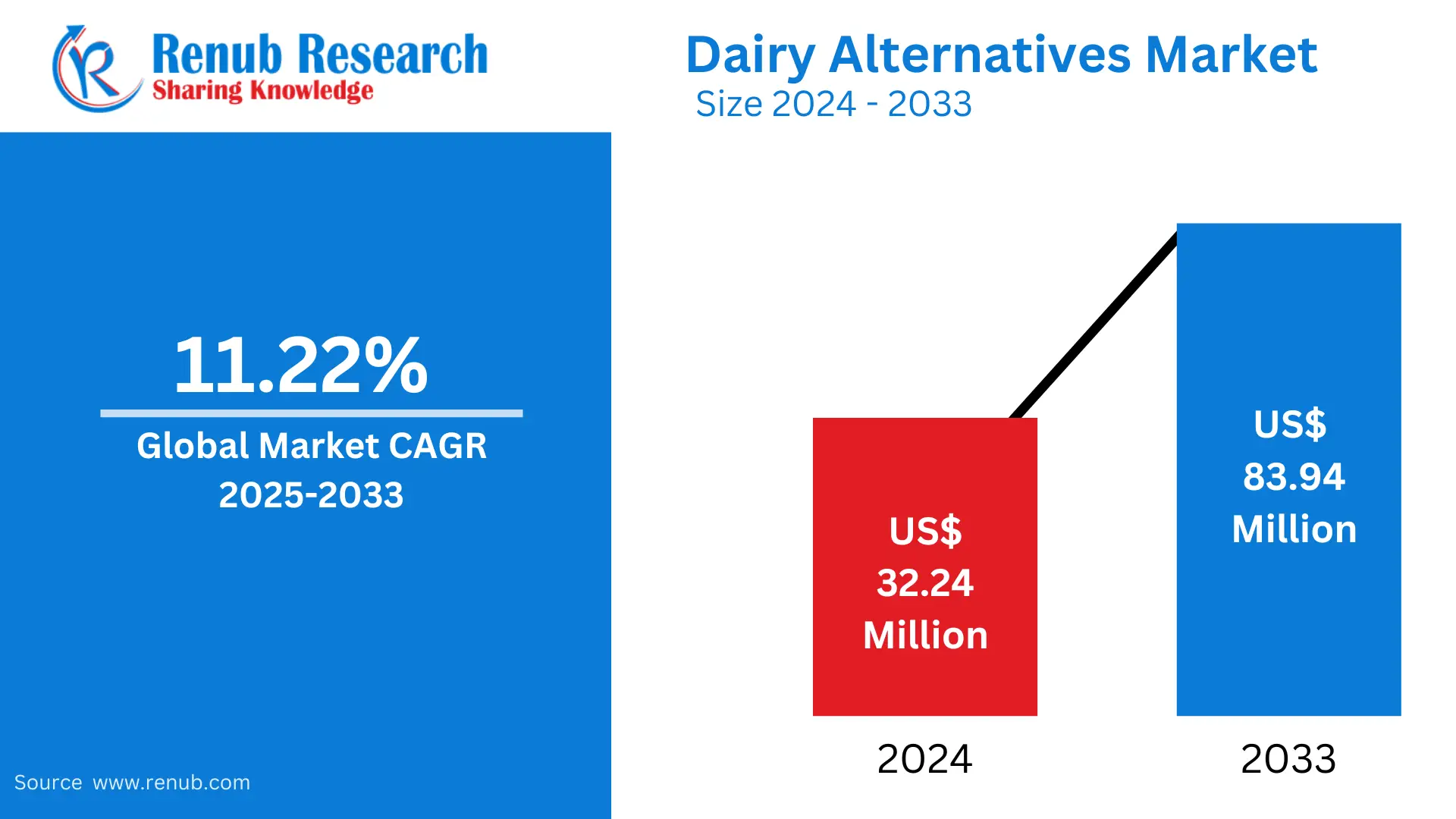
According to Renub Research, the global dairy alternatives market is experiencing robust growth and is projected to expand significantly through 2030. Valued at several billion dollars in 2024, the market is fueled by shifting consumer preferences toward plant-based diets, increasing lactose intolerance cases, rising vegan population, and growing awareness of health and sustainability issues.
Dairy alternatives — including plant-based milk, yogurt, cheese, and ice cream — are becoming mainstream across various regions, reshaping the global food and beverage industry.
Consumers today are seeking healthier, eco-friendly, and ethical choices, leading to the rapid adoption of dairy-free products made from soy, almond, oat, coconut, rice, and other plant-based sources. The growing availability of innovative and fortified dairy alternative products is further supporting market expansion.
Key Growth Drivers of the Dairy Alternatives Market
Rising Lactose Intolerance and Dairy Allergies
Globally, a significant proportion of the population suffers from lactose intolerance or dairy allergies. In regions such as Asia and Africa, lactose intolerance prevalence can reach as high as 70% to 90%. This has created a large consumer base seeking dairy substitutes that are easy to digest and free from allergens. Plant-based dairy alternatives are addressing this demand effectively, contributing to rapid market growth.
Surge in Veganism and Flexitarian Diets
The global rise of veganism and flexitarianism is one of the strongest catalysts for the dairy alternatives market. More consumers are consciously reducing their consumption of animal-based products for health, environmental, and ethical reasons. Plant-based dairy options offer a convenient and tasty alternative, enabling consumers to maintain their nutritional intake without compromising on taste or texture.
Sustainability and Environmental Impact
Dairy farming is associated with high greenhouse gas emissions, land use, and water consumption. As sustainability becomes a key priority for consumers, plant-based dairy alternatives — which generally have a lower environmental footprint — are gaining favor. Governments, NGOs, and environmental groups are also promoting plant-based diets as part of climate change mitigation strategies, further accelerating demand for dairy-free products.
Innovations in Taste, Texture, and Nutrition
Technological advancements and R&D efforts have significantly improved the taste, texture, and nutritional profile of plant-based dairy products. Manufacturers are offering products that closely mimic the creaminess and mouthfeel of conventional dairy while adding nutrients like calcium, vitamin D, and protein to match or exceed dairy’s nutritional value. These innovations are expanding the appeal of dairy alternatives beyond traditional niche markets.
Regional Insights
Asia-Pacific Dominates Consumption
Asia-Pacific leads the global dairy alternatives market, driven by high lactose intolerance rates, traditional consumption of plant-based beverages like soy milk, and rapid urbanization. Countries such as China, India, and Japan are witnessing rising demand for packaged and fortified dairy-free products, supported by growing health awareness and changing lifestyles.
North America and Europe See Explosive Growth
North America and Europe are seeing rapid adoption of dairy alternatives, driven by the surge in vegan and flexitarian diets, health trends, and strong retail availability. The United States, Canada, Germany, the UK, and France are among the largest consumers of plant-based dairy products. Major supermarket chains and foodservice operators in these regions have expanded their dairy-free offerings to cater to consumer demand.
Trends Shaping the Dairy Alternatives Market
Diversification of Plant-Based Ingredients
While soy and almond have traditionally dominated the market, new plant-based sources such as oat, pea, hemp, and cashew are gaining popularity. Oat milk, in particular, is emerging as a major trend due to its creamy texture, natural sweetness, and sustainability credentials. This diversification of ingredients is enabling manufacturers to appeal to a broader consumer base.
Fortification and Functional Ingredients
Manufacturers are increasingly fortifying plant-based dairy products with calcium, B vitamins, omega-3s, and probiotics to enhance their health benefits. Functional dairy alternatives that support digestive health, immunity, and heart health are in high demand, especially among health-conscious consumers.
Expansion of Plant-Based Cheese and Yogurt
While plant-based milk dominates the market, segments like plant-based cheese, yogurt, ice cream, and butter are witnessing rapid growth. Innovative formulations and better taste profiles are encouraging consumers to try and switch to these products, helping expand the dairy alternatives category.
Mainstream Adoption and Retail Integration
Dairy alternatives have moved from niche health food stores to mainstream supermarkets, online platforms, and quick-service restaurants. The widespread availability and marketing of these products are driving consumer trials and repeat purchases, making plant-based dairy a staple in many households.
Competitive Landscape
The global dairy alternatives market is highly competitive, with key players focusing on innovation, mergers and acquisitions, and geographic expansion. Companies are investing in R&D to create differentiated products that cater to diverse consumer preferences. Collaboration with foodservice chains, celebrity endorsements, and sustainability initiatives are common strategies used to build brand loyalty and market share.
Future Outlook
The future of the global dairy alternatives market looks exceptionally bright. As more consumers embrace plant-based lifestyles, and as technology enables better products at competitive prices, dairy alternatives are set to capture a larger share of the global dairy market. Sustainability concerns, health trends, and continued innovation will be the cornerstones of market expansion over the next decade.
Explore the Full Dairy Alternatives Market Report
For comprehensive data, forecasts, segmentation analysis, and profiles of leading companies shaping the plant-based dairy sector, please visit: Dairy Alternatives Market Report by Renub Research
New Publish Report:
About Renub Research
Renub Research is a Market Research and Consulting Company with more than 15 years of experience, especially in international Business-to-Business Research, Surveys, and Consulting. We provide a wide range of business research solutions that help companies make better business decisions. We partner with clients across all sectors and regions to identify their highest-value opportunities, address their most critical challenges, and transform their businesses.
Our wide clientele includes key players in Healthcare, Travel & Tourism, Food & Beverages, Power & Energy, Information Technology, Telecom & Internet, Chemicals, Logistics & Automotive, Consumer Goods & Retail, Building & Construction, and Agriculture. Our core team comprises experienced professionals with graduate, postgraduate, and Ph.D. qualifications in Finance, Marketing, Human Resources, Bio-Technology, Medicine, Information Technology, Environmental Science, and more.
Media Contact
Company Name: Renub Research
Contact Person: Rajat Gupta, Marketing Manager
Phone No: +91-120-421-9822 (IND) | +1-478-202-3244 (USA)
Email: rajat@renub.com
Related Posts
© 2025 Invastor. All Rights Reserved
User Comments