
Ai Content Generator
Ai Picture
Tell Your Story

 William Noah
What Is Quality, Health, Safety, and Environment (QHSE)?
Is a thriving business built solely on profit? Absolutely not. A successful business safeguards its people, protects the environment, and delivers exceptional products. The commitment to workplace safety and environment forms the bedrock of Quality, Health, Safety, and Environment (QHSE).
QHSE represents a comprehensive management philosophy. It integrates processes and principles that ensure consistent product quality, a safe and healthy workplace, and responsible environmental practices. Implementing robust QHSE systems is non-negotiable for today’s businesses. It mitigates risks, promotes employee trust, enhances brand reputation, and ensures compliance with ever-evolving regulatory landscapes.
Qualityze Quality Management Software is a cloud-based EHS solutions streamline QHSE processes, automate compliance checks, and provide real-time insights. They empower companies to meet complex regulatory requirements and exceed industry standards efficiently.
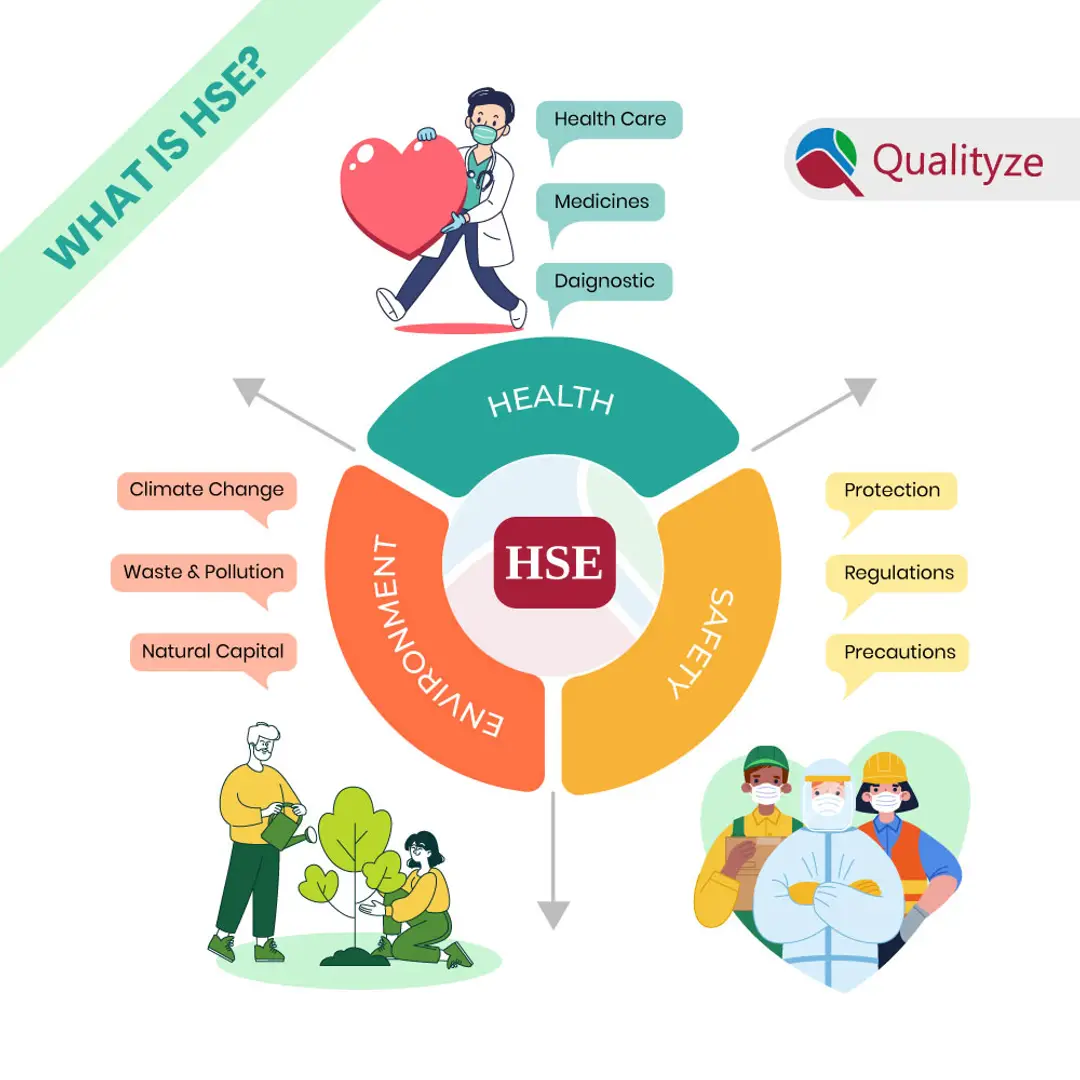
What is the Meaning of QHSE?
QHSE is an integrated approach to ensuring an organization operates responsibly and effectively across all key areas. It goes beyond meeting minimum requirements and focuses on continuous improvement.
Quality: It ensures products or services consistently meet or exceed customer expectations. It involves processes to prevent defects, improve efficiency, and enhance customer satisfaction.
Health: It protects employees from work-related illnesses and promotes their overall well-being. It includes identifying health risks, providing necessary protective measures, and promoting a healthy work environment.
Safety: It aims to prevent workplace accidents, injuries, and incidents. It involves risk assessments, implementing safety procedures, providing training, and ensuring proper equipment use.
Environment: It addresses the organization’s impact on the environment. It involves minimizing pollution, conserving resources, managing waste, and adhering to environmental regulations.
The importance of QHSE cannot be overstated. It protects employees and the public, preserves natural resources, and enhances a company’s reputation and financial stability.
Core Components of a QHSE Management System
A robust QHSE management system builds on several key components. These elements work together to create a framework for continuous improvement. They ensure an organization systematically addresses its quality, health, safety, and environmental responsibilities.
- Policy and Objectives: Every QHSE system starts with a clear policy statement. The statement outlines the organization’s commitment to QHSE principles. Measurable objectives then translate this commitment into actionable goals.
- Risk Management: It identifies potential hazards and risks across all QHSE areas. It then assesses their likelihood and impact. Organizations develop strategies to eliminate or control these risks effectively.
- Operational Control : It involves establishing procedures and controls for all activities. These controls ensure consistent adherence to QHSE standards and cover everything from manufacturing processes to waste disposal.
- Training and Competence: Employees receive proper training. This ensures they understand QHSE policies and procedures and equips them with the skills to perform their tasks safely and responsibly.
- Emergency Preparedness and Response: Organizations develop plans to handle emergencies effectively, including fire, chemical spills, or natural disasters. These plans minimize harm and facilitate quick recovery.
- Monitoring, Measurement, and Analysis: Regular monitoring tracks QHSE performance. It involves collecting data, analyzing trends, and identifying areas for improvement. Data-driven decisions strengthen the system.
- Audits and Reviews: Internal and external audits regularly assess the effectiveness of the QHSE system. Management reviews ensure the system remains suitable, adequate, and effective and drive continuous improvement.
- Management Review: Top management periodically reviews the QHSE system’s performance, assesses its effectiveness, and makes necessary adjustments to ensure its continued suitability and adequacy.
What are the objectives of QHSE Management Software?
QHSE management software offers a centralized platform. It helps organizations achieve their QHSE objectives efficiently.
Objective Category and Specific Objectives
Compliance & Risk
- Streamline Regulatory Compliance: Automate tracking of regulations; ensure adherence to industry standards like ISO 9001, ISO 14001, and ISO 45001.
- Minimize Risks and Incidents: Proactively identify hazards; implement control measures; reduce accidents, injuries, and environmental incidents. Improve Incident Management: Centralize incident reporting; expedite investigations; track corrective and preventive actions (CAPAs).
Efficiency & Process
- Enhance Operational Efficiency: Automate manual tasks; reduce paperwork; streamline workflows for better resource allocation. Standardize Processes: Ensure consistent application of QHSE procedures across all departments and locations.
- Improve Document Control: Manage and disseminate QHSE documents effectively; ensure employees access the latest versions.
- Performance & Data
- Boost Data Visibility and Reporting: Provide real-time data on QHSE performance; generate comprehensive reports for informed decision-making.
- Facilitate Continuous Improvement: Identify trends and root causes; implement continuous improvement initiatives based on performance data.
- Increase Stakeholder Confidence: Demonstrate commitment to QHSE; build trust with employees, customers, and regulators.
- Cost & Reputation
- Reduce Operational Costs: Minimize fines, penalties, and insurance premiums by improving compliance and reducing incidents.
- Protect Brand Reputation: Avoid negative publicity and maintain a positive public image through strong QHSE performance.
- Improve Employee Morale: Foster a safe and healthy work environment; demonstrate care for employee well-being.
Strategic Approach to Implementing a QHSE Management System
Implementing a Quality including HSE management system requires a strategic, phased approach. It is not a one-time project. It is a long-term commitment.
- Gain Leadership Commitment: Top management must champion the QHSE initiative. Their visible support drives success.
- Conduct a Gap Analysis: Assess current QHSE practices against desired standards. Identify areas needing improvement. It provides a baseline for the implementation plan.
- Develop a Comprehensive Plan: Create a detailed plan that outlines specific objectives, timelines, responsibilities, and resource allocation.
- Establish Clear Roles and Responsibilities: Define who does what and ensure everyone understands their part in the QHSE system. Clear roles prevent confusion and ensure accountability.
- Provide Extensive Training: Educate employees at all levels. Training ensures they understand QHSE policies and procedures. It empowers them to contribute effectively.
- Implement Documentation and Controls: Develop necessary documents, including policies, procedures, work instructions, and records. Implement controls to ensure adherence.
- Monitor and Measure Performance: Regularly track key performance indicators (KPIs). KPIs provide insights into the system’s effectiveness. Use this data to identify trends and areas for improvement.
- Conduct Regular Audits and Reviews: Perform internal and external audits. These audits verify compliance and identify non-conformities. Management reviews assess the system’s overall suitability and effectiveness.
- Embrace Continuous Improvement: QHSE is an ongoing journey. Use audit findings, incident reports, and performance data to refine and improve the system continually. Learn from every experience.
What is HSE (Health, Safety, and Environment)? Its Importance
Benefits of QHSE - Quality, Health, Safety and Environment Management Software
Implementing QHSE management software delivers significant advantages. These benefits extend across various aspects of an organization.
- Enhanced Compliance: Software automates tracking and reporting, simplifying adherence to regulatory requirements and industry standards. It reduces the risk of fines and legal issues.
- Reduced Incidents and Accidents: Proactive risk management and incident reporting tools help identify and mitigate hazards, leading to fewer workplace accidents and injuries.
- Improved Efficiency: Automating workflows, document control, and data management reduces manual effort and streamlines QHSE processes.
- Better Data Insights: Centralized data collection and robust reporting capabilities provide real-time visibility into QHSE performance, enabling informed decision-making.
- Stronger Reputation: Demonstrating a strong commitment to QHSE enhances public image. It builds trust with customers, employees, and stakeholders.
- Cost Savings: Reduced incidents, fewer regulatory fines, and optimized resource utilization significantly reduce costs over time.
- Increased Employee Morale: A safe and healthy work environment fosters a positive culture. Employees feel valued and protected.
- Streamlined Audits: Organized documentation and clear audit trails simplify internal and external audits, making the process more efficient and less stressful.
- Faster Corrective Actions: Automated incident reporting and CAPA management ensure quick non-conformity identification and resolution. This prevents recurrence.
How does Qualityze software help an organization with its HSE requirements?
Qualityze EQMS Suite cloud-based EHS software offers a comprehensive solution. It helps organizations effectively meet their Health, Safety, and Environmental (HSE) requirements.
- Integrated Incident Management: Qualityze provides a centralized platform for reporting, investigating, and managing all HSE incidents, including accidents, near misses, and environmental spills. It ensures that no incident goes unnoticed.
- Risk Assessment and Management: The software facilitates systematic identification and assessment of HSE risks. It helps organizations implement controls to mitigate these risks. This proactive approach reduces the likelihood of incidents.
- Comprehensive Audit Management: Qualityze streamlines internal and external HSE audits. Users can schedule audits, manage checklists, track findings, and assign corrective actions.
- Corrective and Preventive Actions (CAPA) Management: The system offers a structured approach to managing CAPAs related to HSE non-conformities. It helps identify root causes and implement effective solutions.
- Training Management: Qualityze Training Management Software helps organizations manage employee training records. It ensures employees receive necessary HSE training.
- Document Control: The software centralizes and controls all HSE-related documents, which include policies, procedures, and safety data sheets. It ensures employees access the latest versions.
- Analytics and Reporting: The software generates insightful reports and dashboards. These visualize HSE performance data.
Organizations can identify trends, measure progress, and make data-driven decisions.
QHSE Software Overview and Importance
QHSE software is a central nervous system for an organization’s quality, healthcare, safety, and environmental initiatives. It provides tools to manage processes, data, and compliance seamlessly.
- Overview : QHSE software is a digital platform. It integrates various modules for managing quality control, workplace safety, employee health, and environmental impact. It automates tasks, centralizes data, and provides real-time insights. It can be cloud-based or on-premise. Key features often include document control, incident management, audit management, CAPA, risk management, and training management.
- Importance : The software provides a unified approach to QHSE. It moves away from fragmented systems. It ensures consistency and efficiency. It serves as a single source of truth for all QHSE-related information. This facilitates better decision-making. It also enhances collaboration across departments. It streamlines operations, reducing administrative burden. The software acts as an enabler for systematic improvement.
- Overview : QHSE software provides the necessary tools to navigate these complexities. It helps organizations maintain compliance, mitigate risks, and foster a culture of safety and quality. It transforms reactive responses into proactive strategies.
- Importance : The importance of QHSE software lies in its ability to drive organizational excellence. It reduces operational risks and costs. It helps avoid legal penalties and improves the organization’s reputation. It creates a safer and healthier workplace. It ensures environmental stewardship. Companies gain a competitive edge. This is achieved through consistent quality and responsible operations. The software helps demonstrate due diligence. This is vital for investor confidence and stakeholder trust. It empowers organizations to adapt quickly to new regulations and industry best practices. It supports continuous improvement initiatives.
Conclusion
Embracing a robust QHSE framework is a fundamental requirement for sustainable business success. QHSE ensures the delivery of high-quality products, safeguards employee well-being, and protects our planet. It builds trust, enhances reputation, and strengthens a company’s bottom line. Implementing a comprehensive QHSE management system powered by advanced software solutions streamlines processes and boosts compliance. Companies gain critical insights from real-time data, enabling proactive risk mitigation and continuous improvement. The future belongs to organizations that prioritize people, the planet, and profit equally. Investing in a robust QHSE system provides the necessary tools to achieve this balance, ensuring long-term prosperity and a positive impact.
Related Posts
© 2025 Invastor. All Rights Reserved
User Comments