
Ai Content Generator
Ai Picture
Tell Your Story

 James Leo
What Is a Construction Worker’s Safety Gear?
Construction safety gear plays a crucial role on job sites because it defends workers from severe injuries that could change their lives. Every shift, crews face threats like falling tools, sharp cutters, blaring machines, flames, and clouds of gritty dust. Proper gear steps in to reduce that danger, acting as a cushion between the worker and each hazard. You could call it todays high-tech building armor, stitched and molded for the real-world risks at hand.
Wearing personal protective equipment, or PPE, is not just smart; in many cases it is the law. For instance, OSHA-the U.S. Occupational Safety and Health Administration-has clear rules that require specific gear for nearly every trade. By following these guidelines, teams boost safety and keep work moving forward without costly accidents or delays.
Understanding Construction Safety Gear – The First Line of Defense.
On every job site, construction safety equipment is the first line of defense for a worker. Accidents can happen in seconds. Skipping a safety measure or piece of equipment could change a life forever. Protective equipment minimizes damage, whether it is from a falling brick or a loud drill.
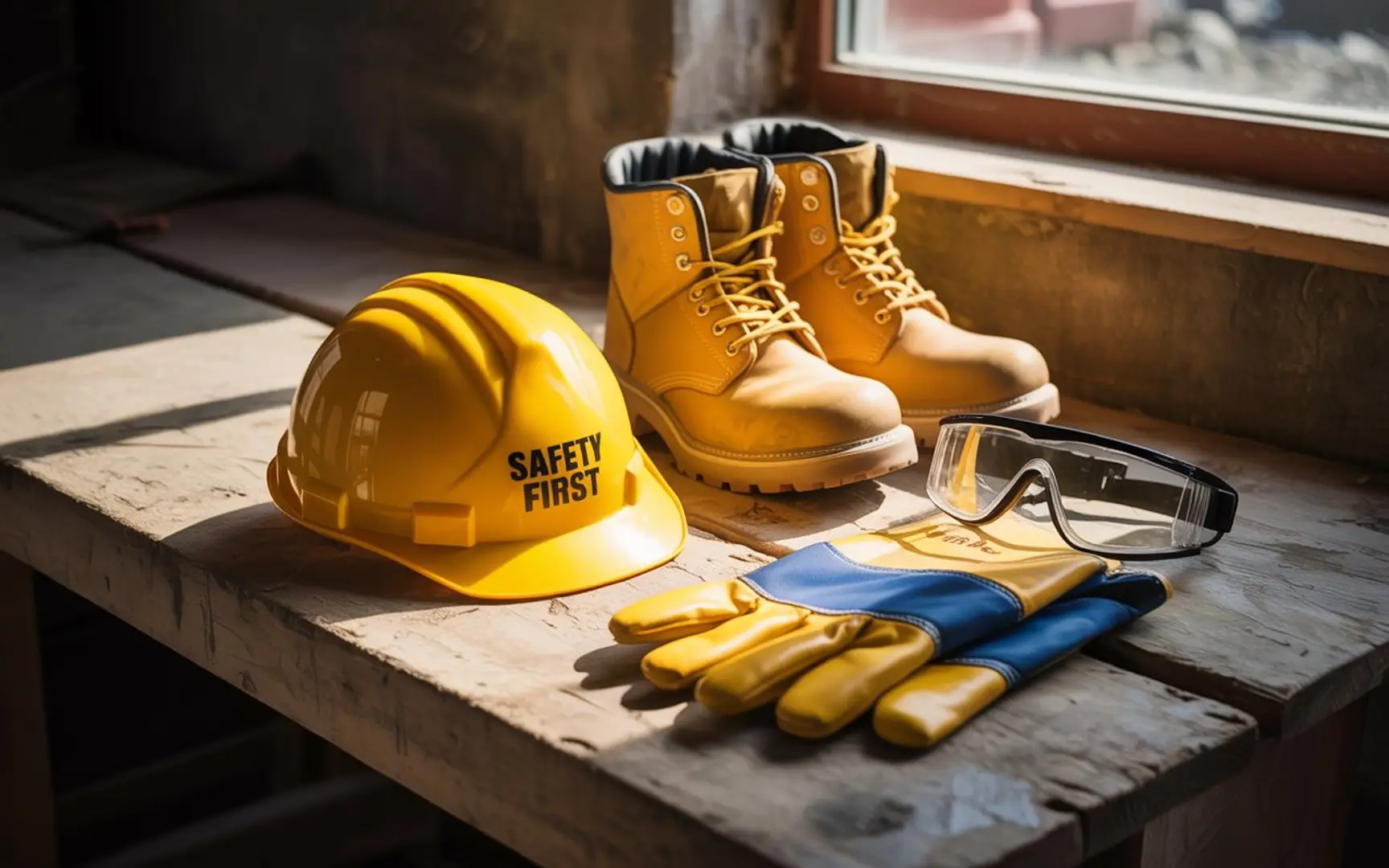
Elements such as head protection, eyewear, and footgear are mandatory. Consider this: a driver would not operate a vehicle without a seatbelt. Similarly, nobody should step onto a construction site without steel toe boots, safety glasses, and hard hats.
Crucial Elements of Construction Safety Gear
Every piece of construction safety gear serves a distinct purpose. Protection starts from your head and continues to your feet, requiring full coverage while on the job. This also includes safety gloves, hearing protection, and specially designed cooling safety vests for hot working conditions.
Here is a quick look at some essential items:
Gear Type
Purpose
Hard hats
Head protection from falling objects
Safety glasses
Eye protection from dust, debris
Steel toe boots
Foot protection from impact or crush
Safety gloves
Shield hands from cuts, burns, chemicals
Fall protection
Prevents falls from heights
Respiratory protection
Filters dust, fumes, and harmful air
Hearing protection
Prevents hearing loss from loud noise
High-visibility clothing
Keeps workers visible in busy zones
Knee pads
Protect knees from hard surfaces
Fire-resistant clothing
Protects against fire hazards
Cooling safety vests
Reduces body heat in hot climates
How OSHA Defines and Regulates Construction Safety Gear
OSHA (Occupational Safety and Health Administration) is the authority on compliance with safety standards. In the U.S., every construction employer must follow OSHA standards. These rules are part of the 29 CFR 1926 safety regulations. They explain exactly what type of protective equipment is required for each kind of job. For example, eye protection must meet ANSI Z87.1 standards, and boots must follow ASTM F2413. If a company fails to meet these rules, they can be fined or shut down. Following OSHA standards keeps workers safe and keeps projects legal. Employers must also provide first aid kits and workplace safety training on how to use every piece of gear.
The Role of Safety Gear in Reducing Workplace Accidents
Construction safety gear is shown to minimize injuries. As NIOSH (National Institute for Occupational Safety and Health) points out, almost all construction site injuries are attributed to absent or incorrectly worn safety gear. Workers are at much greater risk if they lack fall, head, or eye protection.
Appropriate PPE can stop cuts, falls, burns, and even fatalities. Hand injuries can be avoided by wearing gloves that resist cuts. Protective gear, such as specially designed lanyards that absorb shock, aids in avoiding serious injuries from falls. Just as a seatbelt prevents injuries during a car crash, high-visibility and fire-resistant outfits defend workers during hazardous situations.
Site-Specific Gear: One Size Doesn’t Fit All
Different jobs need different construction safety gear. A worker building a road needs gear you wouldn’t need in a chemical plant. That’s why ANSI (American National Standards Institute) and CSA (Canadian Standards Association) offer specific safety categories. For example, roofers need strong fall protection, while welders need full-face shields and arc flash protection.
Some job sites require EN Standards (European Committee for Standardization) level protection, especially if you’re using imported gear. Gear like EN 149 respirators or EN 166 face shields can be used on some U.S. jobs. It’s always best to match the right gear to the task and review labels to ensure it meets standards like EN ISO 20345 for boots or NFPA 2112 for fire hazards.
Proper Use, Inspection, and Maintenance of Safety Gear
Wearing construction safety gear is just step one. You also need to inspect it. Damaged or worn-out gear can fail when you need it most. Helmets with cracks, gloves with holes, or fogged safety glasses are all signs of danger. Workers should inspect all gear at the start of each shift.
Employers must clean, store, and replace PPE on a regular schedule. Items like cooling signal vests and knee pads wear out over time. Respirators must be cleaned and stored in sealed containers. Following ANSI/ISEA 107 rules ensures that high-visibility clothing stays reflective, even after many washes.
What Happens When Safety Gear Is Ignored? (A Cautionary Tale)
In 2022, a construction worker in Texas fell from scaffolding. He wasn’t wearing a harness. There were no shock-absorbing lanyards attached. He broke multiple bones and couldn’t return to work. This could have been avoided with proper fall protection.
OSHA investigated and fined the company. Workers had never received proper training. It’s a sad but true story that happens too often. Ignoring protective equipment is not just risky, it’s reckless. Safety gear only works when it’s worn—and worn right.
Best Practices for Employers and Supervisors
If you manage a crew, safety starts with you. Provide the right construction safety gear, teach workers how to use it, and replace gear when needed. Schedule weekly workplace safety checks. Make sure everyone wears their PPE, every time.
Creating a safety-first culture takes effort. Use signs, toolbox talks, and daily checks to reinforce the message. Don’t wait for OSHA to show up. Staying compliant with NFPA 70E and ASTM guidelines is good for business and even better for your workers.
OSHA Construction Training and Certification in the USA
Training is just as important as gear. That’s why the OSHA 30 hour construction course is so valuable. It’s not just about rules. It teaches real skills. Workers learn how to handle emergencies, identify hazards, and stay safe on the job.
Completing the OSHA 30 certification gives workers a strong edge. Many sites require OSHA 30 training before you can work. If you’re busy, the OSHA 30 Hour online training lets you train at your own pace. This training covers PPE, fire hazards, fall safety, and more.
Final Thoughts: Construction Safety Gear Is More Than Just Equipment
At the end of the day, construction safety gear is about people. It’s about protecting fathers, mothers, sons, and daughters who work hard to build our roads, homes, and schools. Each helmet, glove, and boot is a promise: You go home safe today.
By wearing gear that meets ANSI, NIOSH, CSA, and ASTM standards, and by following OSHA rules, you do more than follow the law—you create a future where safety is the norm. Let’s build that future, together.
visit here to read about Construction Companies Budget for OSHA 30 training.
FAQ Section
What kind of safety gear do construction workers wear?
They wear hard hats, steel toe boots, safety gloves, high-visibility clothing, hearing protection, respiratory protection, and fall protection. Some jobs also require knee pads, fire-resistant clothing, and cooling safety vests.
What is safety equipment in construction?
It includes all the tools and clothing used to protect workers. This gear reduces injuries from falls, loud noise, dust, fire, and impact. Common gear includes eye protection, foot protection, head protection, and more.
What are the 7 examples of PPE?
Hard hats
Safety glasses
Steel toe boots
Respiratory protection
Safety gloves
Hearing protection
High-visibility clothing
Related Posts
© 2025 Invastor. All Rights Reserved
User Comments