
Ai Content Generator
Ai Picture
Tell Your Story

 Ajay Mhatale
Future on Your Wrist: Exploring the Booming Wearable Healthcare Devices Market (2025–2035)
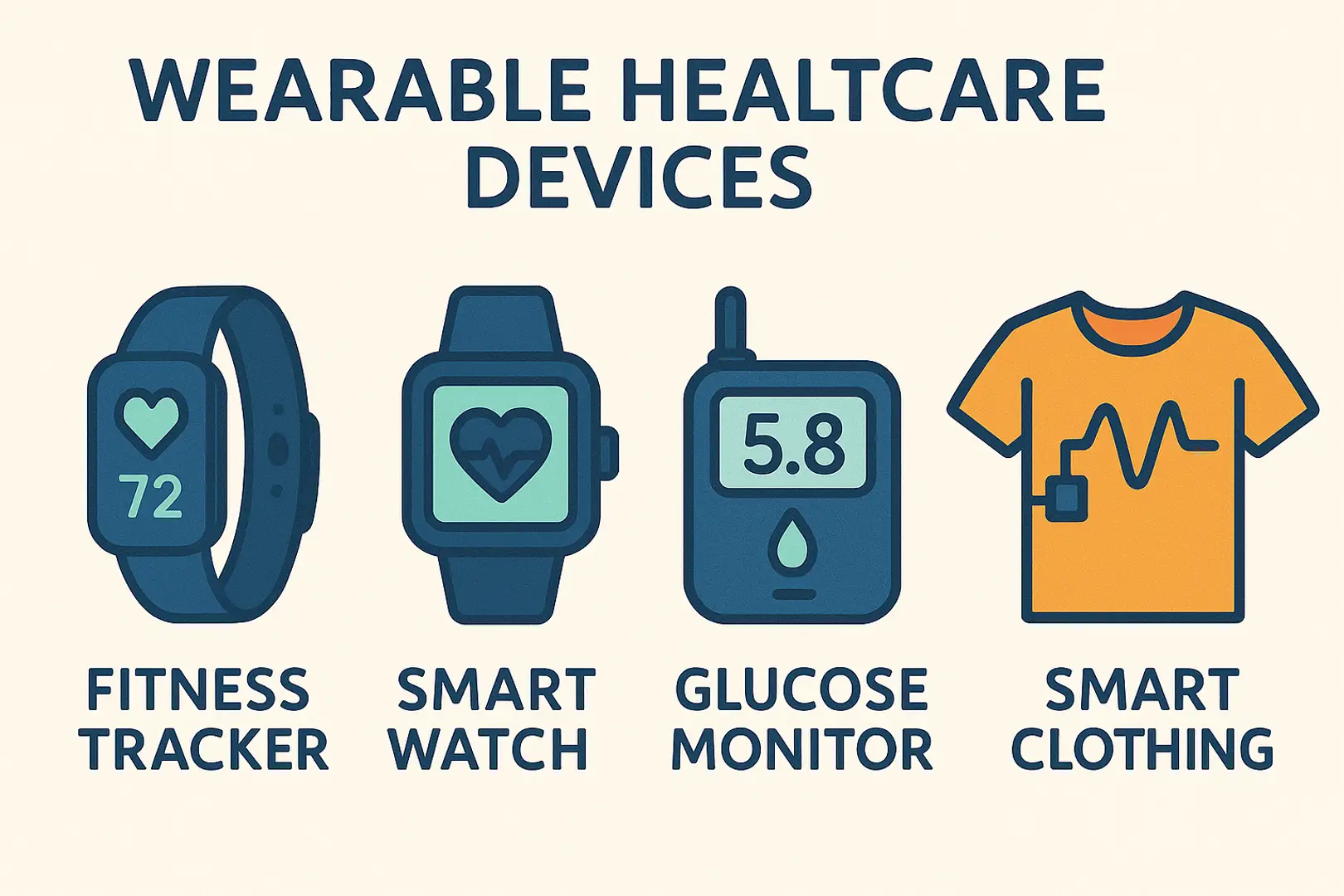 In an age where health and technology are merging at an unprecedented pace, wearable healthcare devices have emerged as a revolutionary force. No longer limited to fitness enthusiasts tracking their steps, these compact and powerful tools are now integral to global efforts aimed at chronic disease management, preventive care, and remote patient monitoring. As we head toward 2035, the wearable healthcare devices market is poised to explode in value—from US$ 70.4 billion in 2024 to more than US$ 379.4 billion, growing at a CAGR of 16.9%. This transformation is underpinned by technological advancements, increased health awareness, and a growing shift toward personalized, data-driven medical care.
Market Outlook Through 2035
The wearable healthcare devices market is set on a transformative trajectory, driven by both consumer demand and the evolution of healthcare delivery systems. Devices that once served niche functions have evolved into sophisticated tools offering a range of features including heart rate monitoring, blood pressure detection, glucose tracking, and sleep analysis. These tools are vital not only for tech-savvy individuals but also for healthcare professionals aiming to deliver personalized and preventative care.
The integration of wearable technology with telehealth has further expanded the potential of these devices. Wearables now play a critical role in continuous care models, enabling real-time communication between patients and healthcare providers. This symbiosis improves outcomes, particularly for chronic conditions like diabetes and cardiovascular diseases. As healthcare continues its digital shift, the market’s expansion will be propelled by increasing consumer expectations for convenience, accuracy, and real-time health insights.
Key Market Drivers
Increasing Launches of Wearable Healthcare Devices
One of the most significant accelerators of market growth is the steady stream of product launches introducing next-generation wearable devices. From smartwatches and rings to patches and smart clothing, manufacturers are in a race to innovate. These devices are increasingly equipped with AI-powered health insights, multi-sensor capabilities, and cloud-based data analytics. For example, VIV Health’s 2025 unveiling of the VIV Ring—featuring generative sleep aid sound technology—marks a breakthrough in sleep and wellness tracking. The smart ring integrates biometric data with AI to offer personalized sleep enhancement, illustrating how wearables are transcending simple tracking to offer holistic health solutions.
With every new product, manufacturers are pushing the boundaries of what wearable devices can do. These advancements not only enhance the user experience but also increase the scope of application—from home care and rehabilitation to hospital-grade diagnostics and monitoring. The wearable healthcare device ecosystem is thus evolving from being gadget-centric to becoming an essential component of the broader digital health landscape.
Rising Health Awareness and Preventive Care
There has been a paradigm shift in the way individuals perceive healthcare. Today, people are more health-conscious than ever before, with a strong inclination toward prevention rather than cure. This growing awareness is creating a fertile ground for wearable healthcare devices to thrive. By providing real-time insights into vital health parameters—such as blood oxygen saturation, sleep quality, heart rate variability, and even stress levels—wearables empower users to monitor their health proactively and take timely action.
The trend is closely aligned with the global healthcare focus on preventive medicine and early diagnosis. Wearables serve as the first line of defense, alerting users and doctors to potential health risks before they escalate into severe conditions. The ability to monitor and analyze health trends daily not only enhances personal wellness but also reduces long-term healthcare costs. As both individuals and healthcare systems increasingly value early intervention, wearable healthcare devices are expected to become indispensable tools in the prevention-first healthcare model.
Market Segmentation Insights
Device Type: Diagnostic & Monitoring Devices Leading the Charge
Among the various device categories, diagnostic and monitoring devices dominate the market due to their critical role in tracking chronic diseases and supporting telehealth. These include wearable ECG monitors, glucose monitors, blood pressure cuffs, and respiratory monitors. As chronic diseases continue to affect a growing portion of the global population, the demand for continuous, non-invasive, and real-time health monitoring is surging. These devices are no longer restricted to hospitals or clinics; they’re now widely adopted for at-home patient monitoring, ensuring better adherence to treatment plans and quicker medical interventions when needed.
What sets this segment apart is its direct integration with healthcare delivery.
Wearables that offer medical-grade accuracy are increasingly being used for remote diagnostics, often acting as a preliminary screening tool. This capability is vital for reducing the burden on healthcare systems while maintaining high-quality patient care. Additionally, wearable monitoring devices contribute to long-term data collection, enabling AI algorithms to predict potential health issues, thus facilitating early treatment.
Grade: Consumer Grade Devices Driving Widespread Adoption
The consumer-grade segment is a powerhouse in the wearable healthcare landscape. Popularized by globally recognized brands like Apple, Fitbit, and Samsung, these devices combine fashion with functionality. Their affordability, user-friendliness, and integration with smartphones make them widely accessible, contributing significantly to market penetration. Users can now track their physical activity, stress levels, sleep cycles, and other health metrics without requiring any medical training or oversight.
These devices are especially popular among younger and middle-aged adults focused on fitness and wellness. However, with enhanced features and better accuracy, even older adults and individuals with chronic conditions are adopting them as part of their daily routines.
Consumer-grade wearables are increasingly viewed as a first step toward professional medical consultation, with data from these devices often being shared with healthcare providers. Their mainstream appeal ensures that this segment will continue to dominate, acting as a bridge between everyday health management and clinical care.
Regional Outlook: North America Holds the Lead
North America accounted for the largest share of the wearable healthcare devices market in 2024 and is expected to retain this lead throughout the forecast period. The region’s well-established healthcare infrastructure, high adoption of digital technologies, and proactive health culture form the backbone of its market dominance. Additionally, the high prevalence of lifestyle-related diseases and an aging population amplify the need for continuous health monitoring through wearables.
What truly sets North America apart is its strong innovation ecosystem, including leading tech companies and startups focused on health tech. Furthermore, regulatory support—such as FDA approvals for digital therapeutics and software-as-a-medical-device (SaMD)—encourages product development and consumer trust. The growing integration of wearables with insurance programs and employer wellness initiatives further fuels adoption. With supportive policy environments, robust funding, and tech-enabled healthcare delivery, North America is poised to remain the epicenter of wearable healthcare growth.
Key Players and Recent Innovations
The market features a dynamic competitive landscape, with leading companies continually striving to outpace each other through innovation, strategic partnerships, and regulatory achievements.
Notable players include Medtronic plc, Omron Corporation, GE HealthCare, Abbott, Philips, Biobeat, and LiveMetric S.A.
Several breakthroughs are setting new standards in the industry. For instance, Nanowear’s SimpleSense-BP, approved in early 2024, is the world’s first non-invasive, cuffless blood pressure monitor with AI diagnostics. Similarly, Abbott’s launch of Lingo and Libre Rio CGMs aims to serve both the wellness market and the Type 2 diabetes population with non-insulin needs.
These developments exemplify how companies are responding to diverse health needs with targeted, user-friendly solutions that align with both consumer lifestyle and clinical requirements.
Conclusion: A Future Where Health is Always Within Reach
The wearable healthcare devices market is more than just a trend—it is a cornerstone of the future of medicine. As the line between consumer electronics and medical devices continues to blur, these technologies will increasingly serve as real-time health companions, enabling early intervention, better disease management, and a higher quality of life. With robust innovation pipelines, supportive healthcare policies, and rising global health consciousness, the market is set for exponential growth through 2035.
Related Posts
© 2025 Invastor. All Rights Reserved
User Comments